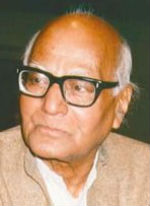









Reading Savarkar, I saw that it was not Hindu self-assertion but Muslim partitionism that gave Hindutva its raison d’être. Savarkar himself had proposed … a unified Hindu–Muslim armed revolution in the Indian War of Independence of 1857. … What made him switch to the extreme suspicion of political Islam, if not an outright anti-Islamist standpoint? – Prof. Makarand R. Paranjape
Becoming Hindu is quite another thing than being Hindu. A lot of us are Hindus, born or otherwise. Some are so even unknowingly. This way of being Hindu, once one grasps the fundamentals, is easy. Why? Because of the freedom of belief and the overabundance of choices when it comes to practice.
Moreover, if you actually take up a path to spiritual growth, which is what yoga essentially is, then you discover enormous benefits. It makes you strong and resilient. Also, if you are serious, it gives you a glimpse of immortality. Because you cease to identify exclusively with the body.
Your consciousness has the opportunity to expand. You may even discover your true identity with something beyond and higher than your mundane self. The psychic awakening is what Aurobindonians call it. It happens when you touch the divine core of your being, and it begins to direct your life and mind. Noa Schwartz Feuerstein calls it ‘Atmanization’, a phrase that I like very much.
Of course, this way of being Hindu gets harder and harder the higher you aspire to go in your personal transformation. In fact, it becomes the hardest thing ever that anyone can accomplish in a lifetime.
Contrarily, becoming Hindu is very tough at first but becomes easier over time.
Why do I say this? Because the first steps, when you begin to take a stand, are the hardest. Especially for someone like me, who was a “secular academic”, quite steeped in the conventional discourse and academic practices.
These excluded any Hindu position, whether overt or covert.
To cross these boundaries and to speak out from a position of total erasure was the most difficult. Then gradually, it became easier, almost like second nature. And the politics of being Hindu was no longer something that one detached from one’s deepest spiritual practices.
From being Hindu to becoming Hindu is, thus, an ideological and political process.
And there are a variety of ways of becoming Hindu as there are of being Hindu. But many, if not most, Hindus avoid being politically Hindu. It is certainly not a fashionable space to occupy.
In fact, it can be hazardous, with possibilities of being targeted, cancelled or removed from academia or public discourse.
Yes, becoming Hindu is to enter into a political space, a space of struggle and contestation. Where the Other takes various forms and shapes of Hindu hatred. But underlying these is a theological, theocratic or theoretical insistence on monothetism. This neologism is a necessity because monism, the normal antonym of pluralism, isn’t apt. When the Sanatani is confronted with the anti-Sanatani, what can it do to defend itself? This is a profound and perennial civilizational question. I have myself offered a framework of analysis of how Hindus have done so over millennia.
Essentially, there are three types of relations between Hindus and non-Hindus: Sanatani and co-Sanatani, Sanatani and non-Sanatani, and Sanatani and anti-Sanatani. Only the last one becomes adversarial and problematic, even violent and prolonged.
To complicate matters a bit, we might also observe that the other two positions, non and anti, inhere right within the Sanatani. Also, as Gandhi knew only too well, non- and even anti-Sanatani systems have the seed and scope for the Sanatani inside them.
These positions are therefore not binary polarities but sliding and overlapping stances. However, when push comes to shove, we have to choose. Why? Because, as Gandhi said famously in the Young India of 12 May 1920, “If I seem to take part in politics, it is only because politics encircle us today like the coil of a snake from which one cannot get out, no matter how much one tries. I wish therefore to wrestle with the snake….”
The snake I stumbled upon, so to speak, was the sordid and dangerous silence, amounting to absence. In current postcolonialism, Islamic imperialism, conquest, iconoclasm, slavery, conversion, vandalism, looting and, more recently, separatism cannot be spoken of.
My Deccan trip and its extramural revelations showed me whence Hindutva had sprung.
Later, reading Savarkar, I also saw that it was not Hindu self-assertion but Muslim partitionism that gave Hindutva its raison d’être. Savarkar himself had proposed, as we have already seen, a unified Hindu–Muslim armed revolution in the Indian War of Independence of 1857 as the way to throw out the British.
What made him switch to the extreme suspicion of political Islam, if not an outright anti-Islamist standpoint? Indeed, that is how he came to be defined, caricatured and pilloried by the Indian establishment. It was evidently the strange and bizarre phenomenon of the Khilafat Movement, the attempt in the subcontinent to restore the Islamic Caliphate in distant Turkey.
When Turkey itself wanted to, and did, modernize under Mustafa Kemal Atatürk!
Gandhi’s wholehearted support for the lost cause of the defeated and dying Caliphate does seem like a bizarre political miscalculation in retrospect. – The Print, 4 September 2025
› Excerpted from ‘Hindutva and Hind Swaraj: History’s Forgotten Doubles’ by Makarand R. Paranjape.

Filed under: india | Tagged: hindudvesha, hindutva, m.k. gandhi, muslim separatism, v.d. savarkar | Comments Off on Becoming Hindu is not the same as being Hindu – Makarand R. Paranjape