









If history teaches any lesson about injustice carried across centuries, it is that politicians cannot permanently hold back Hindu resilience. The civilisation will ultimately triumph. – Abhijit Majumder
To reclaim one of their holiest places, the destroyed Ram Mandir in Ayodhya, over which the Babri Masjid was built, Hindus patiently fought legal cases for 134 years (from the 1885 civil suit to the 2019 Supreme Court verdict).
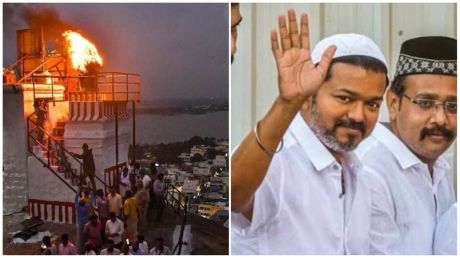
To light the ceremonial Karthigai Deepam at the stone pillar or Deepathoon on the Thiruparankundram hilltop, roughly 50 metres from the Sikandar Badusha Auliya Dargah, Hindus have been fighting in the courts for 109 years. It began with the temple’s civil suit in 1917.
And still, despite the Supreme Court’s November 20 order permitting a one-time interim arrangement for a restricted team of temple priests to light the lamp at the Deepathoon at 6pm on November 24, chief minister Vijay’s Tamil Nadu administration deployed over 5,600 police personnel on the hill, imposed BNSS Section 163 restrictions across Madurai, and put hundreds of BJP and Hindu Munnani leaders under preventive detention or house arrest.
The lamp was not allowed to be lit at the Deepathoon. Instead, it was lit only at the customary Uchi Pillaiyar Deepa Mandapam.
It is an open-and-shut case of contempt. But what is more distressing is how Vijay, who owes his spectacular rise to power to a strong Tamil Hindu vote, among other factors, has decided to walk down the path of MK Stalin and his naked contempt for Hindu sentiments and rights.
By his actions on the Karthigai Deepam issue, Vijay also finds himself at the entrance to the dark, bloodied alley of history that Mulayam Singh Yadav chose during the Ram Janmabhoomi movement, when he ordered police to fire on thousands of unarmed kar sevaks. Vijay is still a long way from that extent of evil, but when matters of faith start spinning out of control, violent chaos can be only a short walk away.
The role of Muslim organisations in Ayodhya and Thiruparankundram is notably similar and heinous.
In Ayodhya, they claimed the entire disputed structure and the surrounding courtyard as the Babri Masjid, built in 1528, asserting exclusive possession and Waqf status. The approach was to deny Hindus even an inch.
On the outskirts of Madurai, dargah representatives and Muslim groups have asserted Waqf claims over the hilltop. They have sought to rename the hill “Sikandar Malai” and argued that the access routes and the stone pillar fall under the dargah’s control. This is despite the 1923 and 1931 decrees that restricted the dargah’s rights to three specific pockets and vested ownership of the hill in the temple.
On December 1, 2025, a single bench of Justice GR Swaminathan directed that the Karthigai Deepam be lit at the Deepathoon atop Thiruparankundram Hill. The then DMK government refused, with Stalin citing law and order, safety and communal harmony.
On January 6, 2026, a division bench of the Madras High Court upheld that order. It dismissed the communal-harmony bogey as an “imaginary ghost” created by the state.
In spite of that, the Vijay government has gone right ahead and defied the Supreme Court’s order on lighting the lamp.
If history teaches any lesson about injustice carried across centuries, it is that politicians cannot permanently hold back Hindu resilience. The civilisation will ultimately triumph. – News18, 25 November 2026
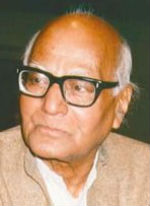
› Abhijit Majumder is an author, editor and media entrepreneur. He is the author of the book ‘India’s New Right’.

Filed under: india, tamil nadu | Tagged: deepathoon, hindu-muslim differences, karthigai deepam, stone pillar, thiruparankundram hill |