












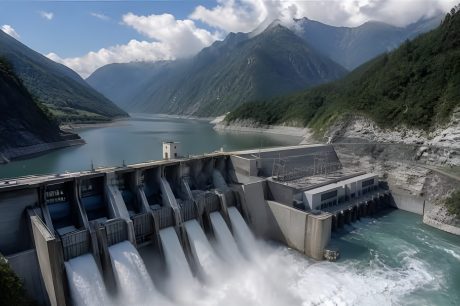
India’s response to the multiple dangers posed by the Chinese Medog Hydropower Project is the proposed Siang Upper Multipurpose Project (SUMP). The Siang Dam reservoir would help India regulate the river flows, contain and hold excessive water inflows caused by sudden discharge upstream and maintain water availability during the lean season. – Virendra Parekh
A Chinese mischief is afoot in Tibet that could cause a serious and lasting damage to India in Arunachal Pradesh and Assam. While the enemy is proceeding with his customary ruthless efficiency, India’s response is mired in political controversies and agitations. Read the following news report.
“China’s construction of a 60GW hydropower project barely 40-50 km from Arunachal Pradesh has made rapid progress, with villages cleared, river diversion work underway and major industrial infrastructure emerging at the site”, says a report in Times of India (24/11/26), citing satellite imagery assessment by an Indian geospatial AI start-up.
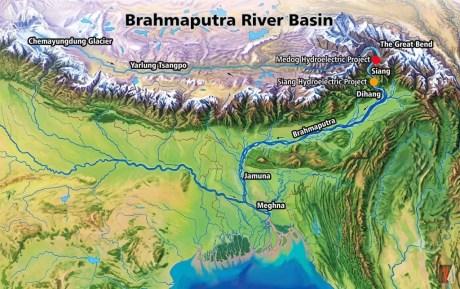
This is a wake-up call for India, if it was needed. In July 2025, China officially commenced construction on the colossal Medog hydropower project in Tibet on the river Yarlung Tsangpo (known as Siang in Arunachal Pradesh and Brahmaputra in Assam). Situated dangerously close to the Indian border, this monumental project, world’s largest in history, is designed to harness a massive 2,000-metre elevation drop across a 50-kilometre stretch of the river known as the Great Bend at an estimated to cost of 1.2 trillion yuan (around $170 billion). It is not a single project, but five cascade hydropower stations, with aggregate installed capacity of 60,000 megawatts. This compares with India’s total hydroelectric capacity of 57,200 megawatts.
This project would give China a potent geopolitical weapon in the form of ability to control trans-border downstream water flows. India faces the risk from China of intentional water hoarding during dry seasons or the sudden release of massive volumes of stored water during the monsoon. Furthermore, the geological instability near the Chinese site severely hikes the probability of catastrophic upstream dam failure.
The risk is heightened by the fact that China views India as a rival to be put down in every possible way. Also, in the absence of any water sharing treaty between China and India on Brahmaputra, there are no round-the-year or real-time updates on water flows—only limited data-sharing during the flood season.
The strategic threat
While China has the strategic advantage of being an upper riparian state, it does not hold all cards. The Brahmaputra gains most of its volume only after it enters India. Tibet contributes only about 30 per cent of the annual flow of the river; a massive 70 per cent in generated within India, by intense monsoon rains and contributions made by torrential tributaries in Arunachal Pradesh and Assam.
That said, inflows from Tibet become crucial during the lean winter months, when glacial melt from Tibet accounts for a disproportionately large share of the river’s base flow in Arunachal Pradesh and upper Assam. While India has plenty of water on its side, upstream water matters during the dry months, when every contribution becomes important. Conversely, during peak monsoons, the coordinated opening of upstream floodgates—or a seismically induced dam breach in Tibet—could unleash devastating floods in the plains of Northeast India. Although China presents its project as run-of-the-river schemes, the cumulative effect of cascades throughout the year are highly unpredictable.
There is, thus, no way can India view the Medog project with equanimity. It has to act, and act fast. India’s response to the multiple dangers posed by the Medog project is the proposed 11,200 MW Siang Upper Multipurpose Project (SUMP). While the hydropower capacity of the Siang project is much smaller in comparison with that of the Chinese project, its proposed reservoir with a storage capacity of 9.2 billion cubic meters (BCM) is much larger than the reported 5.2 BCM of the Chinese project. This reservoir would help India regulate the river flows, contain and hold excessive water inflows caused by sudden discharge upstream and maintain water availability during the lean season.
Not unexpectedly, the project has run into strong opposition from the indigenous tribal communities, who have been on the warpath to thwart it. The strategic importance of the project has done little to soften the opposition in the three Siang districts (Siang, Upper Siang and East Siang) of Arunachal Pradesh through which the river flows before entering Assam. The residents of these districts fear displacement, loss of livelihood, extensive environmental concerns, potential ecological damage, and consequences of building a mega dam in a geologically sensitive region. Local groups, as also various political outfits, have taken to the streets to oppose the initiative. In East Siang district, clashes have erupted between the protestors and security personnel, leading to extensive damage to public buildings and private property. Protestors vandalised the NHPC office and torched vehicles inside a police station. They are opposed even to the drilling on the river bank by NHPC as part of the exercise to prepare the pre-feasibility survey. They just want the project to be dropped.
The concerns of the indigenous communities are entirely understandable and must be addressed to their satisfaction. What is worrisome, however, is the involvement of some local puppets of China and funding of the protests by foreign agencies with proven anti-India credentials. They are fishing in troubled waters to ensure that India’s leadership is entangled in dealing with protests and agitations and left with little drive and energy to proceed with the project.
Consider the utterances of Katon Moyong, an engineer-turned-activist associated with the Siang Indigenous Farmers Forum (SIFF). This gentleman, who has positioned himself as a defender of Adi tribal sovereignty, ancestral lands, and riverine ecology, publicly accused the government of India of fabricating a “China threat” to grab tribal land, insisted that Yarlung Tsangpo project was merely a “run-of-the-river” facility that does not consume or permanently store water and therefore cannot harm downstream riparian states, asserted that Indian engineers, the National Hydroelectric Power Corporation (NHPC) and the Central government lack the technical sophistication to safely build a large dam in the Himalayas and advised India to send her diplomats to Beijing to negotiate a water-sharing treaty. The Chinese puppet gave himself away by mimicking his master’s voice only too accurately.
As regards funding, CBI in September 2026 booked prominent Arunachal anti-dam activist Bhanu Tatak for allegedly receiving substantial offshore contributions directly into her personal bank accounts in violations of the Foreign Contribution (Regulation) Act. Tatak, who serves as the legal advisor to the Siang Indigenous Farmers Forum (SIFF) and Coordinator of the Dibang Resistance, joined Congress in December 2025. The remittances were made by at least four foreign entities. These are: Asia Indigenous Peoples Network on Extractive Industries and Energy, based in Philippines; Front Line headquartered in Dublin; Indigenous Peoples Rights International, Philippines and Human Rights Resource Centre, London. All these organisations have received substantial funding from Open Society Foundations founded by George Soros, Ford Foundation and other global leftist organisations.
Need for tight-rope walking
The upshot is that what we are witnessing in Arunachal Pradesh is not a classic confrontation between indigenous ecological preservation and state-led development. India’s easternmost state has a history of peaceful democratic protests against Kameng Hydroelectric Project, Ranganadi Project and Dibang Multipurpose Project. The protestors took democratic and legal routes to oppose such projects and their grievances were resolved through negotiations, enhanced monetary compensation packages, and necessary structural compromises with local stakeholders. The sudden, coordinated escalation of protests against the Siang dam, therefore, cannot be viewed merely as an organic eruption of grievance against big dams. There is a foreign hand in action, which is trying to manipulate the local communities for its own anti-India agenda.
This calls for tight-rope walking by the authorities at all levels. Genuine tribal grievances have to be separated from foreign political manipulation. Instigators, outfits and so-called leaders working under foreign influences have to be identified, exposed and isolated from genuinely worried local population. The indigenous people have to be dealt with in a fair, transparent and sensitive manner. They have to be apprised that with the Chinese project under way, their ancestral lands and ways of life are no longer safe, irrespective of what the Indian authorities do or don’t do. They have to be made stakeholders in the success of the Siang project by promising a secure and better future. The compensation offered to them should not be a one-time affair, but a sustained programme of rehabilitation.
Happily, the state as well as the central government is aware of the stakes and sensitive to the issues involved. Home Minister Amit Shah on a recent visit to the state underlined the importance of the Siang dam for Arunachal and its youth’s future, but said repeatedly that the government will move ahead with the project only after positive dialogue and after taking people into confidence. “The respect you have for your culture and for the local people, I have the same respect, and my government has the same respect”, he said. Projects of national interest must enlist and ensure people’s cooperation and participation. That is the best way to deal with China’s opacity and unpredictability.
› Virendra Parekh writes on economics and politics, also on issues related to Indian civilization, history and cultural nationalism.
Filed under: arunachal pradesh, china, india, thailand | Tagged: brahmaputra river, himalayan ecology, india-china relations, medog dam, siang dam |