









It is amazing but true that the police and transport authorities are arraigned before the Supreme Court not for their failure, but for their success in maintaining law and order without any untoward incident in the face of a grave challenge from a group of anarchists and rabble rousers. Astoundingly, the Court asked the authorities to reverse these measures to so as to facilitate the protests! – Virendra Parekh
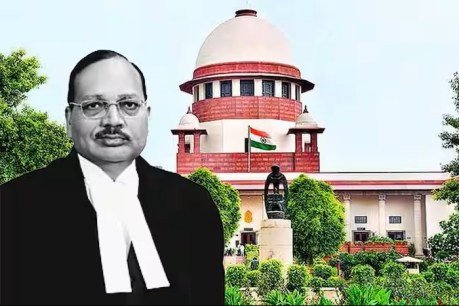
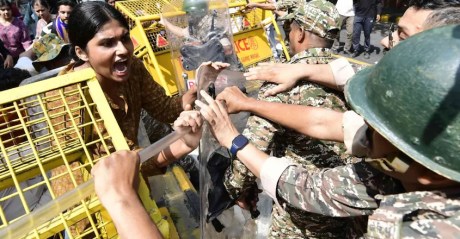
The Supreme Court seems to be under the impression that it knows best, it is all-powerful and, perhaps, it is accountable to no one. On Sunday, 11th October it sat in a special session to demand an explanation from the authorities for measures taken to thwart the CJP protests seeking resignation of the chief election commissioner (CEC) Gyanesh Kumar. It is amazing but true that the police and transport authorities are arraigned before the court not for their failure, but for their success in maintaining peace and law and order without any untoward incident in the face of a grave challenge from a group of anarchists and rabble rousers. Astoundingly, it asked the authorities to reverse these measures to so as to facilitate the protests.
The Supreme Court is doing a great disservice to the country by siding with a gang of rootless foreign-funded anarchists who are out to foment trouble and create unrest in the country, undermine legitimacy of all constitutional institutions including election commission and courts, destroy people’s faith in democratic institutions and bring about a regime change through violence and anarchy. It is extraordinary that the court is buying into their rhetoric of being legitimate protestors exercising their democratic rights. If ever there was a wolf in a sheep’s clothing, they personify it. Glorifying them as representatives of the country’s young generation is not merely inaccurate, but positively misleading.
The court is cross with the police for alleged violation of its October 8 order against complete shutdown of the metro and train services in Delhi on Saturday to thwart the agitation. It has sought response from the union home secretary, Delhi police commissioner and chief of Delhi metro rail in a contempt of court petition. It has also asked them to ensure normalisation of internet connectivity and prohibition of illegal detentions, especially of those who gather for peaceful protests away from areas where prohibitory orders are in place.
The million-dollar question is: if the protests do not remain peaceful, if rogue elements infiltrate the ranks of protestors and if there is targeted violence against security personnel, looting of shops and such other things, will the Supreme Court take responsibility for these happenings? Does it have the means or authority to undo the damage? What moral authority, then, does it have to order the executive to go easy? Lawyers, journalists and other professionals should not be hindered in their duties “in any manner”, thundered the court. What about police and other security forces? Should they also not be allowed to perform their duties professionally? Should not the most basic of human rights (self-defence against malevolent violence) be available to them, too?
The question is not merely hypothetical. In the very recent past, a “peaceful protest march of innocent youngsters” organised by the same group of cockroaches turned violent, injuring over hundred security personnel including women. The organisers never expressed any regrets for what happened. On the contrary, they demanded that no punitive action should be initiated against the protestors and the court ordered that all FIRs in this behalf were quashed.
The same group of cockroaches announced a renewed agitation on October 10. Learning from the past experience, the government refused permission for the protest and used powers under the law (law against unlawful assembly, preventive detention, barricades, withdrawal of transport facilities etc.) to foil their designs. It succeeded in preventing any untoward incident. And now it is asked why.
This is unfair. Law and order is the responsibility of the executive, as the CJI himself has confirmed. Of all the organs of the state, the government alone has the means to gather information and take measures to meet challenges in this regard. Ordinary law-abiding citizens also have a right to be protected from violence and disruption. Their interests also must be kept in mind.
Ironically, while the court is willing to go the extra mile for the rights of the agitators, the latter have scant regard for any law, rule or court. The cockroaches have said their agitation will go on until the CEC resigns, irrespective of the bond they furnished for their release from detention or any government order. Rahul Gandhi, who is out on bail in a criminal case and has repeatedly been forced to apologise for reckless statements, sought a personal meeting with the Chief Justice of India on vote chori and related issues. Mercifully, he did not ask the CJI to meet him at AICC office. When the CJI rightly dismissed the request, Rahul announced a march to the Supreme Court to “save democracy”.
This is not surprising. It bears repetition to state that a sinister campaign is afoot to discredit India’s democracy before a violent attempt at regime change. Anti-India forces at home and abroad are working in active coordination. Witness Elon Musk’s Ambani jibe and Rahul Gandhi’s prompt endorsement of the same, statements from Bangaldeshi politicians. The CJP has never concealed its ambition to make a Nepal or Bangladesh of India. Notice how quickly it has lost all interest in the NEET paper leak, improvement of schools or reform of education system, and revealed its true intentions.
We are up against a bunch of shameless liars. Rahul Gandhi meets the President and claims that “to his astonishment” she did not deny allegations of vote chori and accepted his memorandum on the same, even though the President actually demanded proof of the allegations. Cockroach Dipke was informed by the Delhi police about the death of his grandmother in Maharashtra and offered possible facilitation for his journey to his home town on humanitarian grounds. He decided to stay in Delhi, but later claimed that he was denied communication and could not attend the funeral.
True to type, the lack of veracity of the allegations against the CEC no longer bothers the agitators or the opposition parties. 1,300,000 names have been deleted in Punjab from the voter list. If Rahul Gandhi or Dipke can present before any court even 1300 people whose names have been wrongly deleted, their allegations would gain enormous credibility. But they know better than to attempt it. Their high decibel effort is geared to create a perception (specially for consumption abroad) that India’s democracy has been corrupted beyond repairs, that Modi government has panicked, that it is weakening by the day and it is only a matter of time before Gyanesh Kumar and then Narendra Modi exits the office in disgrace and ignominy.
Fortunately, both the Prime Minister Narendra Modi and Home Minister Amit Shah are made of sterner stuff. Veteran political leaders who have risen from the ranks and enjoy immense popularity, both have borne the brunt of malicious and sustained campaign of calumny for years. They are unlikely to be even impressed by these orchestrated cacophony, forget giving into it.
Even more fortunately, people can see through this artificial campaign of manufactured outrage and remain totally impervious to the calls for participation. If anything, they are losing patience with the agitators. Police action against agitators on October 10 was wholeheartedly endorsed across large sections of society. Rahul Gandhi’s repeated calls for people to rise everywhere in revolt against the vote chori have been met with stony silence and studied indifference from the general public. Only the committed cadre of some opposition parties and leftist organisations crowd the protest venues is a few cities. Even here, many protestors do not seem to know what they want and why. And now that protests have been barred permanently at the Jantar Mantar, the cockroaches have given a call for creating a Jantar Mantars everywhere. If they attempt it, it is more than likely that ordinary people, fed up with their shenanigans, will turn on them, not very peacefully, and put them in their place. That will be democracy in action, to defend itself.
› Virendra Parekh writes on economics and politics, also on issues related to Indian civilization, history and cultural nationalism.
Filed under: india | Tagged: cockroach janata party, indian democracy, law and order, student protesters, supreme court orders | Comments Off on The Supreme Court’s delusions of grandeur – Virendra Parekh