










Pradhan Resignation: Tactical retreat or revealing a fatal weakness? – Virendra Parekh

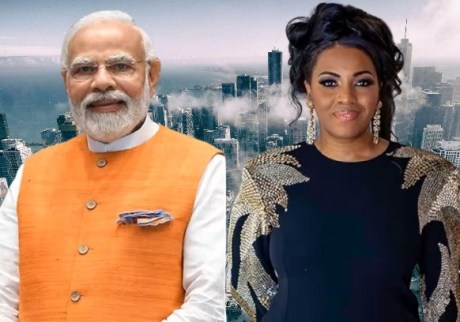
PM Narendra Modi & MP Dharmendra Pradhan

The Modi government has once again exposed its fatal weakness. It is unwilling to use force against confirmed anti-national forces. It can be easily blackmailed into surrender by creating a possibility of being maligned abroad as repressive, authoritarian and tyrannical. – Virendra Parekh

The sudden resignation of former education minister Dharmendra Pradhan left crores of patriotic citizens in a state of disbelief, shock and surprise. They never expected their icon, the strong and shrewd Prime Minister Narendra Modi to give in to the bunch of rootless upstarts backed by the worst elements in our polity. When Sonam Wangchuk ended his fast in return for some verbal assurances, it seemed that the CJP agitation at the Jantar Mantar had lost its moral pillar—such as it was—and would soon peter out.

And then came the astonishing announcement. A strong wave of jubilation swept through not just the gathering at the protest site, but also among those leaders and parties that were desperately thirsting for at least a small political victory against their most beloved enemy. They are cooing victory as if they have vanquished Modi, BJP, RSS and Sangh Parivar and the collapse of the NDA government is only a matter of time. “Pradhan’s resignation is a proof that if you don’t get scared, you can win. They used to say this government doesn’t see resignations … the world bends if there is someone around to make it bend,” said Abhijit Dipke of the CJP. “… signal to farmers, labourers, poor people, there is wisdom and courage in standing up … time has come to remove this government,” said Rahul Gandhi. The tone and tenor of these utterances is obnoxious for any right-thanking citizen.

On the part of the government, there is no dearth of explanations and rationalisations. Dharmendra Pradhan said that he resigned to ensure that “antinational elements do not exploit the situation … no student’s future gets tangled in legal complexities, our children can focus … on building careers.” Newspapers cite intelligence reports as saying that the support to the agitation was no longer confined to CJP backers, it was spreading to wider sections of society including some groups who have been generally supporting the BJP, that the agitation unless controlled could develop into a wider uprising tagging numerous unrelated issues and that it may soon descend into a spiral of violence in several parts of the country. The handlers of the agitation may even incite a few students to court self-immolation, precipitating a great law-and-order crisis. The government is credited with the assessment that a temporary setback in optics was preferable to the possibility of violent clashes in the capital, prolonged disruption of public life, and the risk of the agitation evolving into a wider national movement.

It is also argued that the decision to remove Pradhan has its own positive outcomes. The CJP has formally withdrawn the agitation and asked it followers to return home. The opposition parties are deprived of a major issue as can be seen in the visible disappointment of some leaders who have appealed for agitation’s continuation and even asked other groups to launch fresh agitations of their own. Hopefully, the parliament will start functioning normally and the government would be able to pass some critical legislation on the FCRA, women’s reservation, delimitation and income tax. And yes, the democratic credentials of the government have been redeemed.

All this amounts to saying that placed in a tight spot, the government has opted for cutting its losses. While it may be commended for its pragmatism (Remember? Politics is the art of the possible), the developments do not make for good news. For two reasons.

First, the antinational nature of the agitation and the foreign hand behind it were never in doubt. These were visible almost from the beginning. The protest was launched ostensibly against the NEET paper leak and for educational reforms for the benefit of millions of youngsters whose future was at stake. It soon became apparent that the handlers of Dipke & Co had no interest in any of these issues. NEET, education, Pradhan were just their ploys. They had a different agenda, and had their own stooges, middlemen and henchmen. They had no proposals for suggestions for educational reforms.

The entities who visited the site of this ‘non-political’ agitation included Arvind Kejriwal, Atishi Marlena, Dimple Yadav,  Yogendra Yadav, Pawan Khera, Rakesh Tikayet, Arundhati Roy, Nasiruddin Shah, Shabana Azmi, Vishal Dadlani and Swara Bhaskar. The most visible groups were the dafli gang of AISF and Muslims. These are all usual suspects suffering from a deep hatred for Narendra Modi and Hinduism. Some are professional agitationists (andolanjeevis) whose presence at any anti-Modi protest can be taken for granted. Their agenda became apparent in the slogans raised at the protest site. “Hum dekhenge naam rahega sirf allah ka,” sang a lady. A Kashmiri politician educated the students about the wrong committed with abolition of Article 370. A joker made a blasphemous comment about Sita and Neeta. Some protestors wanted azadi from RSS and Hindus. Someone wanted to pull down the parliament, probably in the service to democracy. Some happily wished death to Modi and Shah. Several protestors devoutly wished for a replication of Nepal and Bangladesh. What has any of these people or slogans to do with education or future of the youth?

No, this was not the spontaneous protest of the young generation. It was an anti-India event sponsored by local and foreign persons, organisations and governments and Islamist groups who cannot suffer the resurgence of Hindu civilisation and India. They want to watch India faltering again. Their design was to convert Jantar Mantar into another Shaheen Baug. Their intention was to provoke the government into use of force—over 100 security personnel were injured in the ‘peaceful’ march to the Parliament house—so that they can claim victimhood, malign India before the world and, most important, lay the stage for violent agitations across the country hopefully strong enough to dislodge the government.

Modi government has apparently foiled their plans. It has meekly accepted all the demands of the protestors. It has reportedly agreed to withdraw cases against demonstrators. Is that not a betrayal of the security personnel who showed extraordinary restraint in the face of murderous assaults? A minister resigns after owning up responsibility for something gone wrong; the prime minister asks a minister to resign; and the prime minister is forced to seek resignation of a minister—these three are altogether different things. Modi has been forced to sack his minister.

In showing this ‘pragmatism’, Modi government has once again exposed its fatal weakness. It is unwilling to use force even against confirmed anti-national forces. It can be easily blackmailed into surrender by creating a possibility of being maligned abroad as repressive, authoritarian and tyrannical. The so-called farmer agitation was funded by Khalistan supporters abroad and manned by adatiyas, commission agents and middlemen. Yet the government allowed them to block an arterial road for nearly a year and meekly withdrew the agri reforms laws. It did not use force against Islamist forces at Shaheen Baug. No other country would have tolerated such non-sense for so long. Mercifully, the sit-in was ended by the Covid epidemic. And now it has sacked a minister to appease the same anti-national forces. The peace it has bought at the cost of its reputation will be short-lived. Having tasted blood, these forces will in all probability, sooner rather than later, stage another protest, launch another agitation, occupy another prominent place. For, let us face it, there is no dearth of people and organisations in the country who are more than willing to be stooges of anti-India forces.

Will the government capitulate again? In the brief intermission it has got before another agitation, it must work out a strong and deterrent response to such sponsored mischief. Counter-mobilisation of patriotic citizens and organisations is a viable option. But the government, first of all, must shed its timidity in the face of artificial protests.

› Virendra Parekh writes on economics and politics, also on issues related to Indian civilization, history and cultural nationalism. 

Cockroach Janta Party founder Abhijeet Dipke addresses protesters marching towards Parliament, seeking the resignation of Education Minister Dharmendra Pradhan, among other demands, in New Delhi, on July 20.






