













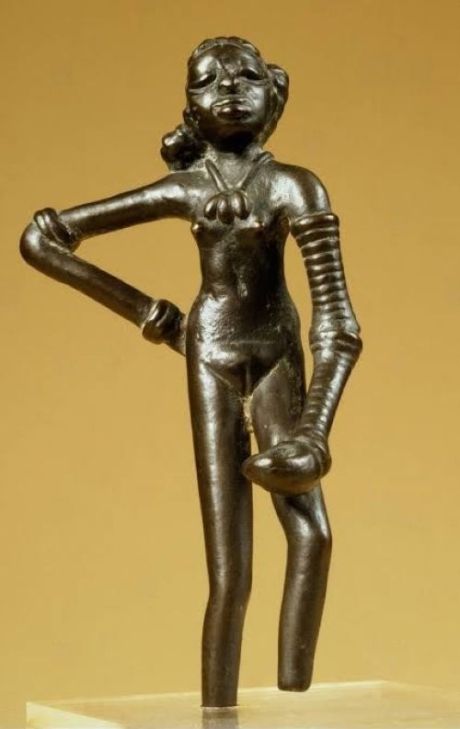
Former Lok Sabha MP R. Senthil wrote to the Director General of the National Museum that the Dancing Girl statuette holds the same pre-eminent stature in India’s civilisational consciousness and global art history as the Mona Lisa holds for France and the Louvre Museum. – Krishan Murari
When former Lok Sabha MP R Senthil planned a road trip to Indus Valley sites such as Lothal, Dholavira and Rakhigarhi, his last destination was Delhi’s National Museum to view the famous Dancing Girl of Mohenjo-daro.
But the tiny 4,500-year-old bronze statue was not on display at the Harappan gallery.
“I was shocked that the Dancing Girl was not displayed in the National Museum’s gallery. It is unbelievable that such a monumental piece has been removed. These people don’t know how to respect history,” Senthil, Secretary at Thagadur Adhiyaman Varalattru Sangam, told ThePrint. He wrote a letter to Union Culture Minister Gajendra Shekhawat, the culture secretary, and the Director General of the National Museum, asking for the justification behind withdrawing the Dancing Girl from display.
The letter is titled, Unwarranted withdrawal of the iconic Harappan Dancing Girl figurine from the Indus Valley Gallery—Demand for immediate restitution. ThePrint has accessed the letter which Senthil has sent after visiting the museum on 17 October.
“To learn that the original piece has been taken down and is currently unavailable on display — neither at the National Museum nor at any designated display site—reflects poorly on institutional stewardship. Relocating a national treasure without having a functional, fortified display ready at the destination goes against all established norms of museum curation and heritage security,” reads the letter.
In the letter, Senthil demanded operational justification for the artefact’s removal from the gallery.
“Clarify the present storage/display conditions and ensure adherence to international preservation protocols. Take immediate measures to restore the original sculpture to its rightful gallery in the National Museum at the earliest,” reads the letter.
Senthil wrote that the Dancing Girl holds the same pre-eminent stature in India’s civilisational consciousness and global art history as the Mona Lisa holds for France and the Louvre Museum.
“Masterpieces of such singular historic and aesthetic importance are worldwide treated as non-circulating national treasures,” reads the letter, adding that to find that this crown jewel of Indian heritage is missing from its gallery is completely unacceptable.
More than two weeks have passed, but Senthil has not received any response from the National Museum and the ministry.
At the Harappan Gallery of the National Museum, the Dancing Girl is one of the biggest attractions for visitors. After withdrawing the artefacts in September, the museum administration pasted a small white chit that reads: “Object removed for Yuge Yugeen Bharat Museum Mock Gallery.”
“Every day, visitors coming to the museum ask officials and staff about the Dancing Girl. Many came just to see this artefact, and now for more than a month, it is not on display. People are going back disappointed,” said a senior official at the National Museum.
Several masterpieces have been removed
Several other masterpieces have also been removed from display at the National Museum.
This includes the Pashupati seal, the Lord Buddha black statue, the Kuber statue, the Dara Shikoh wedding painting, the mother goddess, and the Jallianwala Bagh Kalash.
The Pashupati seal is a 4,500-year-old artefact from the Indus Valley civilisation uncovered at Mohenjo-daro and housed at the National Museum.
The famous Kushana period Kubera statue is an ancient Indian sculpture of the Hindu god of wealth.
The famous miniature painting titled The Marriage Procession of Dara Shikoh, also housed at the National Museum, has been removed.
The official said that all the artefacts have been removed for the proposed Yuge Yugeen Bharat Museum prototype exhibition, or the ‘mock gallery’ as the officials call it informally.
The prototype is in the making at the National Museum, where three galleries are under construction—two on the ground floor and one on the top floor.
However, what is really worrying for museum lovers is that there is no clarity on when the mock gallery will open and whether it will be accessible to the public. This means the Dancing Girl will be out of public view for much longer.
“Most probably this will not be open to the public and will be only for the officials,” said a source at the National Museum. – The Print, 4 November 2026
› Krishan Murari is a Principal Correspondent with ThePrint, and covers archaeology, political economy, cultural politics and social justice issues.
Filed under: india | Tagged: dancing girl statuette, hindu culture, indus valley civilisation, national museum of india, r. senthil |









Dancing Girl is back at National Museum, but not in her original spot – Krishnan Murari – The Print – New Delhi – 12 Nov 2026
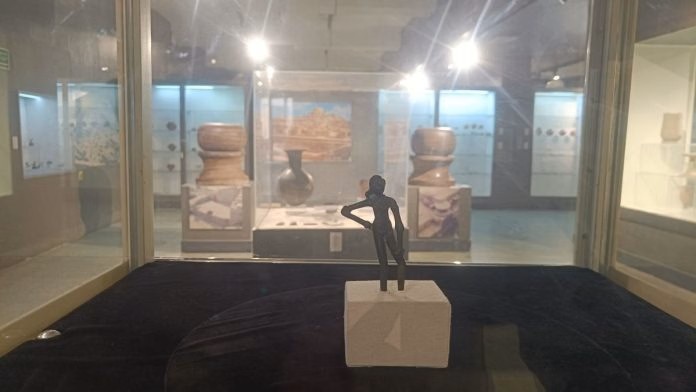
The Dancing Girl is back at the National Museum. But the 4,500-year-old bronze figurine, one of the most recognisable treasures of the Indus Valley Civilisation, has not quite returned to where it once stood.
A week after ThePrint reported that the 10-cm-tall figurine had been removed from public display, the National Museum reinstalled it in the Harappan Gallery on Wednesday. However, instead of restoring it to its original position, the museum placed it barely a metre away from its earlier spot.
And even that return appeared somewhat hurried.
On Thursday morning, the figurine stood inside its showcase without any dedicated lighting. It was only later that the museum authorities arranged focus lighting to make the diminutive bronze sculpture more visible to visitors.
The manner of its reinstatement has also raised questions among those familiar with the museum’s display arrangements.
“The reinstallation has been done in a hurry. The question is why the Dancing Girl has been placed at a new location. Such a masterpiece is now being displayed so poorly,” a source at the National Museum told ThePrint.
An office order issued by Additional Director General Meenakshi Jolly on 11 November directed the shifting of the Indus Valley bronze figurine back to its original display gallery. ThePrint has accessed a copy of the order, which states that the relocation was approved by the National Museum’s Director General.
The figurine had been moved in September to the Jewellery Gallery to make way for the mock gallery of the proposed Yuge Yugeen Bharat National Museum.
For the relocation, the museum constituted a five-member committee headed by Jolly, comprising senior museum officials. The committee was tasked with overseeing the physical handling, transit and reinstallation of antiquity.
The Dancing Girl’s removal had triggered questions over the shifting of important artefacts from the National Museum’s galleries. Former Lok Sabha MP R. Senthil had also written to Union Culture Minister Gajendra Singh Shekhawat, demanding that the figurine be restored to public display.
However, the Dancing Girl remains the only one among several prominent artefacts removed from the museum’s display to have been reinstated so far.
These include the Pashupati Seal, the black stone statue of Lord Buddha, the Kuber statue, the Dara Shikoh wedding painting, the Mother Goddess figurine and the Jallianwala Bagh Kalash.
LikeLike