










 Why is it that the dietary choices of Muslims (or halal) are perceived as personal choices while those of certain sections of Hindus (pure veg) viewed through the lens of discrimination? – Amana Begam
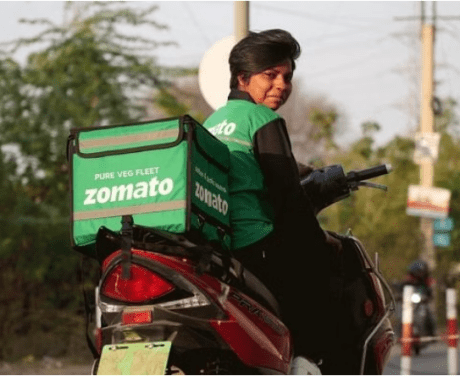
In a world full of opportunities, businesses are often at the forefront of innovation. Zomato CEO Deepinder Goyal’s recent move to tap into India’s substantial vegetarian market, comprising 39 per cent of the nation’s population, epitomises this ethos. However, what started as a strategic business decision swiftly turned into a controversy. Zomato’s introduction of a new feature exclusively listing vegetarian restaurants, coupled with a “Pure Veg” fleet to manage orders, stirred a heated debate online.
What he presented as a solution to accommodate dietary preferences was quickly labelled as casteism. The Indian Express carried an article with the headline Zomato’s ‘pure veg food’ scheme is pure casteism. Here’s why many people don’t get that. This reaction underscored the complexities surrounding the intersection of food choices and social dynamics in India. The notion of purity and pollution inherent in traditional Hindu dietary beliefs is perhaps what leads critics to compare the usage of ‘pure veg’ with casteism.
Vegetarian food is associated with purity and virtue—sattvic—while meat consumption is regarded as tamsic—impure and indulgent. Moreover, there exists a pervasive but inaccurate stereotype associating meat-eating with “lower” castes and Muslims. Consequently, the concept of “pure veg” is seen as a construct rooted in discrimination, thereby rendering it casteist.
As a Muslim growing up in India, I have never encountered similar criticism directed towards Muslim dietary choices from the elite and intellectual class of the country. While a section of the Hindu Right has criticised halal practices with some labelling it as cruel, there is no pervasive argument that views halal as discriminatory against meat-eating non-Muslims.
This contrast prompts a thought-provoking question: Why is it that the dietary choices of Muslims (or halal) are perceived as personal choices while those of certain sections of Hindus (pure veg) viewed through the lens of discrimination?
A clear double standard
The critique posits that vegetarianism in India is driven by discrimination rather than ethical considerations. It suggests that individuals may opt for a vegetarian diet not solely out of ethical concerns but also to avoid mixing their food with what they perceive as pollutants. However, a similar argument can be observed within the Muslim community, where individuals abstain from certain foods, such as bacon, or refrain from using utensils that have come into contact with non-permissible foods. I find it striking that Muslim dietary preferences often receive praise and recognition as expressions of personal freedom, rightly celebrated for their choices. However, there seems to be a noticeable absence of similar reactions directed towards those who practice vegetarianism.
This inconsistency raises important questions about societal perceptions and biases surrounding food practices. The double standard underscores deeper bias and prompts reflection on the failure of the Indian intellectual class.
It is indeed surprising to observe the contrasting attitudes towards vegetarianism in different parts of the world. In the Western world, vegetarianism has been widely applauded and embraced. This shift towards plant-based diets has been lauded for its numerous benefits, including nutritional, ethical, and more recently, environmental considerations. Initiatives promoting vegetarianism or advocating for reduced meat consumption are often celebrated by intellectuals and society at large as ethical steps towards a healthier and more sustainable lifestyle. However, it is striking that in India, where vegetarianism has deep cultural roots and historical significance, similar initiatives often face criticism. It doesn’t garner the same level of support and recognition for its ethical and environmental contributions as seen in the West.
Another criticism arose regarding the different coloured uniforms for the vegetarian fleet. It raised concerns about potential discrimination at the individual level. However, it is not the responsibility of a business to address biases held by individuals in society. Rather, the most effective and lasting solution lies in working towards societal change to eradicate such mindsets. In response to this concern, Zomato’s CEO announced the removal of on-ground segregation of the vegetarian fleet. Instead, all riders, whether part of the regular fleet or the vegetarian fleet, will wear the colour red. This decision underscores Zomato’s commitment to serving the needs of all its consumers while actively avoiding the promotion of segregation and discrimination. Such actions are commendable and demonstrate a dedication to fostering inclusivity and equality within their business practices.
As a Muslim who has the freedom to choose her food, with the exception of beef for sentimental reasons, I find it utterly nonsensical that the needs of vegetarian individuals shouldn’t be met. While everyone must be treated with equal standards, it’s also important to recognise that choosing a vegetarian diet ultimately benefits the environment. Just because vegetarianism has roots in religious beliefs, it doesn’t diminish the validity of being vegetarian. – The Print, 22 march 2024
› Amana Begam Ansari is a columnist and TV news panelist. She runs a weekly YouTube show called “India This Week by Amana and Khalid”.
Filed under: india | Tagged: casteism, food delivery, hindu vegetarian diet, vegetarians, zomato | 1 Comment »