










What if consciousness is actually a fundamental building block of the universe itself, similar to gravity or mass, rather than something the brain creates? – Danielle Zickl
Picture this: You’re watching a sunset on the beach during the summer. As the sun sinks down into the ocean, you watch the sky transform into a canvas of warm reds, deep oranges, and pastel violets. You’re warm and happy as memories of childhood vacations come flooding back to you.
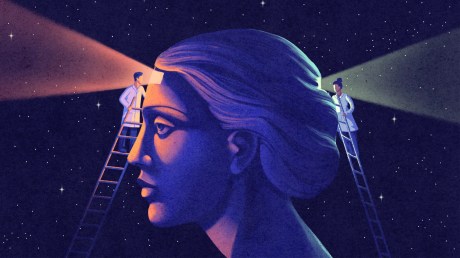
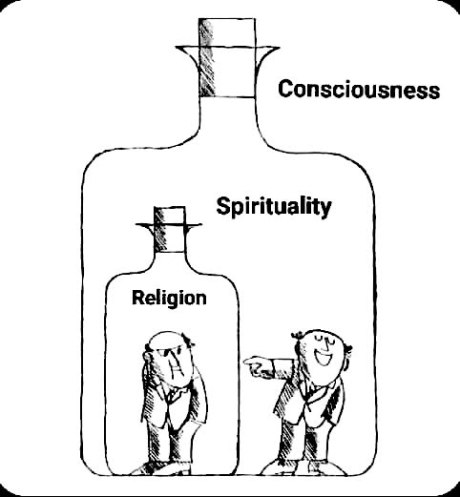
Feeling what it’s actually like to be alive in that moment, watching the sunset, is the essence of consciousness—otherwise known as the state of being awake, aware of your surroundings, and able to process experiences. One explanation for consciousness likens your brain to a computer, and consciousness is the software running on it. Neurons fire, signals zip across synapses, and voilà, you experience the world. But what if consciousness is actually a fundamental building block of the universe itself, similar to gravity or mass, rather than something the brain creates?
That’s the crux of a recent presentation from neuroscientist Christof Koch, PhD, a meritorious investigator at the Allen Institute, a multidisciplinary research organization based in Seattle—and the theory could finally answer some of the cosmos’ greatest mysteries.
“The question is whether—and to what extent—the entire physical world is a manifestation of something mental,” Koch says in an interview.
He explains that everything we experience in the external world—from seeing the sun set over the horizon or feeling—is mediated by our conscious experience. To Koch, this implies that only conscious experience truly exists. Everything else, like the material world, is secondary, he says.
Koch explains how previous consciousness theories—like physicalism—fail to explain things like why people have love for their children, why people find Beethoven beautiful, and why we like the sunshine.
Physicalism states every thought, emotion, and experience you have is due to underlying physical and neurobiological processes. But it doesn’t account for the subjective aspect of them. For instance, physicalism explains how your brain registers a sunset, but it doesn’t explain how you actually feel when you see the beautiful mix of colors in the sky.
For Nicco Reggente, PhD—research director of the Institute for Advanced Consciousness Studies, a research lab based in Santa Monica, California—“consciousness” is the capacity for experience. Like Koch, Reggente also believes consciousness is a basic component of reality, rather than something produced solely by the brain.
He compares our working minds to a flying kite, where the kite is the brain and the wind is consciousness as a fundamental part of reality. “The kite has to be built from the right materials in the right configuration with the right tether, but its flight depends entirely on the wind,” Reggente says.
A radio makes another good analogy, Reggente explains.
“[The radio] doesn’t produce the broadcast, it receives and transduces a signal that’s already present,” he says. “But unlike a radio, the brain isn’t merely reproducing that signal with high fidelity—it’s interacting with it. And that interaction is what gives rise to our particular subjective experience.”
So, if consciousness is indeed a fundamental part of the universe, what does this mean for us as people? For starters, it could answer a host of questions we’ve otherwise viewed as impossible, according to Reggente.
He believes that the “hard problem of consciousness”—or how subjective experience could arise from physical matter—is the obvious case.
“If consciousness is fundamental, the question dissolves: You no more need to explain how the mind emerges from matter than a physicist needs to explain how spacetime emerges from something more basic,” Reggente says. “With this view, the ‘hard problem’ is not a problem at all.”
The same logic applies to cosmological puzzles—or other all-encompassing questions that seem impossible to answer—like, “What came before the Big Bang?” or “What is the universe expanding into?” according to Reggente.
“They feel unanswerable because they’re category errors, not because the answers are hidden,” he says. “Instead of asking how matter produces mind, we ask how mind structures itself into the appearance of matter. Many of our hardest problems may turn out to be artifacts of starting from the wrong place.”
That same logic might apply to problems on a much more human level, too. Consciousness is already a consideration in medicine—but if it’s a fundamental part of reality, might that change how medical professionals treat patients, like those in comas or who have been clinically pronounced dead but were successfully resuscitated?
Roughly 10 percent of patients who survive an in-hospital cardiac arrest report having a near-death experience (NDE), in which they temporarily died, according to Koch. Regardless of any metaphysical explanations, those who experience an NDE come back permanently transformed for the better.
Indeed, despite experiencing a massive physical trauma like a heart attack, the vast majority of NDEs are overwhelmingly positive. Patients frequently report that they “encountered the absolute,” Koch says—which, according to his theory, might be some sort of fundamental consciousness.
But Koch says doctors are generally not taught about this in medical school, and as such, will often dismiss these patient experiences. On the other hand, Reggente argues the view of consciousness as fundamental does not substantially alter clinical treatment. The kite can be broken, the radio can be damaged, but the brain remains a necessary receiver for that individual’s consciousness, Reggente says.
Should researchers ever prove Koch and Reggente correct, it would not only decode the mysteries of our minds, but also of our universe. So next time you admire a beautiful sunset lowering toward the horizon, know that your consciousness may be the ultimate stage hand pulling the strings. – Yahoo News, 23 May 2026
› Danielle Zickl is freelance journalist focusing on healthcare in Ithica, NY.
Filed under: india, USA, world | Tagged: existence, neuroscience, self enquiry, self-concious, universal conciousness | Comments Off on Consciousness is the only thing that truly exists, scientist says – Danielle Zickl