







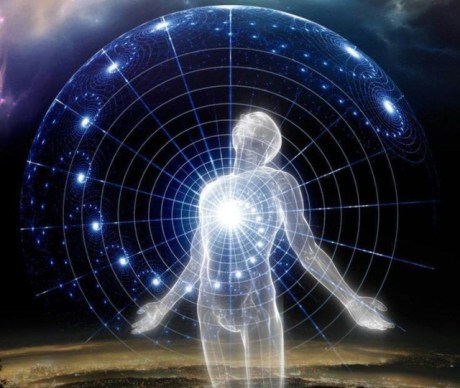
 The brain is merely one of the many possible channels giving expression to a very limited range of consciousness; it cannot be, in this perspective, a generator of consciousness. – Prof Michel Danino
It is only if the cosmos is indeed a symbolic place where all has meaning (“The Universal in Indian Culture”) that Swami Vivekananda’s profound thought becomes understandable: “One atom in this universe cannot move without dragging the whole world along with it. … Though an atom is invisible, unthinkable, yet in it are the whole power and potency of the universe.” Or Sri Aurobindo: “The stone lying inert upon the sands which is kicked away in an idle moment, has been producing its effect upon the hemispheres.” These are not some anticipated laws of modern physics, but statements of the interconnectedness of all things, bridging microcosm and macrocosm.
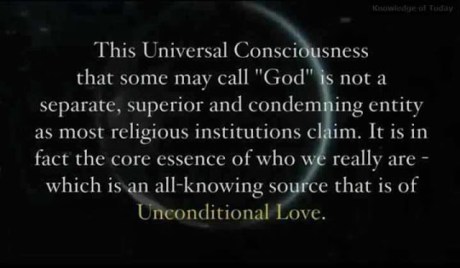
This should sound reassuring: we are not mere insignificant specks of dust in the universe, after all; we are potentially as vast as it is, relate to it, and can comprehend it. But what is the mechanism that accounts for this mysterious connection? In Indic thought, it is surprisingly simple, and embodies the third master idea we trace in our journey: “All creatures, those that move and those that do not move, are impelled by Consciousness,” as the Aitariya Upanishad puts it. In more current language, the distinction between animate or inanimate matter vanishes; both are impelled by consciousness, from the atom to that stone on the beach, from our planet to the swirling galaxies.
Vedic / Hindu, Jain and Buddhist philosophies have had endless discussions on the origin, nature and functioning of consciousness, for which they have used many terms depending on its particular aspect: chetana, chaitanya, chit, samvid, brahman and many more in the Vedic schools (and Jainism for the first two at least), vijñana in Buddhism: it is all that is, it is existence itself, it is what sustains the cosmos and what makes it—and us—tick. It is, in any case, vastly greater and more ancient than the human mind, and much more so than our brain. In fact, the brain is merely one of the many possible channels giving expression to a very limited range of consciousness; it cannot be, in this perspective, a generator of consciousness.
How far does this neat principle take us? As far as we wish, since consciousness is what makes knowledge possible: only the like can know the like. Knowledge by identity is indeed a central method as well as outcome of any advanced yoga or meditation technique, and would be impossible if both knower and known did not share the same substance of consciousness. As a result, if one knows the supreme consciousness, one knows all, as several Upanishads put it (yasmin vijñate sarvamevam vijñatam bhavati).
But there are more mundane consequences. If a repugnance to killing other creatures gained currency early on in Indic belief systems, it is because of the realisation that animals are potentially as conscious or sentient as we are. From Ashoka’s turn to vegetarianism or injunctions of medical treatment of animals to Kautilya’s designated forest areas free from hunting, or the Jains’ extreme care not to harm even the smallest insect, we find in literature and history remarkably advanced ecological concepts and practices.
Are these universal values? In Genesis (9:3), the Judaic god decrees that all creatures are to be at man’s service: “Every creature that lives and moves will be food for you; as I gave the green plants, I have given you everything.” In effect, orthodox Christianity regarded animals and plants as soulless, as testified by the writings of Christian saints such as Augustine or Thomas Aquinas; only later did a few popes appear to depart from this stand. Blacks and Native Americans were seen (again with a few notable exceptions) as being closer to animals than to Whites, a convenient way to legitimise racism and the slave trade. Whatever abuses casteism may have produced, attempts to equate them with racism are misguided, as the concept of race, and therefore superior and inferior races, has been alien to Indian belief and social systems (inequality and discrimination stemmed from other considerations). The respected Indian anthropologist André Béteille once wrote, “The idea of race dies hard in the popular imagination. That is understandable. What is neither understandable nor excusable is the attempt by the United Nations to revive and expand the idea of race, ostensibly to combat the many forms of social and political discrimination prevalent in the world. … By treating caste discrimination as a form of racial discrimination and, by implication, caste as a form of race, the U.N. is turning its back on established scientific opinion.”
In other words, allowing Indian society to be read through the prism of concepts rooted either in the Bible or in racist nineteenth-century European anthropology is a dangerous exercise. Despite everything, saints and spiritual figures from the lowest castes have been accepted just as others, as a glance at India’s immense Bhakti literature (among other sources) will show. At the cultural and spiritual levels, India has more or less lived up to her high principles (we will revisit this point in a later article). One wishes this were true of the social level, but that is another story.
At the religious level, the pantheistic element of Indic religion is rooted in the same concept of interconnectedness: if the whole cosmos is imbued with consciousness, all of it is sacred, potentially at least. Hence a wide array of modes of worship that were dismissed as “pagan,” “heathen,” if not “barbarian,” by a large section of colonial Indology: the worship of planets and stars, of cardinal directions, of Mount Meru as the “axis” of the universe (reflected in Indian classical architecture), of natural phenomena, of plants and animals and all other components of nature—the last of which will be the next step in our exploration. – The New Indian Express, 6 August 2018
» Prof Michel Danino is a French-born Indian author, scholar of ancient India, and visiting professor at IIT Gandhinagar.

Filed under: india | Tagged: consciousness, hindu philosophy, indic, sanatana dharma, universal conciousness | 1 Comment »