














 “Hinduness as a cultural identity that this ancient nation has come to acquire is what Hindu nationalists have always propagated. In this proposition, Hindu doesn’t represent any religion or mode of worship. Instead, it is a set of values that have come to be known as the Sanatana Dharma. Savarkar himself had given a clear definition to the word “Hindu” in his book: Aasindhu sindhu paryantaa Yasya Bharata Bhoomika / Pitrubhu Punyabhuchaiva Tavai Hinduriti Smritah.” – Ram Madhav
 Referring to V.D. Savarkar’s Hindutva as the basic work of Hindu nationalists, Ashutosh Varshney highlights what he surmises as the “three ideas” that constitute the “thematic core” of their ideology (‘Modi the Moderate’, IE, March 27). First, Hindus are the primary, or exclusive, owners of the Indian nation. India is a Hindu rashtra (nation). Second, two minorities — Christians and especially Muslims — have a profound, ambivalent relationship with India. Third, caste divisions within Hinduism and caste-based politics need to be minimised, for they undermine Hindu unity. The lower castes should follow the Brahminical model of Hinduism.
Hinduness as a cultural identity that this ancient nation has come to acquire is what Hindu nationalists have always propagated. In this proposition, Hindu doesn’t represent any religion or mode of worship. Instead, it is a set of values that have come to be known as the Sanatana Dharma. Savarkar himself had given a clear definition to the word “Hindu” in his book: Aasindhu sindhu paryantaa Yasya Bharata Bhoomika / Pitrubhu Punyabhuchaiva Tavai Hinduriti Smritah. Translated, “Those who regard this land of Bharat spread between the river Sindhu (in the north) and the ocean Sindhu (Sindhu Sagar / Indian Ocean in the south) as their Pitrubhumi (fatherland) and Punyabhumi (holy land) are called Hindus”.
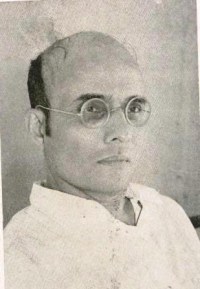 It is more about an emotional bonding with the country in which they were born. But Savarkar never differentiated Hindus and Muslims as superior and inferior. In the manifesto of “Hindu Rashtra”, which Varshney had referred to as the basic text, Savarkar states: “Religious minorities will have all the right to practise their religion in a Hindu Rashtra and the state will ensure that; but the Hindu Rashra won’t allow creation of a nation within a nation in the name of religious minoritysm.” What’s wrong with it? This is exactly the situation in the country where Varshney has grown up and prospered, the United States.
In fact, M.S. Golwalkar, “Guruji”, told an Iranian scholar by the name of Saifuddin Jeelani in 1971: “According to our ways of religious belief and philosophy, a Muslim is as good as a Hindu. It is not the Hindu alone who will reach the ultimate Godhead. Everyone has the right to follow his path according to his own persuasion. That is our attitude.” Where is the question of primacy or exclusivity?
Varshney insinuates that Savarkar had said of Christians and Muslims that “India is not their punyabhumi (holy land)”. “As a result their love for India is ‘divided’. They need to demonstrate their fidelity to India, or must be made into Indians; Indian loyalties cannot be assumed to exist,” is how Varshney interprets Savarkar’s view.
It is important to note that Savarkar had always maintained that he didn’t differentiate between Hindus and Muslims. When a journalist asked him in Lahore in 1938, when he was Hindu Mahasabha president, as to why he and M.A. Jinnah were bent upon dividing the nation along communal lines, his reply was sharp: “Your question is misplaced. While I am for equal treatment for all, Jinnah is for more and more concessions for Muslims.” This emphatically exposes the hollowness of the charges that Savarkar wanted Muslims as second-class citizens in a Hindu Rashtra.
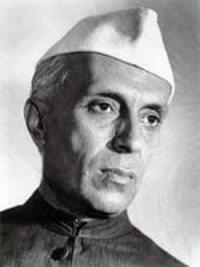 Here, it is also important to understand the prevailing situation in India at that time. Large sections of the Muslim population were influenced by Jinnah’s “Two Nation” theory, causing serious consternation in the minds of many a leader. Forget what leaders like Sardar Patel had said, even a secular-minded leader like Jawaharlal Nehru had raised his voice of concern. Nehru asked the students of Aligarh Muslim University in 1948: “I have said that I am proud of our inheritance and our ancestors who gave an intellectual and cultural pre-eminence to India. How do you feel about this past? Do you feel that you are also sharers in it and inheritors of it and, therefore, proud of something that belongs to you as much as to me? Or do you feel alien to it and pass it by without understanding it or feeling that strange thrill which comes from the realisation that we are the trustees and inheritors of this vast treasure? I ask you these questions, because in recent years many forces have been at play diverting people’s minds into wrong channels and trying to pervert the course of history. You are Muslims and I am a Hindu. We may adhere to different religious faiths or even to none; but that does not take away from us that cultural inheritance that is yours as well as mine”.
Let me quote another senior leader on this issue: “Islam is a system of social self-government and is incompatible with local self-government, because the allegiance of a Muslim does not rest on his domicile in the country which is his but on the faith to which he belongs. To the Muslim, wherever there is the rule of Islam, there is his own country. In other words, Islam can never allow a true Muslim to adopt India as his motherland and regard a Hindu as his kith and kin.” This was not Savarkar or Golwalkar, it was B.R. Ambedkar in his book Pakistan or The Partition of India.
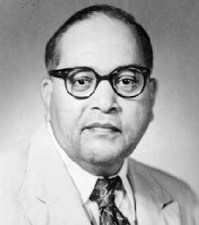 However, even these statements of Nehru and Ambedkar shouldn’t be taken out of context to suggest they were anti-Muslim. The primary concern of all national leaders at the time was to somehow ensure national unity by understanding and exploring socio-religious dynamics.
Savarkar, and for that matter Golwalkar, believed in and worked for Hindu-Muslim unity. Their approach was different from that of others. But their commitment to it was above board.
In the early 1940s, Savarkar openly appreciated it when a group of Muslims in Lucknow got together and passed a resolution, saying “any Muslim slaughtering a cow will be considered an enemy of Hindu-Muslim unity”. Savarkar immediately issued a press statement, saying” if such gestures keep on coming from Muslims, Hindu-Muslim unity is possible”.
That brings us to the third point about caste and Hinduism. Hindutva’s emphasis on minimising caste distinctions and creating Hindu unity is interpreted by Varshney as forcing lower castes to follow the “Brahminical model of Hinduism”. Varshney doesn’t explain what he means by “Brahminical model of Hinduism”.
All his life, Savarkar fought against caste-based inequalities and untouchability. He was the first to launch the temple entry campaign for “Harijans”. He was unequivocal in his condemnation of the distorted caste system. “As the Sanatana Dharma did not die due to this tectonic change, so too it will not die if the present-day distortion that is caste division is destroyed,” he exhorted.
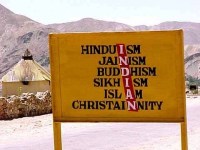 In fact, Varshney’s Hindu nationalist is at the core not an exclusivist, but a universalist and humanist. Rejecting notions of “high and low” on the basis of caste, Savarkar wrote: “No one should ever think that a certain Hindu caste is high or that another is low. The notion of high and low will be determined by overt merit of individuals. Every Hindu child has but one caste at birth — Hindu. Other than that, consider no other sub-caste. Janmanaa jaayate Hinduhu (Everyone is a Hindu by birth)!”
In truth, every man has but one caste at birth — human. The Hindu nationalist whom Varshney called “Brahminical” declared once that “I felt like rebelling against the caste system. Just as I felt I should rebel against the foreign rule over Hindusthan, I also felt that I should rebel against the caste system and untouchability in Hindusthan.”
It is important to look at the works of Savarkar and others as neutral umpires. Inherent ideological biases result in lopsided analyses like the one produced by Ashutosh Varshney. – The Indian Express, 29 March 2014
» Ram Madhav is in charge of media and public relations at the Rashtriya Swayamsevak Sangh.
Filed under: india | Tagged: ashutosh varshney, hindu, hindu nationalism, hinduness, hindutva, history, india, indian history, multiculturalism, narendra modi, philosophy, politics, RSS, sanatana dharma, v.d. savarkar | Leave a comment »











