









Historian William Dalrymple described ancient India as “the cultural superpower of Asia”. He explained that over half the world today lives in countries that were once shaped by Indian religions or philosophies such as Buddhism and Hinduism. – Nakul Ahuja
India, the birthplace of the game of chess, the concept of zero, and the idea that the Earth revolves around the Sun, has long been the source of some of humanity’s most revolutionary ideas.
Yet, as historian William Dalrymple argues in his new book The Golden Road: How Ancient India Transformed the World, the country’s pivotal role in shaping global civilisation has been overlooked for centuries. Far from being a passive corner of the ancient world, Dalrymple paints India as its beating heart, a crossroads of trade, intellect, and spirituality whose influence stretched from Rome to China.
Speaking to Fareed Zakaria on CNN’s GPS, Dalrymple said his book seeks to recover the “enormous Indian influence throughout Asia,” describing ancient India as “the cultural superpower of Asia”. He explained that over half the world today lives in countries that were once shaped by Indian religions or philosophies such as Buddhism and Hinduism.
“Buddhism not only conquered Southeast Asia—Thailand, Laos, Cambodia—but also China itself”, he said, adding that India spread its ideas “through culture and trade, not conquest”.
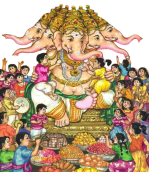
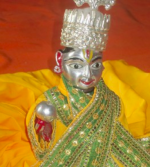
Calling it an “empire of the spirit”, Dalrymple pointed to how Hindu and Buddhist imagery still endures far beyond India’s borders, from Indonesia’s national airline, Garuda (named after Vishnu’s mount), to Cambodia’s grand Angkor Wat temple and the Buddhist monument of Borobudur in Java.
He noted that between 200 BCE and 1200 AD, Sanskrit played the same role across Asia that Latin did in mediaeval Europe. “If you were a scholar or ambassador in 10th-century Java or 7th-century Afghanistan, you would be speaking Sanskrit,” Dalrymple said.
The great Indian epics, the Mahabharata and the Ramayana, were retold and revered across continents, their stories appearing on temple walls in Thailand and Sumatra.
Behind these cultural exports, Dalrymple said, lay a vast body of Indian science and mathematics long forgotten in the West. “We call our numbers Arabic numbers because that’s where the West got them from. But the Arabs got them from the Indians, they still call them Hindu numbers,” he said.
He credited mathematician Aryabhata with introducing the concept of zero and place value, innovations that made modern mathematics and computing possible. “Thanks to him, we have algebra, algorithms, and binary,” he added, noting that even the words “algebra” and “algorithm” trace back to translations of Indian texts.
Reflecting on India’s continuity from its ancient achievements to its modern resurgence, Dalrymple said, “Islamic scholars in 12th-century Spain described Indians as masters of mathematics, and if you go to Silicon Valley today, people will tell you the same story.”
He added that the pace of India’s growth means it is once again emerging as a global power: “It will overtake both Japan and Germany in the next five years. By the end of the century, it will be among the top three economies in the world.”
Dalrymple had earlier spoken about India’s historical centrality at the India Today Conclave in March this year. Calling the ancient Nalanda University in Bihar the “Harvard, Oxbridge, NASA of its day”, he highlighted how it was once the greatest centre of learning in the world, attracting scholars like the Chinese monk Xuanzang (Hiuen Tsang).
“He knew that Nalanda was the greatest centre of learning in the world,” Dalrymple said, adding that the university symbolised India’s exchange of knowledge in mathematics, astronomy, and philosophy with the rest of Asia.
He also challenged the conventional narrative that places China at the heart of ancient trade networks, asserting instead that India was the true hub of global commerce. “It’s time that we recovered this lost centrality of India,” Dalrymple said, explaining that the Romans traded extensively with India via maritime routes while having no direct contact with China.
Citing archaeological evidence, he said that “most of the Roman coins in the world have been found in India and Sri Lanka”, underscoring the scale of India’s trade with the Roman Empire. “Every year, fleets of hundreds of vessels were leaving the Egyptian coast, going down the Red Sea and arriving in India,” he noted. – India Today, 14 October 2025

Filed under: india, rome, south-east asia, world | Tagged: ancient trade routes, aryabhata, buddhism, hindu civilisation, silk road | Comments Off on William Dalrymple: The world has forgotten how ancient India shaped it – Nakul Ahuja