








From anti-India graffiti at a Hindu temple in Southern California to vandalism at temples in Greenwood, Indiana, and incidents involving a Hindu temple near Spanish Fork, Utah, Hindu communities have faced disturbing acts of desecration and intimidation. In North Carolina, a Hindu temple in Cary, near Raleigh, also reported vandalism of a religious statue in January 2026. – Prof. Maneesh Pandeya
A week after an alleged mass-shooting plot targeting a Hindu temple in Aurora, Illinois, the incident remains a sobering reminder that religious freedom cannot be taken for granted. As Indian-Americans prepared for the Hindu festive season, the alleged plot—with investigators reportedly uncovering weapons, ammunition and white-supremacist material—sent ripples of fear through a community already confronting questions of identity and belonging amid America’s charged immigration debate.
Thanks to the swift intervention of local police and investigative agencies, a larger shooting plot aimed at Indian-American devotees was foiled in time. But “the possibilities” haunt the diaspora across America, many of whom expressed strong reactions. Reacting strongly, one Chicago resident asked: “Do we need to carry guns for self-protection?”
Perhaps not, say most of those across America, from the East Coast to the Midwest, whom this writer reached out to. Instead, they counsel restraint, continued integration into mainstream American society and interfaith solidarity. Still, on a realistic note, the Aurora shooting incident has reinforced one concern: there is an undercurrent of a nationwide surge in anti-Indian or anti-Hindu hate.
It cannot be viewed in isolation from temple vandalism at regular intervals, attacks on Indian-Americans and rhetoric that casts South Asians as outsiders. Recent controversies, including the targeting of South Asian students in Texas by a Republican political candidate, underscore the risks of turning immigration debates into racial scapegoating.
Speaking to this author, US Congressman Raja Krishnamoorthi, who was present at the temple at the time of the incident, said: “On the first day of Navaratri, my family and I were worshipping at our Hindu temple in Aurora when a white supremacist armed with an AR-15-style rifle and hundreds of rounds of ammunition attempted a mass shooting targeting Indian Americans, but his gun jammed.
That malfunction saved countless lives, including those of my own family, and I am especially grateful to the suspect’s co-worker who alerted police after learning he planned to return and try again, allowing officers to arrest him before he had the chance. Children are not born to hate; they are taught to hate, and we must hold Big Tech accountable for profiting from the online hatred that fuels radicalisation and close the loopholes that shield these companies from responsibility.”
Congressman Krishnamoorthi also sought an FBI probe into this ‘potential hate attack’ and urged the agency to prioritise combating domestic violent extremism. However, he was quick to add, “Above all, public officials of all parties must condemn hatred wherever it appears, and Americans of every race, religion, and background must stand together and speak with one voice against hate targeting any community.”
The concerns of Congressman Krishnamoorthi predated the Aurora incident. FBI data recorded 32 anti-Hindu hate-crime offences across the United States in 2025, reflecting a wider climate of concern over religiously motivated hostility.
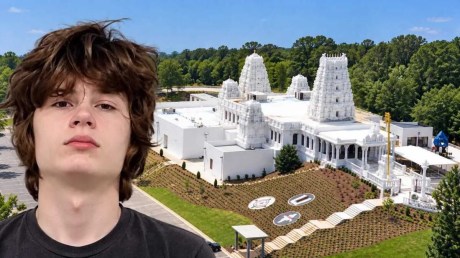
From anti-India graffiti at a Hindu temple in Southern California to vandalism at temples in Greenwood, Indiana, and incidents involving a Hindu temple near Spanish Fork, Utah, Hindu communities have faced disturbing acts of desecration and intimidation. In North Carolina, a Hindu temple in Cary, near Raleigh, also reported vandalism of a religious statue in January 2026.
Texas, meanwhile, has seen controversies over racial stereotyping and anti-India rhetoric. Although these incidents differ in nature and motive, their cumulative effect has heightened anxieties among Hindu Americans and the wider Indian diaspora about religious safety, public hostility and their place in American society.
Prominent community leaders from the Indian diaspora spoke to this writer, echoing concerns as they prepared for the long month of Hindu festival celebrations in temples. Chicago-based Rakesh Malhotra, president of the Global Indian Diaspora Foundation, said: “No one should fear for their life while praying, yet the alleged plot against a Hindu temple here in Aurora shows how real that danger has become. Solidarity has to become protection now.”
Malhotra urged Indian-American organisations to conduct joint temple security assessments, encourage reporting of threats and build interfaith ties. Indian diplomatic missions, he adds, should raise the issue with US authorities and support affected families, though responsibility for protection rests with US officials.
He particularly stressed the urgency of revisiting the House Resolution (2024) that was pushed by Representative Thanedar, “condemning anti-Hindu hatred, fund security grants for vulnerable congregations and demand effective enforcement against threats of violence.”
Texas is home to one of the largest Indian-American communities in the United States, alongside New Jersey and the New York metropolitan area. From Houston and Dallas to Austin and San Antonio, Indian-Americans contribute significantly to the state’s economy and civic life through medicine, technology, entrepreneurship, philanthropy and public service. Yet, recent developments have raised concerns about racial stereotyping and the place of Indian Americans in the state’s social and political landscape.
These include the vandalism of a statue of Lord Hanuman and the controversial social media posts by Bo French, the Republican nominee for Texas Railroad Commissioner, who targeted a photograph of South Asian students celebrating a University of Texas football victory, suggesting that Americans were being displaced by foreigners.
Against this backdrop, the Aurora shooting incident has added to the unease within a community that has made deep economic and civic contributions to the Lone Star State. Writer, columnist and Houston-based Sunanda Vashisth said: “The hate-filled rhetoric targeting Hindus of Indian origin and Indian-Americans on social media cannot be dismissed as harmless speech. Words create permission structures for violence. As someone who studies hate speech and genocide, I know how quickly de-humanising rhetoric can migrate from screens to streets. The attack on the Aurora temple that was thankfully foiled, must be understood in this larger context.”
She added: “Consider Bo French, the Republican nominee for Texas Railroad Commissioner. After the Longhorns defeated Ohio State, he posted a photograph of South Asian students celebrating in burnt orange at a University of Texas football game.
He called the scene a ‘problem’ and suggested Americans were being displaced by foreigners. The photograph told us nothing about the students’ citizenship. Their skin colour, apparently, told him everything. … When a Hanuman statue in Sugar Land, built on private property to promote unity and fraternity, is targeted with racist hostility, the pattern becomes harder to ignore.”
When this writer travelled south of Washington, D.C., two significant Indian diaspora enclaves—Virginia and North Carolina—were also grappling with stress, identity fears and racial scapegoating threatening the long-standing diversity they have enjoyed in America. Despite palpable fears in their voices as they spoke out, prominent community figures reaffirmed their belief in American diversity and democratic values, seeking a strong response from US authorities.
In Virginia, Richmond-based president of Atlas Ventures, Rumy Mohta, said: “The Asian American and Pacific Islander (AAPI) community is deeply disturbed by the attempted mass shooting targeting Hindus in Aurora, Illinois. This alleged act of hate has shaken Indian Americans and communities of all backgrounds who believe everyone deserves to worship, gather, and live without fear.”
Mohta added that this incident is a sobering reminder that anti-Asian hate, anti-Hindu prejudice, racism and white supremacy must never be ignored or normalised. “Threats against one community are threats against the safety and dignity of all communities. … Time calls for restraint, caution and standing with each other. No one should ever be targeted because of their identity, heritage, or faith. Our unity is our strength,” said Mohta.
Another large and densely populated Indian American enclave that is on alert is North Carolina. The state has a sizeable Indian American population, with an estimated 45,000 diaspora members in Cary and Morrisville, near Raleigh.
The area is home to about a dozen temples and three gurdwaras, alongside a vibrant cultural community and Indian American representation in local and state politics. However, it is the incident of statue vandalism at Sri Venkateswara Temple in January 2026, and now the Aurora temple shooting incident, that have spread a sense of unease in otherwise peaceful and diverse neighbourhoods.
For Sajjan Agarwal, chairperson of the Hindu Society of North Carolina (HSNC) Temple, the area’s largest Hindu temple, the safety of devotees is paramount. “Thankfully, no one was hurt in the Aurora temple shooting, and the swift response of law enforcement is commendable. The ongoing investigation is equally important to ensuring the safety of our devotees. We have strengthened security checks, expanded volunteer presence and deployed additional security cameras, particularly during the extended Hindu festive season. Police officers remain on site, and we continue to coordinate closely with local law enforcement during major events. We are also working with other temples, gurudwaras and religious institutions to ensure maximum security.”
Agarwal also urged mutual tolerance and a firm rejection of hate, pointing to HSNC’s broader contribution to the community. “HSNC has served the wider Research Triangle community through initiatives including five million free meals provided through a local rescue mission, vaccination camps, blood drives, donations to area schools and opening our facility as a polling site. We will continue working with our neighbours, interfaith partners and civic leaders to foster mutual respect and understanding. Hate has no place in our community. Our doors remain open to all who come to worship, celebrate and serve,” said Agarwal.
True. Hate has no place in any civilised society, and ‘Little India’ enclaves seem to hold on to that belief while remaining a core component of the larger American family. – Firstpost, 20 October 20267
› Prof. Maneesh Pandeya is a Fulbright scholar, a columnist on India-US affairs and the Indian . diaspora, and is currently based in Maryland, USA.
Filed under: USA, world | Tagged: american racism, christian bigotry, hindumisia, hinduphobia, indian-americans |