














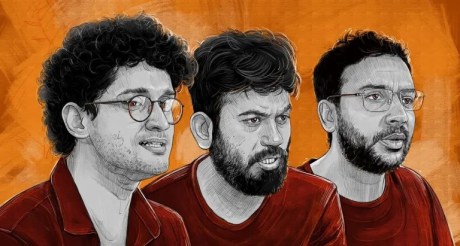
The Indian government must be alert, cautious and unforgiving in its lawful pursuit of individuals demonstrably involved in foreign-directed destabilisation, covert financing, deliberate provocation or attempts to engineer violence. India must prevent any manufactured confrontation from becoming a national crisis. – Savio Rodrigues
There is presently no verified evidence establishing that CJP organisers intend to engineer fatalities or that the mobilisation is foreign-directed. Nevertheless, India’s security establishment must investigate credible threats.
A Colour Revolution does not necessarily begin with a revolution. It can begin with a grievance, a protest, an emotionally charged narrative and a political ecosystem willing to transform public anger into a confrontation with the state. What appears initially to be an isolated democratic agitation can, under certain circumstances, become the foundation for a much larger campaign to undermine constitutional authority and destabilise an elected government.
I have spent considerable time studying geopolitical conflicts, covert influence operations and the manner in which domestic vulnerabilities can be exploited by hostile external interests. It is through this strategic lens that I examine the protests by the Cockroach Janata Party (CJP) against India’s Chief Election Commissioner, Gyanesh Kumar. My concern is not the democratic right to protest. That right is fundamental to the Indian Republic. My concern is the possibility that a protest ostensibly directed against an electoral institution could become the opening act of a wider destabilisation campaign, with Prime Minister Narendra Modi and Home Minister Amit Shah becoming its ultimate political targets.
The experiences of Bangladesh and Nepal provide important warnings about the speed with which youth mobilisation, institutional distrust and confrontation can escalate into a national political crisis. India must understand these patterns without assuming that every protest is a foreign conspiracy.
The protest behind the protest
The immediate controversy concerns allegations against the Election Commission of India, particularly over electoral-roll revisions and the independence of the electoral process. These are matters that can and should be examined through constitutional and institutional mechanisms. But a strategic analyst must look beyond the immediate demand.
When a protest against an individual constitutional authority becomes intertwined with broader demands against an elected government, its political significance changes. The issue is no longer exclusively whether Gyanesh Kumar should continue as Chief Election Commissioner. It becomes a contest over public confidence in the institutions that sustain the Republic.
In such circumstances, organised networks seeking political instability may attempt to redirect legitimate dissatisfaction towards objectives that the original protesters neither intended nor understood. This is precisely the vulnerability that hostile influence operations can exploit.
The Deep State’s invisible hand
The “Deep State” is often used to describe clandestine networks of power operating beyond public scrutiny, but the reality of covert political influence is far more consequential, representing a sophisticated instrument of geopolitical manipulation, institutional subversion and strategic destabilisation in international relations.
Intelligence agencies, state-linked intermediaries, covert financing networks and information operations have historically been employed to influence the domestic political environments of rival countries. The methods need not involve direct control of a protest movement. An external actor may find it sufficient to amplify existing grievances, spread inflammatory narratives, encourage polarisation or exploit a violent incident once it occurs.
The operational objective in such a scenario would be to widen the distance between the public and the state until ordinary political disagreement becomes a crisis of legitimacy. That is the possibility I believe India must investigate in relation to the present mobilisation.
My data, analysis and examination of emerging patterns indicate that while it would be inaccurate to suggest that everyone associated with the CJP is directed by a foreign intelligence network, certain individuals and activities raise serious questions about possible foreign influence, whether by commission, through deliberate coordination and facilitation, or by omission, through knowingly enabling agendas that serve external strategic interests. These patterns, in my assessment, warrant deeper investigation into the networks, motivations and potential external linkages shaping the movement.
The Nepal and Bangladesh warnings
The political upheavals in Bangladesh in 2024 and Nepal in 2025 deserve particular attention because they demonstrate how quickly youth-led protests can evolve into crises of political authority.
In Bangladesh, demonstrations over publicsector employment quotas expanded into a national uprising against Sheikh Hasina’s government. According to the United Nations Human Rights Office, as many as 1,400 people may have been killed between July 1 and August 15, 2024, with the majority reportedly shot by security forces.
The lesson is profound. Once fatalities occur, the political character of a protest can change dramatically. Public outrage intensifies, demands expand, and the legitimacy of those governing the country becomes the central issue.
Nepal’s experience similarly illustrates how youth frustration can combine with wider dissatisfaction to produce rapid political upheaval. Neither event proves that an identical operation is underway in India. Yet both offer valuable case studies for understanding the risks of escalation.
For an adversary seeking to destabilise India, a violent confrontation involving young demonstrators could provide an opportunity to amplify anti-government sentiment, generate international pressure and deepen domestic polarisation. That is a scenario India’s national security establishment cannot afford to ignore.
The dangerous politics of death count
There is one possibility that concerns me above all others: the exploitation of casualties for political escalation.
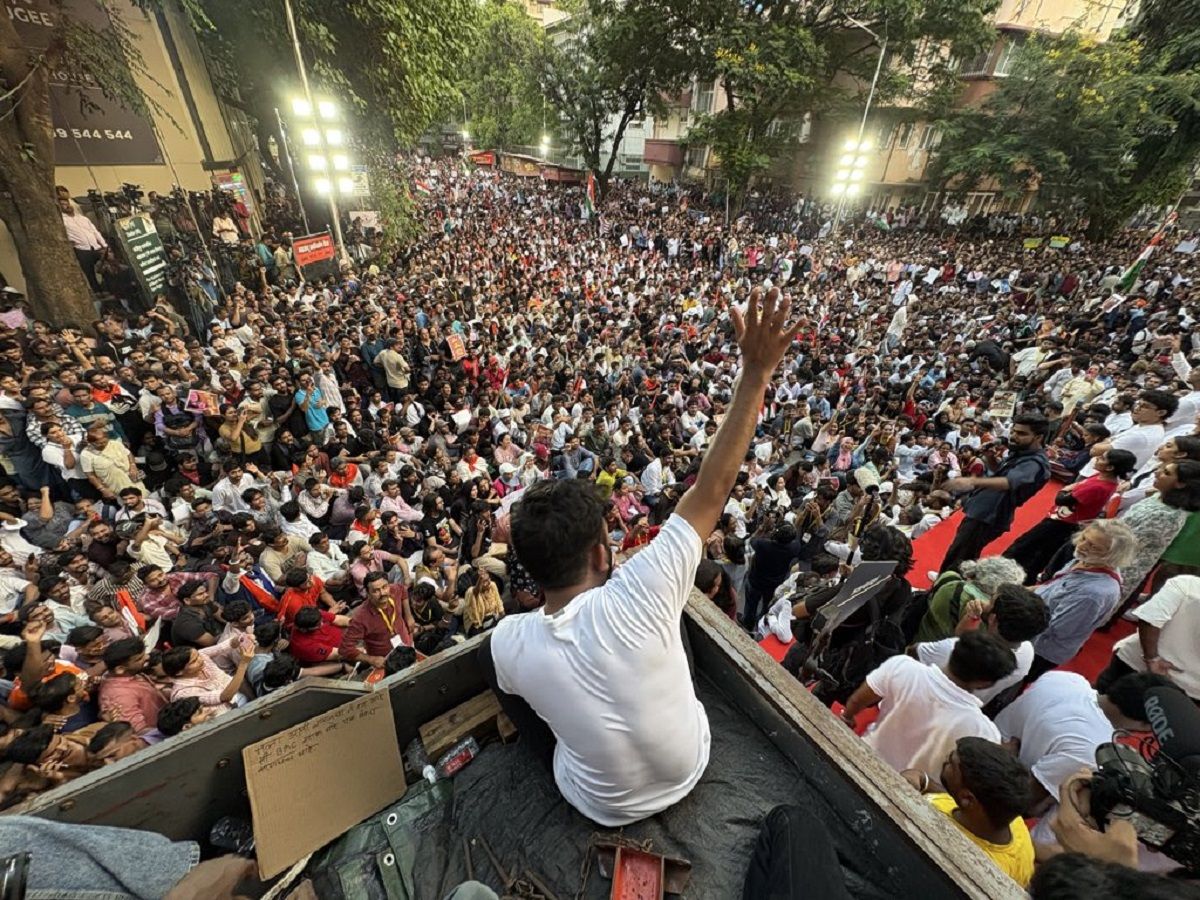
The developments in New Delhi on October 10 have reinforced my conviction that India must remain exceptionally vigilant against attempts to transform political mobilisation into a confrontation capable of destabilising constitutional order.
The reported detention of Cockroach Janta Party (CJP) founder Abhijeet Dipke, alongside Saurav Das and Ashutosh Ranka, and the preventive detention of numerous protesters have already transformed the mobilisation into a confrontation over political freedoms, constitutional authority and public order. The movement’s decision to transfer protest leadership to Ajinkya Shinde indicates its determination to continue despite restrictions.
What concerns me most is the speed with which such confrontations can acquire an entirely different character if even one innocent life is lost.
In mass protests, fatalities are first and foremost human tragedies. Yet deaths can become powerful political symbols. Images circulate instantly, allegations spread before investigations begin, and international attention can transform a domestic dispute into a national crisis.
My concern is particularly informed by Saurav Das’s statements ahead of October 10, warning of a potential civil war-like situation, suggesting protesters could be killed by alleged right-wing extremists and assigning prospective responsibility to the BJP government and Delhi Police.
Such anticipatory framing is deeply troubling. It does not establish an intention to engineer casualties, but when fatalities and political blame enter the public narrative before demonstrations begin, any subsequent violence risks being interpreted through a predetermined framework.
My examination of political destabilisation patterns makes me attentive to the intersection of political grievances, confrontational mobilisation and emotionally charged narratives. Bangladesh and Nepal demonstrate how rapidly unrest can escalate when institutional distrust, public anger and violence converge.
The strategic question is unavoidable: could a violent incident, irrespective of its perpetrator, be exploited by hostile information networks or foreign interests to transform an electoral protest into a broader confrontation with the Indian state?
There is presently no verified evidence establishing that CJP organisers intend to engineer fatalities or that the mobilisation is foreigndirected. Nevertheless, India’s security establishment must investigate credible threats and prevent any attempt to turn innocent lives into political currency.
India must remain vigilant
The October 10 mobilisation in New Delhi has evolved into a significant confrontation between the CJP and India’s security establishment. Reports of extensive police deployment, barricading, restrictions on movement and preventive detentions demonstrate the seriousness with which authorities have approached the situation.
The detention of Dipke and other organisers has also provided the movement with a fresh political narrative, potentially extending the controversy beyond electoral administration into questions of democratic freedoms and constitutional legitimacy.
My analysis of emerging patterns leads me to believe that India must examine the broader ecosystem of political mobilisation, messaging, financing and coordination surrounding such movements. Nationwide calls for participation, allegations against constitutional institutions, anticipatory warnings of violence and rapidly circulating political narratives create conditions potentially exploitable by hostile interests.
The possibility of a Colour Revolution-style destabilisation attempt deserves serious intelligence scrutiny, although it must not be presented as an established fact without credible evidence.
The Indian government must be alert, cautious and unforgiving in its lawful pursuit of individuals demonstrably involved in foreign-directed destabilisation, covert financing, deliberate provocation or attempts to engineer violence. India must prevent any manufactured confrontation from becoming a national crisis.
Every credible threat must be investigated, every innocent life protected and every unlawful attempt to undermine constitutional order confronted through the full force of the law.
India’s constitutional stability is non-negotiable. Neither political opportunism nor foreign manipulation must be permitted to turn young Indians into casualties of a manufactured crisis. – The Sunday Guardian, 11 October 2026
› Dr. Savio Rodrigues, PhD, is a strategic affairs thinker, author, journalist, and Founder Editor-in-Chief of Goa Chronicle, specialising in geopolitics, national security, public affairs, strategic communications, and peacebuilding.
Filed under: india | Tagged: cockroach janata party, colour revolution, deep state, indian democracy, student protests |











