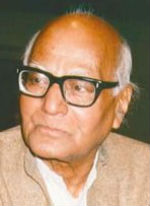













 The fervent followers of Emperor Aurangzeb are not embarrassed that for over three centuries an illegitimate mosque structure stands over a desecrated temple, welcoming the adherents of Aurangzeb’s bigoted ideology. The judges in this case should soon begin trials. It should be declared that this is a trial over a place of worship that was robbed and desecrated, not a dispute between two equals. The law of adverse possession cannot apply here. – Prafull Goradia
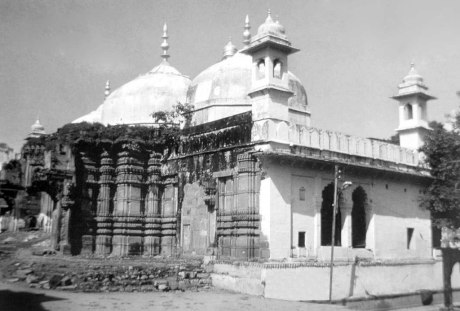
The legal hearings, whether in the court at Varanasi or the Supreme Court, over the past many months regarding the worship at Gyan Vapi, carry ethical interest. The statures of the lawyers of both sides in these courts appear to be comparable. It has occurred to neither lawyers nor laymen that one side argues in defence of their clients’ rights of worship; the puja in the tehekhana, whereas the opposing side also has argued that they have been the owners of the edifice in question. Also, it has not occurred to the judges, leaders and clients; in fact, no one else that the property is an acquisition by dacoity; i.e., loot in whatever sense. There was no mosque in that vicinity at all, until 17th century Mughal emperor Aurangzeb via a firman (a royal decree) had the Kashi Vishwanath Temple destroyed, except for the western side, which still unmistakably bears the evidence of the structure being originally a temple, in the form of its carved walls.
The fervent followers of the Mughal emperor are not embarrassed that the Hindu devotees of Kashi Viswanath since the mid-17th century and even in independent India, have to worship in a small temple, because of lack of any more space. For over three centuries then, an illegitimate structure stands, welcoming the followers of Aurangzeb’s bigoted ideology. The judges in this case should soon begin trials. It should be declared that this is a trial over a place of worship that was robbed and desecrated, not a dispute between two equals. The law of adverse possession cannot apply here.
“The Europeans should clearly understand that this spirit of Mohammedanism is unchangeable and that, if by any mischance, India should again come into the possession of men of this creed, all the churches and colleges and all the mission institutions, would not be worth a week’s purchase”. So wrote Reverend Mathew Atmore Sherring, an English official. The Muslims did not harm the Christians of British India. But he was so upset at the vandalism he saw in Banaras that he could not help speaking out.
Reverend Sherring was a devout, maybe slightly bigoted evangelist member of the London Missionary Society, dead against idol worship. And yet he said it would not be difficult to find twenty temples in all Banaras of the age of Aurangzeb (l658-1707). This is the case throughout the whole of northern India.
His description of the desecration of temples by the thousand and their blatant conversion into mosques, mausoleums, dargahs, palaces or pleasure houses has to be seen to be believed. In his view, if there is one thing about the Mohammedan period that Hindus remember better than another, it is the insulting pride of the Musalmans (sic), the outrages that they perpetrated upon Hindu religious convictions and the extensive spoliation of their temples and shrines. “When we endeavour to ascertain what the Mohammedans have left to the Hindus of their ancient buildings in Banaras, we are startled at the result of our investigations. Although the city is bestrewn with temples, it is unlikely that there are many which are old”.
Reverend Sherring continued, that the diminutive size of nearly all the temples in India—except for the south—that exist is another testimony to the stringency of the Mohammedan rule. It seems clear that Mughal emperors forbade the Hindus to build spacious temples and forced them to erect only small structures, of the size of cages, for their idols and those of no pretensions to beauty. The consequence is that the Hindus of the present day, blindly following the example of their predecessors of two centuries ago, commonly build their religious edifices of the same dwarfish size as formerly. These observations speak volumes about the trauma that the Hindu psyche has suffered as a result of the impact of Islam.
Sherring writes that just as Muslims yearn to visit Mecca and the Christians, Jerusalem, the Hindu heart goes out to Banaras. If the Hindus refer to any one city as their holiest, it is Banaras. Aurangzeb tried to change its name to ‘Muhammadabad’. The temple of Bisheswar, regarded as the god of all gods, was systematically demolished by Aurangzeb during the 17th century. The new temple was built at the behest of Rani Ahilyabai Holkar long after Aurangzeb’s desecration. As already explained, all the temples built during the Mohammedan rule in Banaras had to be diminutive in size. It transpires that the demolition of temples was inspired not only by a hatred for idolatry or greed for loot but also by a desire to humiliate the Hindus. Or, else, how does one explain that the masjid built by Aurangzeb is bang next to the Gyan Vapi or the well of knowledge?
Sherring has also referred to Al Baruni, an important source of Indian history of the medieval period. He came to India with Mahmud of Ghazni. Although Sherring casts doubts on Al Baruni’s contention, nevertheless, he mentions that Ghazni reached as far as Banaras during his ninth incursion into India. In 1194 AD, Shahabuddin, better known as Muhammad Ghori, after defeating the Kannaujian monarch, Jaichand, marched to Banaras where he is reported to have destroyed a thousand Hindu temples.
› The writer is a well-known columnist, an author and a former member of the Rajya Sabha
Filed under: india | Tagged: aurangzeb, gyanvapi mosque, indian muslims, kashi vishwanath temple, temple desecration |