













 “Pakistan is intervening in a number of foreign conflicts. Its intelligence service has long acted as the manager of international mujahedeen forces, many of them Sunni extremists. … Pakistan was cooperating with Qatar … to move international Sunni jihadists … from Pakistan’s tribal areas … to new battlefields in Syria. It is just another reminder of Pakistan’s central involvement in creating and managing violent jihadist groups. … Perhaps most troubling, there are reports that Pakistan had a role in the rise of the Islamic State.” – Carlotta Gall
 President Ashraf Ghani of Afghanistan has warned in several recent interviews that unless peace talks with Pakistan and the Taliban produce results in the next few months, his country may not survive 2016. Afghanistan is barely standing, he says, after the Taliban onslaught last year, which led to the highest casualties among civilians and security forces since 2001.
“How much worse will it get?” Mr. Ghani asked in a recent television interview. “It depends on how much regional cooperation we can secure, and how much international mediation and pressure can be exerted to create rules of the game between states.”
What he means is it depends on how much international pressure can be brought to bear on Pakistan to cease its aggression.
Critics of the Afghan leadership say it’s not Pakistan’s fault that its neighbor is falling apart. They point to the many internal failings of the Afghan government: political divisions, weak institutions, warlords and corruption.
But experts have found a lot of evidence that Pakistan facilitated the Taliban offensive. The United States and China have been asking Pakistan to persuade the Taliban to make peace, but Afghanistan argues that Islamabad has done nothing to rein in the Taliban, and if anything has encouraged it to raise the stakes in hopes of gaining influence in any power-sharing agreement.
 This behavior is not just an issue for Afghanistan. Pakistan is intervening in a number of foreign conflicts. Its intelligence service has long acted as the manager of international mujahedeen forces, many of them Sunni extremists, and there is even speculation that it may have been involved in the rise of the Islamic State.
The latest Taliban offensive began in 2014. United States and NATO forces were winding down their operations in Afghanistan and preparing to withdraw when Pakistan decided, after years of prevarication, to clear Taliban and Al Qaeda fighters from their sanctuary in Pakistan’s tribal area of North Waziristan.
The operation was certainly a serious endeavor—Taliban bases, torture chambers and ammunition dumps were busted, town bazaars were razed and over one million civilians were displaced.
But the militants were tipped off early, and hundreds escaped, tribesmen and Taliban fighters said. Many fled over the border to Afghanistan, just at the vulnerable moment when Afghanistan was assuming responsibility for its own security. Ninety foreign fighters with their families arrived in Paktika Province that summer, to the alarm of Afghan officials.
Further along the border in Paktika Province, Taliban fighters occupied abandoned C.I.A. bases and outposts. A legislator from the region warned me that they would use the positions to project attacks deeper into Afghanistan and even up to Kabul. Some of the most devastating suicide bomb attacks occurred in that province in the months that followed.
Meanwhile, in Pakistan, the Haqqani network, the most potent branch of the Taliban, moved from North Waziristan into the adjacent district of Kurram. From there it continues to enjoy safe haven and conduct its insurgency against American, international and Afghan targets.
Pakistan regards Afghanistan as its backyard. Determined not to let its archrival, India, gain influence there, and to ensure that Afghanistan remains in the Sunni Islamist camp, Pakistan has used the Taliban selectively, promoting those who further its agenda and cracking down on those who don’t. The same goes for Al Qaeda and other foreign fighters.
Even knowing this, it might come as a surprise that the region’s triumvirate of violent jihad is living openly in Pakistan.
 First, there’s Sirajuddin Haqqani, the leader of the Haqqani network, and second in command of the Taliban. He moves freely around Pakistan, and has even visited the Pakistani intelligence headquarters of the Afghan campaign in Rawalpindi.
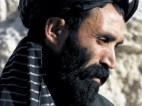
Then there is the new leader of the Taliban, Mullah Akhtar Muhammad Mansour, who has openly assembled meetings of his military and leadership council near the Pakistani town of Quetta. Since he came to power last year, the Taliban has mounted some of its most ambitious offensives into Afghanistan, overrunning the northern town of Kunduz, and pushing to seize control of the opium-rich province of Helmand.
 Finally, Al Qaeda’s leader, Ayman al-Zawahri, enjoys sanctuary in Pakistan—one recent report placed him in the southwestern corner of Baluchistan. He has been working to establish training camps in southern Afghanistan. In October, it took United States Special Operations forces several days of fighting and airstrikes to clear those camps. American commanders say the group they were fighting was Al Qaeda in the Indian Subcontinent, a new franchise announced by Mr. Zawahri that has claimed responsibility for the killings of bloggers and activists in Karachi and Bangladesh, among other attacks.
 Pakistan denies harboring the Taliban and Al Qaeda, and points out that it, too, is a victim of terrorism. But many analysts have detailed how the military has nurtured Islamist militant groups as an instrument to suppress nationalist movements, in particular among the Pashtun minority, at home and abroad.
Perhaps most troubling, there are reports that Pakistan had a role in the rise of the Islamic State.
Ahead of Pakistan’s 2014 operation in North Waziristan, scores, even hundreds, of foreign fighters left the tribal areas to fight against President Bashar al-Assad in Syria. Tribesmen and Taliban members from the area say fighters traveled to Quetta, and then flew to Qatar. There they received new passports and passage to Turkey, from where they could cross into Syria. Others traveled overland along well-worn smuggling routes from Pakistan through Iran and Iraq.
The fighters arrived just in time to boost the sweeping offensive by ISIS into Iraq and the creation of the Islamic State in the summer of 2014.
If these accounts are correct, Pakistan was cooperating with Qatar, and perhaps others, to move international Sunni jihadists (including 300 Pakistanis) from Pakistan’s tribal areas, where they were no longer needed, to new battlefields in Syria. It is just another reminder of Pakistan’s central involvement in creating and managing violent jihadist groups, one Pakistani politician, who spoke on the condition of anonymity when talking about intelligence affairs, told me.
This has been going on for more than 30 years. In 1990, I shared a bus ride with young Chinese Uighurs, Muslims from China’s restive northwest, who had spent months training in Pakistani madrasas, including a brief foray into Afghanistan to get a taste of battle. They were returning home, furnished with brand-new Pakistani passports, a gift of citizenship often offered to those who join the jihad.
Years later, just after Osama bin Laden was found and killed in Pakistan, I interviewed a guerrilla commander from the disputed region of Kashmir who had spent 15 years on the Pakistani military payroll, traveling to train and assist insurgents in Bosnia, Chechnya, Kashmir and Afghanistan.
In 2012 I came across several cases where young clerics, fresh graduates from the Haqqania madrasa in Pakistan, returned to their home villages in Afghanistan, flush with cash, and set about running mosques and recruiting and organizing a band of Taliban followers.
I visited that madrasa in 2013. It is the alma mater of the Afghan Taliban, where many of the leaders of the movement were trained. The clerics there remained adamant in their support for the Taliban. “It is a political fact that one day the Taliban will take power,” Syed Yousuf Shah, the madrasa spokesman, told me. “We are experts on the Taliban,” he said, and a majority of the Afghan people “still support them.”
 The madrasa, a longtime instrument of Pakistani intelligence, has been training people from the ethnic minorities of northern Afghanistan alongside its standard clientele of Pashtuns. The aim is still to win control of northern Afghanistan through these young graduates. From there they have their eyes on Central Asia and western China. Pakistani clerics are educating and radicalizing Chinese Uighurs as well, along with Central Asians from the former Soviet republics.
No one has held Pakistan to account for this behavior. Why would Pakistan give it up now? – The New York Times, 6 February 2016
» Carlotta Gall is the author of “The Wrong Enemy: America in Afghanistan 2001-2014” and currently the North Africa correspondent for The New York Times.

Filed under: india | Tagged: al qaeda, geopolitics, haqqani network, ISI, ISIS, islamic jihad, jihad, pakistan, pakistan army, taliban, terrorism |









Leave a Reply