












 “Maulana Abul Kalam Azad, himself trained as a cleric, was acutely aware of the damaging role played by Islamic clerics—ulema—throughout history. He noted: ‘Our history is replete with the doings of ulema who have brought humiliation and disgrace to Islam in every age and period…. How many ulema find an honourable mention in the Muslim history of the last 1,300 years?'” – Tufail Ahmad
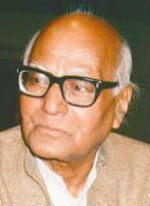
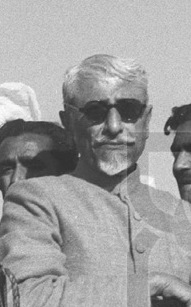 During the 1930s through the forties, Muhammad Ali Jinnah was the toast of Muslim politics in India, but it was Maulana Abul Kalam Azad, the first education minister of independent India, who had a substantive vision for human progress. Azad’s real name was Abul Kalam Ghulam Muhiyuddin; he was born in Mecca on November 11, 1888, and died in Delhi on February 22, 1958. Over a year before Pakistan’s creation, in an April 1946 interview he gave to journalist Shorish Kashmiri, Maulana Azad forecast the darkness that engulfs Pakistan today.
The interview for Lahore-based Urdu magazine Chattan, translated by former Indian minister Arif Muhammad Khan and reproduced in the columns of Pakistani nuclear scientist Abdul Qadeer Khan recently, is notable for a series of sociological verdicts Azad delivered on the future of Pakistan, which was not born yet.
First, Azad was a respected Islamic scholar and argued that Islam could not be the basis for creating countries, warning that the Muslim League’s politics for the creation of Pakistan “will ensure that Islam will become a rare commodity in Pakistan” and “Pakistan, when it comes into existence, will face conflicts of a religious nature”. Soon after Pakistan’s creation, Islamic clerics were engaged in a religious war. Pakistan witnessed a major riot in 1953 when Jamaat-e-Islami and other religious groups fought street battles, demanding that Ahmadi Muslims be declared infidels.
In 1974 Zulfiqar Ali Bhutto enacted a legislation declaring Ahmadis as non-Muslims. This religious hatred flourished during the 1980s as General Zia-ul Haq unleashed Islamization in Pakistani society. It continues today as Sunni militants are systematically murdering Shia Muslims throughout Pakistan. And as the Taliban and other jihadists win over Pakistan’s mainstream, it appears that most Pakistanis who follow Barelvi Islam will be declared infidels for listening to music, not growing beard or for simply visiting a Sufi shrine.
 Second, Azad understood that the separatist demand for Pakistan was rooted in the hatred of Hindus. He noted: “This hatred will overwhelm relations between India and Pakistan.” Over the course of Pakistan’s existence, the only reason why Islamabad hasn’t been able to forge good ties with Delhi, despite courageous efforts such as by Atal Bihari Vajpayee, is Pakistan’s reliance on Islam to sustain its identity. Islam guides the Pakistani state to claim any Muslim territory as its own and visualise itself as Madina-e-Saani, or second Madina, the other being the first Islamic state established by Prophet Muhammad.
Due to heavy reliance on Islam, Pakistan defines its international relations as well as domestic conduct based on religious ideology: Saudi Arabia and Malaysia become friends, while India is viewed as enemies. This also means that any country created out of Pakistan, namely Bangladesh or later Balochistan, can be expected to have generally friendly relations with Pakistan’s neighbours. Pakistan, in its current form, is built to last as a system of hatred against its own religious groups or neighboring countries.
Third, Maulana Azad understood that Pakistan will be unable to govern itself and its stability will be tested. He forecast that several factors will lead to military dictatorships: absence of good relations with neighbours, burden of foreign debt, loot of national resources by industrialists and so on. He observed: “Right from its inception, Pakistan will face some very serious problems: incompetent political leadership will pave the way for military dictatorships, as has happened in many Muslim countries.” Pakistan witnessed military coups in 1958, 1969, 1977 and 1999 followed by years of dictatorship, and even when under a civilian government it was ruled by the army chief, practically the king of Pakistan.
Fourth, Azad predicted that East Pakistan will secede from West Pakistan. He noted the political disunity in the Arab world and argued that Muslims have “never created durable political unity” anywhere.
 He added: “The moment the creative warmth of Pakistan cools down, the contradictions will emerge and will acquire assertive overtones. These will be fuelled by the clash of interests of international powers and consequently both wings (of Pakistan) will separate.” East Pakistan became Bangladesh in 1971, and Balochistan is clamouring to secede.
Fifth, a least-studied aspect of Muslim societies is the fact that clerics are derided by Muslims for their problems, but it may sound contradictory to note that the same clerics also rule over Muslim consciousness. Azad, himself trained as a cleric, was acutely aware of the damaging role played by Islamic clerics (ulema) throughout history. He noted: “Our history is replete with the doings of ulema who have brought humiliation and disgrace to Islam in every age and period…. How many ulema find an honourable mention in the Muslim history of the last 1,300 years?”
As can be said of Muslims in the 21st century, Azad observed that Muslims were “flowing” like an unthinking mob. “The problem is that Muslims have not learnt to walk steadily; they either run or flow with the tide. When a group of people lose confidence and self-respect, they are surrounded by imaginary doubts and dangers and fail to make a distinction between right and wrong.” Azad said, “Muslims will not hear anything against Pakistan unless they experience it.”
 He also noted: “The evil consequences of Partition will not affect India alone; Pakistan will be equally haunted by them.” Pakistan’s problems are associated with Islam.
Azad, who was aware that Pakistan was being created in the hatred of Hindus, warned: “We must remember that an entity conceived in hatred will last only as long as that hatred lasts.” It is a tragedy for the Pakistani people that Pakistan’s problems cannot be resolved if the country continues to exist in its current form. Saqlain Imam, a senior Pakistani journalist, says it is fortunate for Pakistan’s ruling elite that no neighbouring power is interested in the dismemberment of Pakistan but it is unfortunate for the people that the Taliban and other jihadist forces will keep growing, ultimately posing a serious threat to international security. – The New Indian Express, 25 February 2014
»Tufail Ahmad is director of South Asia Studies Project at the Middle East Media Research Institute, Washington DC. Email: tufailelif@yahoo.co.uk
Filed under: india, pakistan | Tagged: anti-hindu, india, ISI, islam, islamic jihad, jihad, maulana abul kalam azad, maulana azad, pakistan, partition of india, terrorism |







 BHARATA BHARATI
You didn’t mention the elimination of minorities in Pakistan especially Hindus from 25% in 1947 to 1.6% as on today ? Its courts fail to give justice to any one and executing minorities along with islamists on the streets
LikeLike
Supreme Court: Fatwas have no legal backing, can’t be forced on people – Dhananjay Mahapatra – Times of India – 26 February 2014
NEW DELHI: In a significant ruling, the Supreme Court on Tuesday assured it would come to the rescue of any citizen who felt harassed by a fatwa issued by a Muslim cleric and said such fatwas had no sanction in law.
A bench of Justices C K Prasad and P C Ghose made it clear that the judiciary could redress a fatwa while hearing final arguments on a PIL by Vishwa Lochan Madan, drawing the court’s attention to parallel Shariat courts that were mushrooming in India. Madan sought a declaration that such fatwas were illegal.
The bench said fatwas and dictates by muftis had no sanction in law. “Anything not sanctioned by the law need not be taken cognizance by anyone. The muftis can take up any issue and dictate a fatwa. But this will be akin to any common man’s view on an issue,” it said.
The court’s observations have implications for other informal pressure groups like khaps that have issued diktats that range from imposing social boycott to handing out death sentences for marriages within the same gotra or clan.
When Madan complained that poor and uneducated Muslims were forced to obey fatwas, the bench said, “If someone suffers because of a fatwa, be sure we will come to the rescue of the sufferer.”
The court said there were fatwas which could also be for general good of the community. However, it was firm that under the constitutional scheme of things, nobody was bound by the fatwas.
It said Hindus too had Shankaracharyas, Mandaleswars and Mahamandaleswars. “There are followers who obey their directions. But can it have any legal sanctity,” it asked.
“If someone voluntarily follows the fatwas or directions of the religious figures, it is purely up to them. But can these dictates, fatwa or religious head’s directions, be enforced in a court of law? If someone is punished for not obeying the fatwa, then the judiciary is there to set right that wrong,” the bench said.
The All India Muslim Personal Law Board through senior advocate Raju Ramachandran shared the views of the bench and said it was purely voluntary for the believers to obey a fatwa.
“When a Muslim or a non-Muslim approaches a mufti with a problem, the mufti looks into the issue taking help of the Shariat law and issues a fatwa. But a mufti does not verify the correctness of the facts stated before him by the person who approaches him. A fatwa can cover all aspects of life, from hygiene to marital disputes. A mufti has no power to impose his fatwa on anyone. Even the seeker of advice can ignore the fatwa,” he said.
AIMPLB also said if a fatwa violated the fundamental right of anyone, then the doors of the court were always open to seek redress. However, it conceded that it was training qazis in Muslim personal law to resolve disputes relating to marriage.
However, the qazis were barred from entertaining any criminal matter, he clarified.
LikeLike