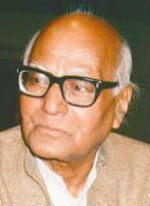








 What is needed is a “svayambhu” constitution that the people will understand, cherish and defend. It should be simple, clear and short so that any high school student can understand it. – Prof Gautam Pingle
The laws that governed India till 1950 were made by the British Parliament in 1833, 1853, 1858, 1919 and 1935. The Constitution of 1950 was primarily borrowed from the British Government of India Act of 1935 and given its republican shape by adding concepts from the US and Irish Constitutions. Rajendra Prasad, President of the Constituent Assembly and first President of the Republic, wrote: “The Constitution which we have drafted is a copy of the constitutions of Western countries. There is nothing new in it.” Our Constitution is a hybrid product that reveals inconsistency and confusion that has been further aggravated by the 100-odd amendments.
The Constitution labels the country: “India that is Bharat” which shows a considerable degree of confusion in the minds of the drafters. They were unable to decide on the name of the country itself and therefore left it hanging in the air. The Republic is also designated “socialist and secular”—the first being untrue, and the latter indefinable. It says it is given by “We, the people” although 392 elected representatives from the former British provinces, 93 selected from the Princely states and four nominated from the Chief Commissioners provinces approved it.
The second issue is that the Republic is deemed “a Union of States”—again ambiguous as the states themselves are neither equal nor were they treated equally as the Constitution classified them into four separate categories—Part A (former British provinces), Part B (Princely states), Part C (Chief Commissioners provinces) and Part D (Andaman and Nicobar)—each with different status.
The Constitution also allowed for the division and merger of both states and parts of states—the internal structure of the Republic was fluid. A-D categories were abolished in 1956 when all states became formally equal. But the states do not have equal representation in the Council of States (Rajya Sabha). Under the “Temporary Transitional and Special Provisions” chapter, J&K received special treatment under Article 370 and allowed to retain its State Constitution, still in force—a Constitution within a Constitution!
The third issue is the division of powers between three parts of the state—executive, legislature and judiciary. Certain aspects would overlap, and the Constitution provided for judicial oversight of both executive and legislative actions to decide their constitutionality. However, the Constitution itself included 284 Union and State Acts in its Ninth Schedule which is designed to exempt them from judicial review (as they are in clear violation of the Constitution).
The early decades of the Republic saw the dominance of both the executive and the legislature and the disregard for the functions of the judiciary. By the mid-1970s, the judiciary sought to stem the tide by the historic Keshavananda Bharathi case where the Supreme Court ruled that the Parliament could not amend the Constitution if it affects its “basic structure”.
The “basic structure” was not defined, leaving ample scope for the Supreme Court to decide on an ad-hoc basis when the need arises. In the last decade, the judiciary has taken a more aggressive and interventionist position by determining and directing public policy and also in expressing their “right” to select, transfer and promote judges. Today the judiciary reigns supreme with the executive and the Parliament unable or unwilling to restore balance that the Constitution makers intended.
The fourth issue is the right to equality and non-discrimination. Despite this (positive) discrimination in education, public employment and elected representatives cover half the population. Further, Article 371 allows 12 states to discriminate against citizens who are “non-residents” in those states. This is against the fundamental notion of citizenship with equal rights and opportunities.
The fifth issue is the question of religion. The Constitution barred discrimination based on religion but also granted the right to propagate it. This has incentivised a religious contest based on claims and beliefs of one religion as opposed to another. The contest is funded largely by foreign sources and causes tension between communities and leads to inevitable violence. So, the problem of religion and the “secular” state has become a critical political factor.
But what is religious and what is “secular”. Is caste or polygamy a part of a religion, or is it social practice? If the first, those are part of religious freedom and, if the latter, subject to the law. The Constitution confuses the issue—which is further confounded by the judiciary, which has no expertise in defining religion.
Another fundamental issue is the identification of the ultimate power in an extreme crisis. The head of state, the President, is elected by members of both Houses of Parliament and members of all Assemblies. The President then appoints the Prime Minister and the Union Council of Ministers, the judges of the Supreme Court and the High Courts and is Commander-in-Chief of the Armed Forces. But the Constitution requires the President to act only on the “advice” of the Union Council of Ministers.
The replacement of Constitution should be conceptually consistent, and parsimonious. What is needed is a “svayambhu” constitution that the people will understand, cherish and defend. It should be simple, clear and short so that any high school student can understand. It must be approved by the people in a referendum to give it a legitimacy which the present Constitution lacks. Only then will it be a Constitution given by “we, the people” and not just words adopted or invented by clever lawyers. – The New Indian Express, 13 July 2019
> Prof Gautam Pingle is the Dean of Research at Administrative Staff College of India, Hyderabad. He also serves as Member of National Advisory Board at MEdRC EduTech Limited, Hyderabad.

Filed under: india | Tagged: constitution of india, constitution of jammu & kashmir, india act of 1935, western constitutions | Comments Off on The many confusions in the Constitution – Gautam Pingle