









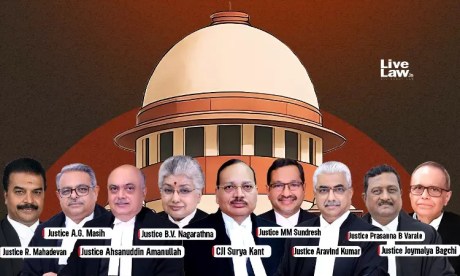
The nine-judge bench, headed by Chief Justice Surya Kant, will from April 7th hear a batch of petitions and cross-petitions for and against the 2018 Sabarimala judgment – The Telegraph
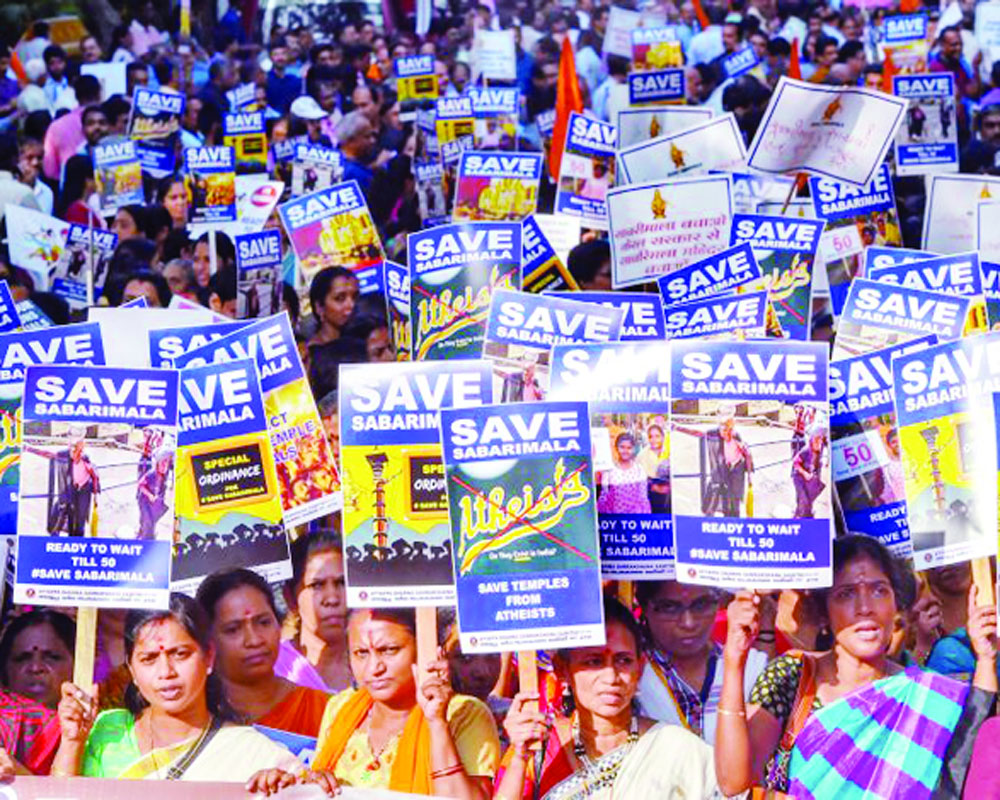
Courts lack the right to interfere with “essential religious practices”, a Hindu outfit has argued while seeking the recall of a 2018 Supreme Court judgment that allowed women of any age to enter the Sabarimala temple.
“…The fundamental right to equality guaranteed under Article 14 cannot override Article 25 of the Constitution of India, which guarantees every individual the right to profess, practise and propagate their faith,” the Akhil Bhartiya Sant Samiti’s intervention application before a nine-judge constitution bench says.
“The courts should not determine the ‘essential religious practices’ because the court is not an expert in religious matters / practice. The courts should step in only when such religious practice violates public order, morality or health.”
In 2018, a five-judge bench had by a 4:1 majority ruled as “unconstitutional” a centuries-old ban on women of menstrual age—those aged 10 to 50—entering the Kerala shrine.
“This religious practice should also be protected under Article 25. … This restriction cannot be said to be (an) absolute restriction for a woman; it is restricted for a particular age and therefore it is not violative of Article 14.” the Samiti, which claims to represent 127 Hindu sects, has argued.
The application, filed through advocate Atulesh Kumar, asks the top court to “not interfere in the puja paddhati / method of worship (or) procedure for performing Hindu rituals of any temple (which) should be left open to pujari / religious scholars to decide”.
It adds: “The issues involved in the petition have far-reaching ramifications and implications, not only for the Sabarimala temple in Kerala but for all places of worship of various religions in this country, which have their own faith, beliefs, practices, customs and usages (that) may be considered to be exclusionary in nature.”
The nine-judge bench, headed by Chief Justice Surya Kant, will from April 7 hear a batch of petitions and cross-petitions for and against the 2018 judgment.
It will also examine the restrictions on Muslim women’s entry into mosques and dargahs; female genital mutilation in the Dawoodi Bohra community; and the ban on Parsi women from entering the fire temples if they marry a non-Parsi.
The bench will decide eight issues:
1. The ambit of the right to freedom of religion under Article 25.
2. The interplay between the rights of individuals under Article 25 and those of religious denominations (to manage their religious affairs) under Article 26.
3. Whether the rights under Article 26 are subject to provisions of Part III of the Constitution (fundamental rights) apart from those relating to public order, morality and health.
4. The scope of the word “morality” under Articles 25 and 26, and whether it includes constitutional morality.
5. The scope and extent of judicial review of religious practices.
7. The meaning of the expression “sections of Hindus” in Article 25(2)(b), which empowers the State to open Hindu religious institutions to all sections of Hindus.
8. Whether someone not belonging to a particular religious denomination or religious group can question a practice of that denomination or group through a public-interest plea. – The Telegraph, 4 April 2026
Filed under: india | Tagged: constitution articles 25/26, reproductive age ban, sabarimala temple, sabarimala temple entry, supreme court of india | Comments Off on Sabarimala: Top court told to keep its hands off religion – The Telegraph