









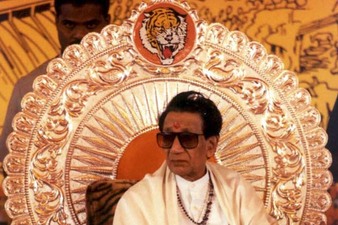
 “Balasaheb’s leanings towards Hindutva were not opportunistic or tactical. Patriotism at regional level, if genuine, is not opposed to but is underpinned by cultural nationalism. What nourishes Marathi pride also nourishes Hindu Asmita and vice versa. This is also true of Bengali, Tamil or Telugu pride. To dismiss and denounce pride in local heritage as chauvinism is to divest Hindu civilization of its rich and variegated content. It becomes problematic only when it becomes self-absorbed and loses sight of the larger unity.” – Virendra Parekh

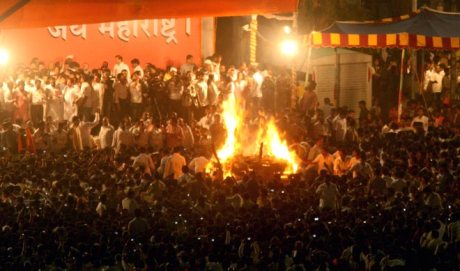
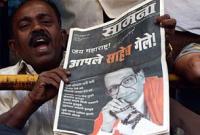 The tiger will roar no more. Some said it almost gleefully. Most said it with grief. It is natural for leaders like Bal Thackeray who practice the politics of conviction and speak out their mind forthrightly to arouse strong emotions. In his death as in his life, Balasaheb (as he was commonly known) maintained his uniqueness. He never contested an election and never held any official position. Yet he wielded a clout that would be the envy of many chief ministers, both in its magnitude and longevity. Millions thronged Shivaji Park in central Mumbai to have a last glimpse of their beloved ‘saheb’. This was not a hired political mob. People from every nook and corner of Maharashtra traversed long distances to pay homage to a man who they felt brought cheer to their lives and fought for their rights and honour. Their solemnity, their grief, was such as could never be manufactured by state machinery or money power.
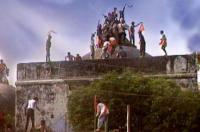 Bal Thackeray was the only lion-hearted Hindu leader who proudly owned up the demolition of the disputed Babri structure. “If my Shiv Sainiks have done it (demolition), I am proud of them”, he declared when BJP leaders were fumbling for apologies. He consistently opposed playing cricket with Pakistan until that country renounced terrorism. He voiced the desire of millions of his countrymen when he demanded the public hanging of Ajmal Kasab at Gateway of India who, by a strange coincidence, was quickly and quietly hanged in Pune almost immediately after Balasaheb’s demise [on Nov. 21]. He rightly placed caste reformers B.R. Ambedkar and Jyotiba Phule in his pantheon of Maharashtrian greats, and formed electoral alliances with dalit leaders Ramdas Athawale and Namdeo Dhasal. But he was also, in 1991, one of the few courageous politicians to oppose the Mandal commission report on OBC quotas in Central government jobs.
For anyone living outside Mumbai, it is not easy to understand the Thackeray phenomenon. His rise from a cartoonist to a maverick politician in the “Godfather” mould had certainly been meteoric. For three decades, Balasaheb could and did shut down Mumbai on behalf of those whose rage he grasped. Essentially, it was the rage of the people who were numerically dominant but systemically marginalized, and also faced a constant threat even to their numerical dominance. Way back in 1970s, he warned that Mumbai was being weighted down by influx of outsiders. Today that concern is shared by many people outside Shiv Sena.
 To put it brusquely, Mumbai is trapped in a unique political configuration. Mumbai and its suburbs have a population of 20.50 million, out of Maharashtra’s total population of 112 million. Mumbai generates 6 per cent of India’s GDP, provides almost 30 per cent of India’s total direct taxes. In terms of both population and economic contribution, Mumbai simply dwarfs all else in Maharashtra.
Yet Mumbaikars as a whole are grossly under-represented in Maharashtra’s politics when, as the single largest voter bloc, they should actually dominate it. Mumbai has 34 seats in Maharashtra’s assembly of 288. Leaders with political base outside Mumbai treat the city as a milch cow and cavalierly neglect even its basic needs. Marathas from the agricultural rich Western Maharashtra have dominated the Congress party, and over the decades have transferred whatever surplus was at hand to their constituencies for development.
 The anti-Congress faction has been in power only once, representing an alliance of the Shiv Sena-Bharatiya Janata Party, and this formation almost bankrupted the state by diverting all the money they could find or borrow into rebuilding Mumbai’s dilapidated infrastructure in 1995-2000. This five-year spell by the Shiv Sena-BJP showed what was possible for Mumbai but for Congress’ domination of Maharashtra politics. They were promptly booted out of power for their trouble, but Mumbaikars still nurse sympathy for them.
Another dimension of Mumbaikars rage related to the proliferation of a Muslim-dominated underworld. In 1970s and 1980s, Mumbai was the smuggling capital of India with the Konkan coast (that includes Mumbai) landing 90 per cent of contraband that included gold, electronics, textiles and much else.
The fishermen of Konkan, traditionally Muslim, dominated the smuggling trade on this side. On the other side were Malabari Muslims in Dubai who sourced the contraband. The ring was completed by the Pathans of Mumbai who provided protection and marketing. This grouping, highly organised, was an excellent vote-gathering machine at election time, and its need to buy political protection made it the ideal partner of unscrupulous Congress politicians. Needless to say, Muslim gangsters, big and small, dominated ward-level politics, adding to the resentment of lower-middle class Mumbaikars who saw the phenomenon first hand.
 Within Mumbaikars was the rage of former Marathi mill workers in search of a job. This was aided and fueled by the unease of the middle-class in Shivaji Park and Dadar at Maharashtrians becoming minorities in their own city. This was and has always remained the core constituency of Shiv Sena.
Bal Thackeray allowed this natural, alienated, marginalised lower-middle class constituency to shape his worldview and politics. Their preferred opinions became his ideology. That partly explains why he had no political philosophy or ideology of his own to speak of. In turn, the sense of marginalisation of the Marathi Manoos in Mumbai explains the fierce loyalty that the Sena commands even among police and state machinery, something that outsiders find hard to comprehend given Mumbai’s cosmopolitan character.
But Balasaheb more than made up for his lack of a coherent political philosophy with his virility of speech and action. Operating in the space created by the Congress and initially manipulated by it, the Sena soon came into its own as its inveterate challenger, cannily playing on economic anxieties and providing a platform for cultural assertion. Creating fear in the enemy camp was the main objective. Public violence was adopted as a conscious strategy. If that effort needed some amount of ruthlessness, then so be it.
 Balasaheb’s leanings towards Hindutva were not opportunistic or tactical. Patriotism at regional level, if genuine, is not opposed to but is underpinned by cultural nationalism. What nourishes Marathi pride also nourishes Hindu Asmita [pride, self-esteem] and vice versa. This is also true of Bengali, Tamil or Telugu pride. To dismiss and denounce pride in local heritage as chauvinism is to divest Hindu civilization of its rich and variegated content. It becomes problematic only when it becomes self-absorbed and loses sight of the larger unity.
The sense of Marathi pride as part of a larger Hindu nationalism gave Balasaheb a political courage which is found wanting even among Hindutva outfits. His positions were unequivocal and his articulation even more so. His style, both oral and verbal, was punching, biting and vitriolic. To browbeat, ridicule and vanquish the adversary became his sole objective when he took on anyone. Let decency and decorum go out the window.
Unfortunately, the freedom of expression that he reserved for himself was not extended to others. Shiv Sainiks ruthlessly cracked down on anyone who they thought had insulted their ‘Saheb’ or Sena. Fighting corruption never topped his agenda.
 The high noon of Bal Thackeray’s political career came in 1995 when the Sena, with the BJP in tow, finally got a chance to rule Maharashtra.
As fate would have it, Bal Thackeray’s journey into the shadows also began in 1995 when he lost his wife, Meenatai. Even before he could fully absorb this cruel blow, he lost his eldest son Bindumadhav in a car accident in April 1996. Then his other son, Jaidev, deserted Thackeray. Succumbing to domestic pressure, he anointed youngest son Uddhav as his political heir in preference to his nephew Raj, widely perceived as more dynamic and aggressive. Peeved, Raj left the Shiv Sena and created his own outfit, poaching upon Sena’s cadre and mass base, which is giving a hard time to family loyalists. In the last few years, the Sena has witnessed a rapid decline from a tight-knit, disciplined, cadre-based party into a faction-ridden conglomerate. Many leaders loyal to Bal Thackeray have either quit the Sena or retired. Uddhav will face a tough challenge in keeping his flock together.
 None of this deterred the sea of humanity who gathered at Shivaji Park to pay homage to a leader who had consistently and fearlessly espoused the cause of the people from whose ranks he had come up. Bal Thackeray showed that a Hindu leader who is loyal to his core constituency need not bother about Muslim votebanks and cannot be blackmailed by parties hankering after green votes. There is a lesson in this for all BJP leaders, including Narendra Modi. – Vijayvaani, November 2012
» Virendra Parekh is the Executive Editor of Corporate India and lives in Mumbai.
Filed under: india | Tagged: bal thackeray, balasaheb, BJP, bollywood celebrities, civil rights, culture, demagogue, democracy, demography, economics, economy, hindu, hindu leader, hindutva, india, indian economy, indian national congress, indian politics, maharashtra, marathi manoo, middle class, mill workers, multicultural, mumbai, nationalism, newspaper, patriotism, politics, politics of conviction, psychological warfare, shiv sena, values | 1 Comment »