










 “Strategic restraint”, a phrase limited to defence or foreign policy experts, is suddenly part of public discourse. Going beyond it may seem desirable, there are political and social pressures pushing India towards it, but it is a difficult unchartered path where risks, so far, appear to outweigh gains. – Prashant Jha
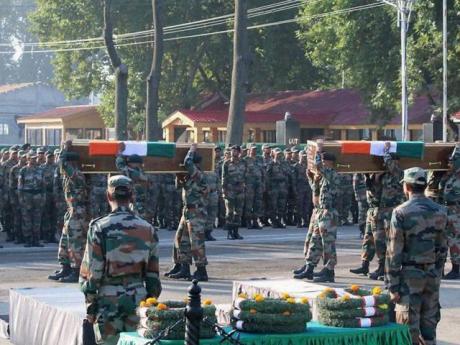
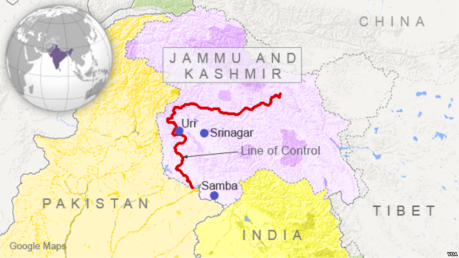
The Uri attack that left 17 [18] soldiers dead has triggered calls for India to shed strategic restraint and impose costs on Pakistan for engineering such strikes.
High-level security meetings are underway to devise a response. And there is a general air of uncertainty about what will come next in the already strained India-Pakistan ties.
The call for an aggressive response, especially on social media, comes in the backdrop of a perception that India has, for too long, taken Pakistani hostilities lying down.
As the rhetoric gets shriller, it is important to answer three questions.
What is this much-derided strategic restraint that India has been practising? Why has Delhi stuck to strategic restraint despite several provocations, including the 2008 Mumbai strike? And, what has changed now?
Broadly, strategic restraint meant that while India condemned an attack, raised the issue internationally, sought to expose Pakistan’s use of terror as a state policy and stepped up internal security, it did not launch a military counter-offensive.
Why?
For one, there is no easy option to inflict costs on Pakistan. Crossing the Line of Control—even in “hot pursuit”—could mean an all out war. Given the nuclearisation of the subcontinent, it is too risky because unlike India, Pakistan doesn’t adhere to the no-first use policy and has flirted with tactical nuclear weapons.
Second, the feeling was that even a surgical strike would drag India into a conflict, adversely hitting economy at home and the India story aboard.
Three, a military offensive is no guarantee of providing a solution to the crisis, which is unique.
If it was just about taking territory, Indian armed forces could well do it.
But the challenge is to force the Pakistani army to give up its policy of exporting terror. India may have the military superiority but a clean, quick victory that would force Pakistan to end the covert war is not certain. In fact, in the short term, terror strikes could well see a rise.
An Indian offensive would go on to strengthen the notorious Pakistani military-ISI-jihadi nexus, which is at the forefront of bleeding India by a thousand cuts.
An Indian response would give credence to their claim—“Hindu India” has evil designs on Pakistan and all should unite against the challenge.
So, why is there now a push for an aggressive response?
For one, India is changing. Its vast nationalist middle-class respects the armed forces, sees Pakistan as an incorrigible enemy, believes that problems in Kashmir are the creation of Islamabad, and is regularly fed a dose of patriotism by some aggressive television.
This constituency is impatient and asks—why a rising India, a powerful India, a bigger India, and an India which is on the “right side” should cave in to Pakistan. And, this is not just a city phenomenon.
In travels across largely rural Uttar Pradesh in recent months, this writer met several young people and many were unhappy with the Modi government’s Pakistan policy. “We should be more aggressive” was the chorus.
There is a second, somewhat paradoxical, reason for this impatience. India has faced a series of terror attacks over the years but the younger generation doesn’t seem to have a sense of what a war means and the suffering that comes with it.
Do remember a bulk of the country’s population is below 25. The last full-scale war that India fought was 45 years ago in 1971 against Pakistan. Many have memories of Kargil but its scale and impact was limited.
And finally, the government of the day, which in a sense represents the constituency outlined above, that believes India’s mistake has been its inability to display hard power.
The BJP championed, in the election campaign, a tough stand it would take—as BJP general secretary Ram Madhav said it in a Twitter post soon after the attack—“for one tooth, the complete jaw”.
The aggressive response to ceasefire violations along the LoC in 2014 was in keeping with that line. Top officials believe there has to be unpredictability in policy otherwise status quo would prevail and Pakistan will continue to “kick India” around. It is time not to succumb to “Pakistani blackmail”
“Strategic restraint”, a phrase limited to defence or foreign policy experts, is suddenly part of public discourse. Going beyond it may seem desirable, there are political and social pressures pushing India towards it, but it is a difficult unchartered path where risks, so far, appear to outweigh gains. – Hindustan Times, 18 September 2016
» Prashant Jha is an author and associate editor at The Hindustan Times.
Filed under: india, pakistan | Tagged: india, india-pakistan relations, J&K line of control, kashmir, pakistan, state-sponsored terrorism, strategic restraint, terrorism, uri attack | 2 Comments »