










 Easter began as a Pagan festival celebrating spring in the Northern Hemisphere, long before the advent of Christianity. – Prof Carole Cusack
On Easter Sunday, a bunny will deliver chocolate eggs to many households across the world.
Have you ever wondered how this seemingly bizarre tradition came to be?
Well, it turns out Easter actually began as a Pagan festival celebrating spring in the Northern Hemisphere, long before the advent of Christianity.
“Since pre-historic times, people have celebrated the equinoxes and the solstices as sacred times,” University of Sydney Professor Carole Cusack said.
“The spring equinox is a day where the amount of dark and the amount of daylight is exactly identical, so you can tell that you’re emerging from winter because the daylight and the dark have come back into balance.
“People mapped their whole life according to the patterns of nature.”
Following the advent of Christianity, the Easter period became associated with the resurrection of Christ.
“In the first couple of centuries after Jesus’s life, feast days in the new Christian church were attached to old Pagan festivals,” Professor Cusack said.
“Spring festivals with the theme of new life and relief from the cold of winter became connected explicitly to Jesus having conquered death by being resurrected after the crucifixion.”
Easter’s changing date
In 325 AD the first major church council, the Council of Nicaea, determined that Easter should fall on the Sunday following the first full moon after the spring equinox.
That is why the date moves and why Easter festivities are often referred to as “moveable feasts”.
“There’s a defined period between March 25 and April 25 on which Easter Sunday must fall, and that’s determined by the movement of the planets and the Sun,” Professor Cusack said.
Pascha, Easter and the Goddess of Spring
In most countries in Europe, the name for Easter is derived from the Jewish festival of Passover.
“So in Greek the feast is called Pascha, in Italian Pasqua, in Danish it is Paaske, and in French it is Paques,” Professor Cusack said.
But in English-speaking countries, and in Germany, Easter takes its name from a Pagan goddess from Anglo-Saxon England who was described in a book by the eighth-century English monk Bede.
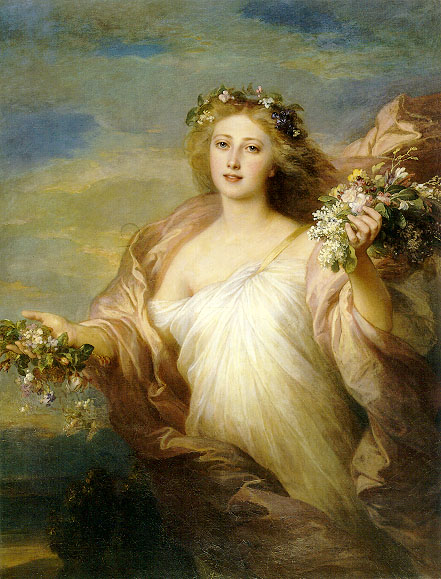
“Eostre was a goddess of spring or renewal and that’s why her feast is attached to the vernal equinox,” Professor Cusack said.
“In Germany the festival is called Ostern, and the goddess is called Ostara.”
Rabbits and eggs as ancient symbols of new life
Many of the Pagan customs associated with the celebration of spring eventually became absorbed within Christianity as symbols of the resurrection of Jesus.
“Eggs, as a symbol of new life, became a common people’s explanation of the resurrection; after the chill of the winter months, nature was coming to life again,” Professor Cusack said.
During the Middle Ages, people began decorating eggs and eating them as a treat following mass on Easter Sunday after fasting through Lent.
“This is actually something that still happens, especially in eastern European countries like Poland,” Professor Cusack said.
“The custom of decorating hard-boiled eggs or blown eggs is still a very popular folk custom.”
Rabbits and hares are also associated with fertility and were symbols linked to the goddess Eostre.
The first association of the rabbit with Easter, according to Professor Cusack, was a mention of the “Easter hare” in a book by German professor of medicine Georg Franck von Franckenau published in 1722.
“He recalls a folklore that hares would hide the coloured eggs that children hunted for, which suggests to us that as early as the 18th century, decorated eggs were hidden in gardens for egg hunts,” Professor Cusack said.
Commercialisation, confectionery and greeting cards
Commercialisation during the 19th century saw rabbits become a popular symbol of Easter with the growth of the greeting card industry.
“Postage services became affordable and people wanted to keep in touch with people,” Professor Cusack said.
“Card companies like Hallmark became big by launching images of cute little rabbits and Easter eggs on cards.”
The first edible Easter bunnies made from sugared pastry were made in Germany in the 19th century.
Big confectionery companies, like Cadbury in England, started manufacturing chocolate eggs.
“Chocolate that used to be something that’s bitter and drunk became something that was sweetened and turned into a confectionery treat,” Professor Cusack said.
“Easter eggs were one of the areas of marketing for chocolate.”
Today, chocolate eggs and egg hunts are a popular part of Easter celebrations around the world.
Easter in Australia today
Australia’s significant public holiday periods of Easter and Christmas are based on Christian European celebrations.
So although autumn is in full swing and winter is coming in the Southern Hemisphere, rabbits and eggs as symbols of spring remain part of Australian festivities.
On Easter Sunday, the Easter bunny will deliver chocolate eggs to children and there will be egg hunts in backyards and parks across Australia.
Christian Australians will attend church services and the majority of secular Australians will enjoy the four-day weekend feasting and relaxing with family and friends.
All the while, the chocolate bunnies and eggs serve as a reminder of Easter’s ancient Pagan origins. – ABC Radio, 15 April 2017
» Prof Carole M. Cusack is an Australian historian of religion, specialising in Early Medieval Northwestern Europe, western esotericism, and trends in contemporary religion.

Must See
Filed under: australia, india | Tagged: easter, goddess eostre, ostara, pagan festivals, paganism | 1 Comment »