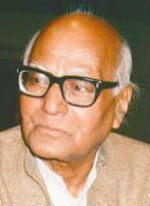











 It is a well-known fact that the relocation formula has been adopted by Arab countries. When these countries wanted to re-plan their cities, they found that there were many mosques that were obstacles to city planning. They did not hesitate to relocate such mosques. – Maulana Wahiduddin Khan
The Babri masjid was built in 1528 at Ayodhya by Mir Baqi, the governor of Ayodhya at the time. He built it adjacent to the Ram chabutra, which is held sacred by the Hindus. This was a clear deviation from the Islamic principle. According to Islam, the places of worship of two religions should be built at a considerable distance from each other.
 When Caliph Omar visited Jerusalem in AD 638, he wanted to offer his prayers. At that moment, he happened to be in the Church of the Resurrection of Jerusalem. The Christian bishop told him he could offer his prayers inside that very church. But the caliph refused. He said that he would offer his prayers at a stone’s throw from the church. If he offered his prayers right there inside the church, it would create a controversy in the future. The Muslims of later generations would say that they would build a mosque there because their caliph had offered prayers there. Notwithstanding this historic example, Mir Baqi built a mosque adjoining a Hindu sacred place. This was bound to create problems.
In 1949, some Hindus placed three idols inside the Babri mosque. Unable to manage the crisis this created, the Muslims reacted: their failure to adopt the prophetic principle in this regard started an unending controversy between the two communities.
 At the time of the Prophet, in the first quarter of the 7th century AD, idol worshippers had placed 360 idols in the premises of the Kabah, Mecca. But the Prophet never reacted. He simply ignored the situation and tried to change people’s hearts. And the result was that, within 20 years, Meccans abandoned idol worship and became the followers of the Prophet. Then those Meccans themselves removed the idols from the Kabah without any confrontation or bloodshed.
In 1991, during the prime minister-ship of Narasimha Rao, the Indian Parliament passed a legislation called the Places of Worship Act, 1991. According to this Act, the government of India was bound to maintain the status quo of all places of worship on the Indian soil as it stood in 1947. But there was an exception – that of the Babri masjid of Ayodhya. The Act maintained that the Babri masjid issue was in court, so the government would wait and it would be its duty to implement the verdict of the court when it was given.
This Act was a most reasonable one and Muslims should have accepted it as such. But they rejected it outright and resorted to street demonstrations. The demolition of the Babri masjid on December 6, 1992, was nothing but the culmination of this negative course of action adopted by the Muslims. At that time i said: “Babri Masjid ko Hinduon ne toda aur Musalmano ne usko tudwaya.” (The Hindus demolished the Babri masjid but Muslims provoked them to do so.)
The Muslims subsequently took the very impractical line that the masjid should be rebuilt on the same spot. At that time, i said that the rebuilding formula was totally unrealistic; Muslims should accept the alternative formula of the relocation of the mosque.
It is a well-known fact that the relocation formula has been adopted by Arab countries. When these countries wanted to re-plan their cities, they found that there were many mosques that were obstacles to city planning. They did not hesitate to relocate such mosques. I said at the time that Muslims in India ought to adopt this same formula and accept the relocation of the Babri mosque. But again the Muslims refused.
 Now, after the judicial verdict on September 30, 2010, the Muslims are generally saying that this verdict is contrary to their hopes and they will challenge it in the Supreme Court. But this is not going to solve the problem. It is an emotional reaction to the verdict and not a well-considered response.
Suppose the Muslims refer the issue to the Supreme Court and suppose it issues a judgement in their favour. Even then it will not solve the problem. The Muslims themselves set a precedent in 1985, which is enough to predict the situation as it will unfold.
In 1985, the Supreme Court issued a judgement in the Shah Bano case, which ran counter to Muslim aspirations. So the Muslims refused to accept the judgement. They took to the streets and the government was compelled to pass a new Act. The Hindus would certainly say that it was now their turn to refuse the verdict issued by the Supreme Court.
The only solution to this problem is for the Muslims to decide to put a full stop to this issue. If they put a comma, then there will be no end to it. We have lost 60 years by putting comma after comma and now this is the last chance to bring closure to the issue so that the relationship between the Hindus and the Muslims may be normalised. And this full stop means either leaving it to the government to implement the verdict or agreeing to the relocation of the Babri mosque. There is, in reality, no third option. – Times of India, Chennai, Oct. 12, 2010
The writer is an Islamic scholar.
Filed under: india | Tagged: ayodhya, babri masjid, communalism, hindu, hindu nation, hinduism, indian history, interfaith dialogue, islam, koran, maulana wahiduddin khan, mir baqi, mohammed, mosque relocation, national identity, nationalism, omar, politics, rama, ramjanmabhumi, religion, religious politics, sanatana dharma, shariah, theology | 2 Comments »