









 “The Macaulay mindset is not really about Macaulay the person. What it really is about is this psychological idea that we have imbibed into our nervous system, almost, that we are somehow functioning because civilisation was given to us by other people and that we have never had agency,” – Sanjeev Sanyal
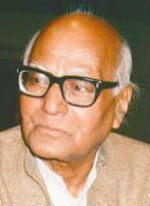
Sanjeev Sanyal, an economist and a member of the Prime Minister’s Economic Advisory Council, spoke about the ‘Macaulay mindset’, asserting that generations of Indians have been conditioned to believe that civilisation and progress were brought to the subcontinent only by outsiders.
Sanyal emphasised that “Indian history is not what we have been taught to believe”, and that people are led to feel that the Indian had “no agency in world history”.
In an interview with ANI, Sanyal said the idea that Indians were passive recipients of history was deeply flawed and rooted in what he described as the “Macaulay mindset.”
“To change the narrative of who Indians were historically, see, one of the things I’ve been trying to do, and not just through this project, I’ve been writing these history books, is to show that Indian history is not what we have been taught to believe,” he said.
“That it’s not the case that Indians were somehow a passive people sitting in India waiting for conquerors to come and give us civilisation, and that we have no agency. This is not a history at all,” Sanyal added.
Sanyal said even a basic examination of India’s past challenges supports the perception. “A very little bit of digging into our own history will show us that this is not our history. We have a history. We’ve got a rambunctious history of adventurers and mercenaries and doing all kinds of interesting things,” he said.
Citing early maritime achievements, Sanyal noted that Indians were seafarers long before many other ancient civilisations.
“One of the things we did was very early on, long before even the Phoenicians, who are famous mariners of history, we were sailing during Harappan times to the Middle East. The seals were found in Mesopotamia,” he said.
He added that historical records mention people known as Meluhans travelling to regions such as Samaria nearly four to five thousand years ago.
“The seals and all kinds of things are found. There are records of people called Meluhans going to Samaria four or five thousand years ago,” he said, adding that author Amish Tripathi has also written about this period, albeit in a fictionalised form based on historical references.
Highlighting India’s ancient maritime networks, Sanyal pointed to ports such as Lothal and Dholavira. “We had a port at Lothal and Dholavira and all of these places. But even later, it continues. And that’s why they were sailing out to Indonesia. They were sailing all the way through to Korea,” he said.
Sanyal referred to early cultural links with East Asia, saying, “In fact, Korean history actually begins with the marriage of a local prince to a princess from Ayodhya.” He added that the legacy of such connections endures to this generation.
“The ship itself is called INSV Kondinya. Kondinya was the name of the first Indian mariner that we know about by name. They were before, but we don’t know their name. About 2,000 years ago, we don’t have an exact date, but he went there, as I said, married a local girl, set up a kingdom called Funan, the first Hindu kingdom in Southeast Asia,” he added.
“All subsequent kingdoms of that part of the world trace their origin to this marriage. So till even modern times, royal families of, say, for example, Cambodia, trace their lineage back to this marriage between Kondinya and Soma,” he added.
Responding to a question on Prime Minister Narendra Modi’s recent remarks about India witnessing a “psychological renaissance” and the need to break the “Macaulay mindset,” Sanyal said the concept goes beyond the historical figure of Thomas Babington Macaulay.
“The Macaulay mindset is not really about Macaulay the person. What it really is about is this psychological idea that we have imbibed into our nervous system, almost, that we are somehow functioning because civilisation was given to us by other people and that we have never had agency,” he said.
He explained that this mindset has profoundly shaped how Indians perceive their own capabilities. “So, okay, the Mughals came and built the Taj Mahal. That’s fine. You know, the British can come and do something, but we should not do anything. So now this is imbued into us in a very fundamental way,” Sanyal said.
He added that this attitude continues to shape public discourse even today. “It showed through, for example, when we wanted to build a new Parliament,” he said, underlining how deeply rooted the mindset remains in contemporary thinking. – MoneyControl, 28 Decemeber 2025

Filed under: india, south-east asia, world | Tagged: indian education system, indian history, macaulay mindset, macaulayism, sanjeev sanyal | Comments Off on Sanjeev Sanyal questions what Indians are taught to believe – ANI