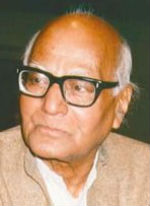












 Penal laws left behind by the British and preserved by those who came to power after the country won its freedom needs to be reduced to conform to the changes required by the 21st century. – Prof. M.D. Nalapat
The Supreme Court of India deserves gratitude from those who believe in the values of freedom and democracy. That “jail is the exception and bail is the rule” has been repeated endless times, yet it appears to many in India that jail is the norm and bail the exception. The emphasis by the Apex Court on liberty in the recent granting of bail to some media personalities will hopefully be emulated by courts across the country. So far as the media is concerned, over the years dozens of journalists have been sent to jail in states across the country. Some have been silenced in a more permanent way. In another field, numerous personnel connected to India’s nuclear and missile industries succumbed to “suicides”, “accidents” and “break-in murders” since the 1990s, when President Bill Clinton declared a public as well as a covert war on both nuclear and missile activity in our country. The killings stopped once reports of the serial deaths of individuals in the nuclear and missile industry appeared in The Sunday Guardian. The time has been overdue to investigate the arrest, intimidation and deaths of numerous Right to Information (RTI) activists across the country who seek to probe wrongdoing by those in authority. RTI was intended to be an instrument of transparency that would tear away the layers of secrecy in which governmental processes operate. Instead, the UPA regime ensured that RTI boards were dominated by those who had spent their entire careers keeping information away from the public. This is among the practices of the past that should not be allowed to continue . A country’s progress is determined by those in key positions. Care needs to be taken to ensure that attendance in the durbars of powerful bureaucrats and politicians cease to be indispensable for getting into positions of authority. On paper, there are “360-degree investigations” of prospective nominees to responsible office. In reality, such consultations usually take place solely within a narrow band of officials and their favourites. The personnel dossiers that get prepared about suggested nominees often reflect the personal and other biases of those preparing them rather than be a factual rendition of an individual’s pluses and minuses.
Lack of transparency in the processes of governance has created an absence of public accountability even after 1947, although during Modi 2.0 more and more processes are being made less opaque. This is because of the Prime Minister’s focus on expanding the scope of Digital India. As a consequence of this, several more administrative processes have become transparent, but more need to follow. The RTI law in its manner of operation needs to be rescued from the morass into which incorrect implementation pushed it during the UPA period. This can happen through increasing the powers of RTI boards and choosing members who have spent their lives chasing transparency rather than making a fetish of secrecy. Several of the officials who dominate RTI boards apparently believe that the common citizen cannot be trusted with any information other than the line tossed in her or his direction by official channels and those outside that are faithful to the line peddled.
Until the Supreme Court stepped in and ensured justice, there had been much commentary about the incarceration of a prominent editor by a state government. His news outlet had been reporting on a presumed suicide that in the view of some could have been a murder. As a consequence of that view, several individuals were sent to prison while others were questioned by police for long periods in the full glare of television cameras. Ultimately no proof of murder was discovered. Among other such statutes, India has a narcotics law that makes the word “draconian” an understatement. This is now being used to create a brouhaha that will have the effect of relocating the Indian film industry to Mauritius. Judging by what is being charged against some of those connected to Bollywood, even the possession of small quantities of “soft” drugs that are in widespread recreational use could result in long jail terms. It would be better to legalise such drugs the way President-elect Joseph R. Biden plans to do in the US, and in the manner several countries around the world have. The Narcotics Control Board has to focus on “hard” drugs and on taking down their distribution and finance channels. Given the range of ways in which a citizen can be deprived of his or her liberty in India, it is no surprise that even so prominent a journalist as the editor who had been incarcerated in Maharashtra remains enmeshed in a criminal case. This is a process that could take decades to complete, with attendant human and financial costs. The Supreme Court needs to set a high bar for the taking away of liberty or the confiscation of property of the citizen. Such forfeitures should not continue to take place in India in the manner that used to happen during the colonial period. The range of penal laws left behind by the British and preserved by those who came to power after the country won its freedom needs to be reduced to conform to the changes required by the 21st century. Under existing statutes, a wide range of actions by a citizen can be interpreted in a misleading manner by an interested official, even though the same may be entirely innocent of wrongdoing. The country has a penal code that has a vintage of more than a century and a half in an era when technologies get transformed every few months. Over the decades, rather than get reduced, penal provisions have been added on to over the years, especially in economic activity. Officials—and politicians in power—love such authority despite its killing effect on the business environment and on individual freedom. During the UPA period, jail was added as an option for several financial charges despite the fact that the wording of regulations and laws often lend themselves to misinterpretation and erroneous conjecture. North Block during the Vajpayee period removed several such vexatious provisions, and to a considerable extent sought to ensure that officials did not misuse their powers. Despite the reality of corruption increasing with every new anti-corruption measure coming into force, more and more penal measures have been introduced. These need to be rolled back during Modi 2.0. The rate of economic growth in India has been falling for some years, even before the pandemic, and this can get reversed should the risks to liberty and property caused by misinterpretation and erroneous conjecture get reduced. The Prime Minister has spoken of the need for this, hence such a change in this longstanding colonial practice is expected.
The Prime Minister and the Chief Justice of the Supreme Court can separately work to ensure that colonial laws and practices be discarded so that the governance system reflects the 21st rather than the 19th century. Many of the existing penalties should be civil and financial rather than criminal and penal. Economies delinking from the PRC are looking to invest in India, but are wary of the continuing hangover of the colonial era. This puts them at the mercy of the minority of officials who because of their venality—facilitated by lack of transparency and accountability—have given administration in India an unsavoury reputation. Properties have been summarily grabbed by governments and freedoms taken away with abandon by Central and state authorities over the decades. It is time this changes. – Sunday Guardian Live, 3 November 2020
› Prof. M.D. Nalapat is an academician and columnist. He is Vice-Chair of Manipal Advanced Research Group and Director of the Department of Geopolitics & International Relations at Manipal University.

Filed under: india | Tagged: colonial law legacy, law of india, law reform, legal system reform | Comments Off on India’s colonial laws must be discarded – M.D. Nalapat