







 “The jyotishis proclaimed August 15 a date so inauspicious…. Accepting their advice would have brought India ridicule. But Nehru and Patel … had to find a way out. According to Durga Das, … ‘Nehru then hit upon an interesting compromise. He called the Constituent Assembly in the afternoon of August 14 and continued its sitting till midnight when, according to Western practice, August 15 took birth and the zero hour was within the auspicious period envisaged by the Hindu calendar.’ The Constituent Assembly, as the Provisional Parliament, assumed sovereign power at midnight on August 14-15.” – Capt Praveen Davar
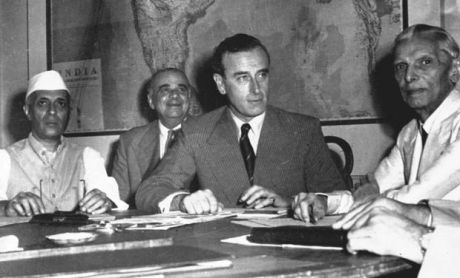
Lord Mountbatten, who had come to India armed with powers which no Viceroy before him enjoyed, had decided to unveil his plan (transfer of power) on May 17, 1947. Nehru did not have any idea about what he was going to see when he took the file Mountbatten gave him. On reading the draft, he was deeply shocked. The new plan would offer India’s provinces and princes only one choice—India or Pakistan. Jinnah would get his Pakistan, but with Punjab and Bengal truncated.
Later, Nehru introduced the problem of Gurdaspur, with its evenly divided population, and virtually ensured that this critical land-link with Kashmir remained in India. Ferozepur was similarly prevented from going on the other side of the border. The plan was finally announced on June 3. A visibly upset Mahatma Gandhi, after meeting Mountbatten, spoke at his prayer meeting: “The British government is not responsible for Partition—The Viceroy had no hand in it—if both of us (Hindus and Musalmans) cannot agree on anything else then the Viceroy is left with no choice.”
 Another drama took place regarding the choice of August 15 as India’s Independence Day. At a press conference, after the Viceroy announced his plan on June 3, he was asked by one of the 300 journalists present on which day he will cease to be a Viceroy. Without hesitation Mountbatten replied: “The transfer of power will take place on August 15, 1947.” In an interview to Larry Collins and Dominique Lapierre, authors of Freedom at Midnight, in 1971-73, a quarter century after Independence, Mountbatten admitted: “The date I chose came out of the blue—I was determined to show I was master of the situation. I thought it had to be August or September and I then came to the 15th of August because it was the second anniversary of Japan’s surrender.”
But the Viceroy had not catered for India’s occult industry. As the authors of Freedom at Midnight record: “Louis Mountbatten’s spontaneous decision to announce the date of Indian Independence on his own initiative was a bombshell—nowhere, however, did his choice of August 15 cause as much surprise and consternation as it did in the ranks of a corporation which ruled the lives of millions of Hindus…. They proclaimed August 15 a date so inauspicious….” Accepting their advice would have brought India ridicule. But Nehru and Patel, despite their intense dislike of the jyotishis, had to find a way out.
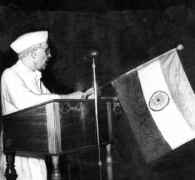
According to Durga Das, author of India: From Curzon to Nehru and After: “Nehru then hit upon an interesting compromise. He called the Constituent Assembly in the afternoon of August 14 and continued its sitting till midnight when, according to Western practice, August 15 took birth and the zero hour was within the auspicious period envisaged by the Hindu calendar.” The Constituent Assembly, as the Provisional Parliament, assumed sovereign power at midnight on August 14-15. India’s “tryst with destiny” had begun. – Deccan Chronicle, 14 August 2015
» Capt Praveen Davar is an ex-Army officer, editor, and political analyst.

Filed under: india | Tagged: 15 august 1947, india independence day, jawaharlal nehru, partition of india | 1 Comment »