








 “Political considerations, ideological affiliations—especially of those who have always tried to establish an imported ideology—of well-resourced groups who have thrived in the Western academia by projecting India as a society in perpetual conflict and instability, has largely influenced the study of history. Their prime political objective, despite their arguments to the contrary, has been to generate confusion and to finally deconstruct Bharat’s civilisational self-perception.” – Dr Anirban Ganguly
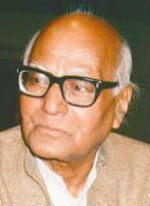
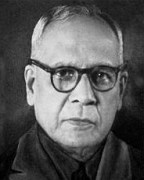 In the preface to his three-volume classic, History of the Freedom Movement in India, R. C. Majumdar (1888-1980), one of India’s most distinguished 20th century historians, made a very telling remark, especially relevant to teaching the history of the Indian freedom movement to young learners. “I have not hesitated,” wrote Majumdar, “to speak out the truth, even if it is in conflict with views cherished and propagated by distinguished political leaders for whom I have the greatest respect.” He also argued that a “solid structure of mutual amity and understanding cannot be built on the quicksands of false history and political expediency.”
One notices a compartmentalised and selective approach to the study of India, especially when examining the freedom struggle and the role of various regions and leaders. How many, for example, have been taught in some detail, of the rebellions against the East India Company rule in the southern region between 1800 and 1801? Why is the Northeast’s contribution to the freedom struggle and its pre-British civilisational identity and achievements not highlighted, researched and taught? Shall we not marvel to know how V. O. Chidambaram Pillai launched a Swadeshi Steam Navigation Company and challenged the British monopoly of the shipping sector until he was held, charged with sedition, and sentenced to life imprisonment? Sri  Aurobindo’s columns in Vande Mataram still stir the depths of our being and shape our patriotic sentiments. Ranima Gaidinliu’s exploits continue to inspire, as does the poetry of the revolutionary Subramaniam Bharati. Sister Nivedita’s contribution to strengthening scientific research in India against great colonial opposition is worth knowing.
Political considerations, ideological affiliations—especially of those who have always tried to establish an imported ideology—of well-resourced groups who have thrived in the Western academia by projecting India as a society in perpetual conflict and instability, has largely influenced the study of history. Their prime political objective, despite their arguments to the contrary, has been to generate confusion and to finally deconstruct Bharat’s civilisational self-perception. Therefore, all episodes in our history that have strengthened that civilisational self-perception, any individual or movement that has derived inspiration from Bharat’s civilisational self or has worked to discover and disseminate its achievements has been marginalised and suppressed.
So opportunistic and shallow has been the commitment to officially write the history of the freedom struggle that Marxist historians who got down to writing it could never complete it despite spending crores of taxpayers’ money and working on it for over four decades. The “Towards Freedom” project that continues to languish was essentially handed over to a group of scholars with no known commitment to India’s civilisational  ethos and who used the opportunity to perpetuate a political line and to exonerate a political class whose only contribution to the struggle for freedom was through collaboration with colonialists and imperialists in suppressing the movement itself.
But finally, there seems to be a gradual reversal of that approach. Attempts are being made to rediscover and re-interpret, as inspiring icons, many marginalised personalities who have made epochal contributions to shape our civilisational self and world view. Efforts are being made to study and disseminate their contributions, the contributions of historical episodes, events and achievements that have instilled a genuine civilisational sense in us. The compartmentalised approach is being challenged and questioned, new ideas, hitherto suppressed, are finding voice.
Such first steps towards restating our civilisational self is an urgent necessity, it alone can lead towards achieving that second dimension of freedom—the freedom of the mind, self and self-perception. – The New Indian Express, 15 August 2015
» Dr Anirban Ganguly is Director, Dr Syama Prasad Mookerjee Research Foundation, New Delhi. Email anirbangan@gmail.com

Filed under: india | Tagged: hindu civilisation, hindus, history, india, indian history, indian independence movement, indian politics, marxist historians, politics, western academics | Leave a comment »