











 When it comes to religious beliefs, the rule is that the judicial inquiry stops at finding out whether such a belief in fact exists—and never to go in to the logic or reason behind it. – K.N. Bhat
Is Sabarimala still a Hindu temple even after the famous verdict of the Supreme Court or is it just a resort? If it is a Hindu temple, only Hindu women of all ages are entitled to pray there as a matter of right. The majority judgment annulling the exclusion of women of a certain age group from temple entry was for enforcing their fundamental rights under Article 25. That judgment, as I understand, did not guarantee entry into Sabarimala to Rehanas and Marys to enable themselves to get in to the Guinness Book of Records. Sabarimala is a Hindu shrine and will continue to be so and despite the judgment, the Devaswom Board can officially and openly restrict the entry to believers only.
In the case of triple talaq, where a Muslim woman—a citizen of India—aggrieved by the practice of talaq, challenged its constitutional validity. The court had to decide the issue; the exclusion of some women from entering Sabarimala shrine based on a tradition of unknown antiquity was not challenged by any woman or any believer; some busy bodies who did not claim to be believers of Lord Ayyappa were the petitioners before the court. Considering the fact that the ancient practice did no harm to society and the possible repercussions and reactions of ruffling a hornet’s nest, a wise course would have been to rule out involvement of any public interest in this case.
Though my introduction to the Constitution of India was through the first edition of D.D. Basu’s Shorter Constitution of India, I have kept pace with the changing texts and revolutionary interpretations that followed—and I venture to say that our Supreme Court is not a proverbial “Hyde Park” open to interlopers to speak on any subject—in addition to indenting on precious judicial time. “Locus” of a petitioner is not just “technical”—it is the starting line; if you foul it you should be out of the race.
Thanks to Justice Indu Malhotra for assuring and demonstrating that doors of courts have been and should be open only for persons aggrieved by the cause in issue—or else the dignity and sanctity of the courts will be lost. The term “aggrieved” may on occasions receive a liberal interpretation. But a petition by a group of young lawyers with no claims for devotion to the temple—in other words “interlopers”—should not have been entertained. The justification for this reasoning is a stunning reality. Justice Malhotra said, “In a pluralistic society comprising of people with diverse faiths, beliefs and traditions, to entertain PILs challenging religious practices followed by any group, sect or denomination, could cause serious damage to the constitutional and secular fabric of this country”.
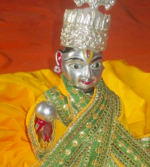
The other four learned judges on the bench ignored this aspect. In addition, their preoccupation with the high principles of constitutional morality and the like, appears to have made them mistake the matter in issue to be one relating to menstruation—while the real issue was the existence of a religious belief among a large section of Hindus for ages that to a shrine dedicated to a deity conceived as an eternal bachelor, women of sexually active age—10 to 50—should not be allowed entry. Maybe this prohibition was also because of the desire to keep women away from the male devotees who had lived a life of strict celibacy for 41 days before visiting the temple.
When it comes to religious beliefs, the rule is that the judicial inquiry stops at finding out whether such a belief in fact exists—and never to go in to the logic or reason behind it. Let me quote Justice Malhotra again, “The prayers of the petitioners, if acceded to, in its true effect, amounts to exercising powers of judicial review in determining the validity of religious beliefs and practices, which would be outside the ken of the courts. The issue of what constitutes an essential religious practice is for the religious community to decide.”
The learned judge based her conclusion on several precedents, some of them are worth reproducing.
“If this is the belief of the Zoroastrian community, a secular judge is bound to accept that belief—it is not for him to sit in judgment on that belief. He has no right to interfere with the conscience of a donor who makes a gift in favour of what he believes to be the advancement of his religion and the welfare of his community or mankind”.
“Our personal views and reactions are irrelevant. If the belief is genuinely and conscientiously held, it attracts the protection of Article 25, but subject, of course, to the inhibitions contained therein.”
“Article 25 is an article of faith in the Constitution, incorporated in recognition of the principle that the real test of a true democracy is the ability of even an insignificant minority to find its identity under the country’s Constitution. This has to borne in mind in interpreting Article 25….”
“Judicial review of religious practices ought not to be undertaken, as the court cannot impose its morality or rationality with respect to the form of worship of a deity. Doing so would negate the freedom to practice one’s religion according to one’s faith and beliefs. It would amount to rationalising religion, faith and beliefs, which is outside the ken of courts.”
She proceeded to hold, “In the case of the Sabarimala temple, the manifestation is in the form of a naishtik brahmachari. The belief in a deity, and the form in which he has manifested himself is a fundamental right protected by Article 25(1) of the Constitution.”
What about the rights of the excluded women to pray at Sabarimala? The answer is that not one of them questioned the exclusion—maybe because there are enough temples for them to pray. Or on the realisation that none can claim that she has a right to pray in any temple of her choice on her own terms, ignoring the sentiments of a larger number of other women who may respect the custom of exclusion.
Despite the Supreme Court declaring that women during menstruation can visit temples, the believers will continue to stick to existing customs; despite adultery no longer being an offence, the Seventh Commandment will continue to be respected. – Asian Age, 22 October 2018
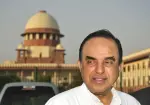
» The writer is a senior advocate of the Supreme Court and former additional solicitor-general of India.
See also
- Sabarimala Verdict: Only one judge got it right – EWD
- Sabarimala and the very real problems with ‘Constitutional morality’ – Nihal Sahu and Nikhil Mahadeva
Filed under: india | Tagged: hindu faith, hindu religious rights, sabarimala, sabarimala temple entry, supreme court of india | 2 Comments »