













 A new controversy is set to dog religious conversion and re-conversion with the Himachal Pradesh High Court ruling that changing religion is a matter of one’s personal belief and the State has no role to know whether it is a forced or free conversion.
If upheld by the Supreme Court, this order delivered on Thursday last, can have widespread ramifications on the raging debate on conversions and pave the way for people to change their religion at will without requiring them to give prior mandatory intimation to the local District Magistrate.
Holding that the Act was contrary to the right to practice any religion and the right to privacy linked to Article 21 of the Constitution, the bench of Justices Deepak Gupta and Rajiv Sharma held on Thursday, “A person’s belief or religion is something very personal to him. The State has no right to ask a person to disclose what his personal belief is.”
The decision is expected to be challenged before the Supreme Court owing to its impact on the State’s effort to curb forced conversions.
The Court was dealing with Section 4 of the Himachal Pradesh Freedom of Religion Act 2006 that required any person changing his original religion to intimate the District Magistrate of his decision a month in advance. On receiving such notice, the Magistrate would satisfy whether the conversion was by force, fraud or inducement. If the case was found to be a forced conversion, the DM was free to initiate criminal action against the accused persons.
There was even a penalty clause of up to Rs 1,000 attached in case of failure to give notice. But interestingly, if the person re-converted to his original religion, he was not required to give such notice. Finding this dichotomy unconstitutional, two NGOs — Evangelical Fellowship of India and Act Now for Harmony and Democracy (ANHAD) — had approached High Court.
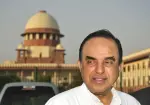
Janata Party president Subramanian Swamy had opposed the petitions on the ground that conversions were anti-Hinduism as the original religion of every person in the country is Hinduism.
The court held that every human being had a right to question and change his own belief. It dismissed Swamy’s argument as being “more philosophical in nature” but at the same time held, “this change must be an act of his own conscience — an act which has come from within himself, an act uninfluenced by force, fraud, or inducement”.
The State argued that prior notice alone could ensure if it was a forced conversion. But the Court felt, “This may open a Pandora’s box and once notice is issued, this may lead to conflicts between rival religious outfits and groups.” Only one case had been registered since the Act came into force.
The Court further reasoned, “If a person of his own volition changes his religion, there is no way that one can measure or fix the date on which he has ceased to belong to religion A and converted to religion B this has to be an ongoing process and therefore, there can be no notice of 30 days as required under the Act.”
The petitioners represented by a team of lawyers including Manoj V George of the Supreme Court said that disclosure by a convertee could endanger his life. Going a step further, the bench was of the view, “…Chances of the convertee being subjected to physical and psychological torture cannot be ruled out.” In such an event, the remedy could become more harmful than the problem. – The Pioneer, 3 September 2012
Filed under: india | Tagged: arunachal pradesh, christian, christian missionaries, christian terrorism, christianity, conversion, cultural relativism, evangelicals, forced conversion, foreign funds, freedom of religion, geopolitics, government, hindu, hinduism, hindutva, history, human rights, india, judiciary, neo-colonialism, politics, proselytize, protestant church, psychological warfare, re-conversion, religion, roman catholic church | 6 Comments »







 BHARATA BHARATI