











 It seems that Muslim societies have a predilection for Islamism and authoritarianism, factors evident in the governance of leading minority institutions like the Aligarh Muslim University and the Jamia Millia Islamia of Delhi. Regionalism, feudalism and Islamism are undermining north Indian Muslim educational institutions, combined with a failure in the voluntary education sector.” – Tufail Ahmad
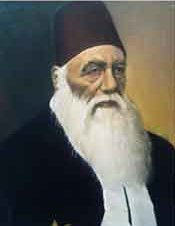 Every year, October 17 is celebrated on the campus of Aligarh Muslim University to mark the birthday of Sir Syed Ahmad Khan (1817–1898), arguably the 19th century’s foremost Muslim reformer. After the fall of the Mughal rule in 1857, Sir Syed thought deeply over the causes of Muslim decline and argued for rejecting religious orthodoxy and initiating educational reform to ensure advancement of Muslims. He toured England during 1869-70, learned about the British educational system, familiarised himself with the ideas of European enlightenment and sciences, and returned, inspired by The Spectator of London, to launch Tahzibul Akhlaq, a journal for educational and social reform among Muslims.
AMU alumni groups organise Sir Syed Day functions on October 17 in India, the Middle East and North America, but his message of enlightenment and reform is lost. Invariably, the annual functions are known for two features: dinners and mushairas, or Urdu poetry recitations. While Urdu did play a role as the language of rebellion against the British, its contribution to generating good ideas for the advancement of Muslims now is nil. Under incapable editors, Tahzibul Akhlaq that once stood for advancing scientific temperament among Muslims is reduced to promoting friends and reproducing translations of articles. It has failed to challenge religious orthodoxies, cause a stirring of ideas among students and the wider Muslim society, debate arguments on issues that matter to Muslims. It is hardly read on campus.
 There is no dearth of ideas among Muslims, but good ideas are missing. Across the Islamic world, clerics and academics are establishing disciplines like Islamic sociology and Islamic finance in a bid to revive Islam. They are full of ideas, reproducing the same ideas each time. AMU has a large residential campus that can match any varsity. It runs hundreds of courses from food craft, theology and management to foreign languages, tourism and physical and social sciences. It trains students in various skills and can take credit for bringing Muslim youth from rural areas and turning them into a graduate on a par with the national average, but a university of its scale and infrastructure is performing far below its potential.
Its negligible role in scientific innovation, original research in social sciences, or excellence in other fields reflects the following: a comprehensive failure to recruit and promote meritorious teachers, lack of progressive culture and free thinking among students, inability to promote a culture of debate and questioning on campus, and the like. In that sense, AMU mirrors the wider Muslim society. Also, hooliganism among students is corroding academic culture; students’ table manners will make any visitor ashamed; AMU student union leaders have engaged in collecting bhatta (extortion) from nearby shops and were recently the subject of ridicule for spending, in one case, one lakh rupees on buying water for a function.
 In India and abroad, it is understood that universities should be administered by academics who better understand their needs. However, it seems that Muslim societies have a predilection for Islamism and authoritarianism, factors evident in the governance of leading minority institutions like the AMU and the Jamia Millia Islamia of Delhi. Regionalism, feudalism and Islamism are undermining north Indian Muslim educational institutions, combined with a failure in the voluntary education sector. P K Abdul Aziz, a southerner from Kerala who did not speak Urdu and did not bend to the pulls of the feudal, Islamist and regional lobbies of north Indians on the AMU campus, was accused of being an enemy of Urdu and forced to quit as VC.
On October 17, at the main function to mark Sir Syed’s 196th birthday, AMU vice-chancellor retired Lt Gen Zameerud-din Shah pledged to turn the university into an “intellectual powerhouse” but Shah has recently shunned the path of setting up expert committees to recruit academics. Instead, he has misused emergency powers to appoint professors, notably in the departments of West Asian studies, English and electronics engineering—one of them being a retired major-general with no teaching experience in West Asian studies, another an Islamist ideologue with no research experience in English and a third from the Tablighi Jamaat with no degree in electronics. Shah, a former deputy chief of Indian Army, has relied on recruiting retired military officials to key offices, notably Brig S Ahmad Ali as pro-VC, Gr. Captain Shahrukh Shamshad as registrar and another as an intermediate college principal.
 Despite the total absence of government interference in recruitment of its vice-chancellor, AMU has been run by retired officers from the military and the Indian administrative service in recent decades. Dr Shamim Akhtar, an assistant professor at AMU’s department of adult and continuing education, says Shah’s reliance on former military officers strengthens a culture of nepotism on campus and damages academic excellence and motivation of the teaching staff whose anger recently stopped him from appointing a military man as caretaker of the medical college. Akhtar rues that elections to the teachers’ association are marked by public demonstrations of regional loyalties, and regionalism—between those from eastern and western UP—prevents recruitment of meritorious teachers.
Insofar as the culture of feudalism, regionalism and Islamism has seeped into the functioning of AMU, it is unlikely that it can shake off these corroding agents, but there is a way forward. On the AMU website, a passage about its founder notes that the Aligarh Institute Gazette, a journal started by Sir Syed, “succeeded in agitating the minds in the traditional Muslim society. Anyone with a poor level of commitment would have backed off in the face of strong opposition but Sir Syed responded by bringing out another journal, Tahzibul Akhlaq”.
 The challenge now before AMU and the editors of Tahzibul Akhlaq is to foster a culture of debate that challenges religious orthodoxies among Muslims, thereby creating a wider intellectual base from which reformist Muslim writers in India can advance Sir Syed’s message of enlightenment and reform. – The New Indian Express, 23 October 2013
» Tufail Ahmad is director of South Asia Studies Project at the Middle East Media Research Institute, Washington, DC. Email: tufailelif@yahoo.co.uk
Filed under: india | Tagged: aligarh muslim university, education, feudalism, india, islam, islam in india, islamism, jamia millia islamia university, muslim fundamentalism, politics, psychological warfare, religion, syed ahmad khan, tablighi jamaat | 2 Comments »