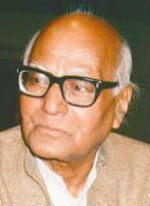







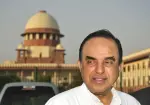


 “Nation-building cannot be accomplished by manifestoes or speeches. It demands sacrifice and realisation of the responsibility of living and dying for a larger cause. It is this widening of the self that is known as ‘character-building’ in RSS shakhas. Hankering for power and using larger causes for self-aggrandisement hardly serves any purpose.” – Prof Rakesh Sinha
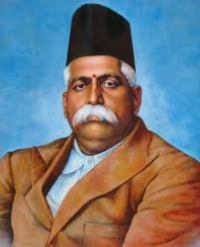 Netaji Subhas Chandra Bose visited RSS founder Dr Keshav Baliram Hedgewar on June 20, 1940 to solicit his support to re-polarise anti-imperialist forces. Unfortunately, conversation didn’t happen as Hedgewar was on his deathbed—he passed away the next morning. This fact unravels many things that history textbooks have selectively omitted. The reason isn’t complex. Most textbook writers, steeped in communist ideology and hatred for RSS, have made history textbooks uninspiring, boring, ridden with selective facts and manipulated ideas and events.
Had Hedgewar lived on, Bose might not have gone to Germany and Japan to seek an alliance against British imperialism. Three decades later, Jayaprakash Narayan sought RSS support to fight Indira Gandhi’s naked authoritarianism. Notably, both Bose and JP came from the Congress Socialist Party, sharing similar political moorings.
The British weren’t unaware of the Sangh’s hidden agenda behind its military training, camps and indoctrination of young minds. Their military intelligence’s first report on RSS in 1930 stated that “RSS has the potential to become a terrorist organisation”. The immediate objective of RSS was liberation of the country. This was endorsed in a different way two years later when Hedgewar along with hundreds of swayamsevaks joined the Civil Disobedience Movement. This led the intelligence to blame Hedgewar for reviving the dying movement in Central Provinces and Berar.
Hedgewar’s actions were an exposition of the definition of nationalism that need to be part of history textbooks. For him, nationalism excluded any compromise with imperialism for personal or circumstantial reasons. It had to be pure-spirited, with 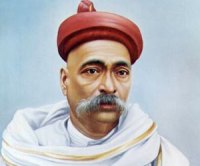 sacrifice, if needed. Nationalism was his philosophy of action. By 1920, Hedgewar emerged as a young radical inside the Congress. During its 1920 Nagpur session, he opposed Vijayaraghavachariar’s candidature for presidency because of the latter’s presence at the Governor of Madras’ tea party, even as the nation mourned the Jallianwala Bagh massacre. Hedgewar’s puritanism challenged politics based on elitism and convenience. Earlier, during WWI, when the British enticed nationalists to cooperate in their war effort, Hedgewar, himself a follower of Lokmanya Tilak, broke ranks with senior leaders, including Dr B. S. Moonje, long considered his mentor. Hedgewar’s views split the Rashtriya Mandal, an organisation of Tilakites; he formed Nagpur National Union which opposed mobilisation for the war. His slogan was ‘Revolution, not Cooperation’. It was this nationalism that led him to form the RSS. He found two maladies to be the bane of Indian life—individualism and conscious amnesia of our civilisational role. Thus, while showing solidarity with the Congress, he widened the horizon of nationalism from anti-imperialism as its beginning to cultural nationalism. The RSS bore the responsibility of resurrecting civilisational values of nationalism.
These core issues have been missing from any discussion on the RSS, particularly among its critics who view it as a power-centric organisation with majoritarian perspective. Hedgewar believed that only cultural nationalism can generate peacetime nationalism and restore the importance of Bharatvarsha.
 Nation-building cannot be accomplished by manifestoes or speeches. It demands sacrifice and realisation of the responsibility of living and dying for a larger cause. It is this widening of the self that is known as ‘character-building’ in RSS shakhas. Hankering for power and using larger causes for self-aggrandisement hardly serves any purpose. Mahratta, an English daily, in its editorial on June 28, 1940, aptly defined Hedgewar’s personality: “We use the word ‘selflessness’. Dr Hedgewar’s career gives it a reality which few have realized…. Dr Hedgewar was the prophet of Hindu Rashtra. He was no mere dreamer engrossed in flights of imagination, but a man of action who knew how to build lofty structures with human material.”
Hedgewar’s vision and action is not merely a thing of past, but holds exciting possibilities for the present and future. That is why while others’ shadows are shrinking, Hedgewar’s imprint is increasing by the day. The Mahratta’s title of page one news “Dr Hedgewar’s Sangh Still Going Strong” on June 28, 1940, transcends the limit of title. His 125th birth anniversary is the apt occasion to correct the discourse. – The New Indian Express, 23 MArch 2015
» Prof Rakesh Sinha is Hony Director of India Policy Foundation. Email rakeshsinha46@gmail.com

Filed under: india | Tagged: cultural nationalism, hindu, india, keshav baliram hedgewar, national culture, nationalism, RSS, RSS | 4 Comments »