









 It would seem that we Indians, despite whatever we may claim, love caste. The only problem is that we want it to work in our favour rather than against us. – Prof Makarand R. Paranjape
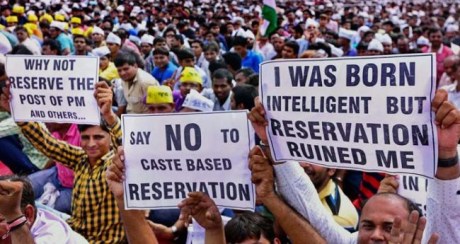
Perhaps no facet of Indian society is so difficult to comprehend and, more recently, more contentious than caste, along with millennia-long attempts to reform or modify it. The euphemism for India’s reservation system, affirmative action, is actually a misapplication to India of US social justice and equal opportunity interventions. Our system of quotas is not only different but almost certainly far more complex, not to mention unique, with countless state and region-wise variations. It is, paradoxically, almost as complicated and fathomless as the caste system itself, which it ostensibly seeks to replace.
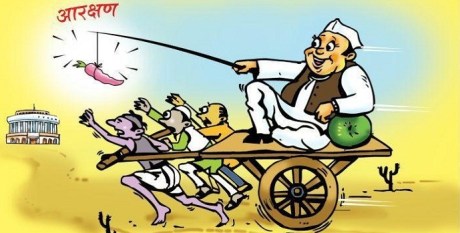
Not surprising if we get to the bottom of the problem, it would seem that we Indians, despite whatever we may claim, love caste. The only problem is that we want it to work in our favour rather than against us. Everyone understands this except the naïve few who want India to transit into a colourless equality of the sort that is only a modern ideal and perhaps nowhere in practice. In one form or another, privileges, whether monetary, cultural, or social, are zealously guarded and routinely reproduced in most parts of the world, though under different guises. Why should it surprise us if reservations create another type of caste, with special benefits to certain sections, entitled by birth and extended generation after generation? No wonder many not so badly off sections of our populace are seeking reservations regardless of any vestigial stigma that may be still attached to them.
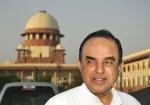
On August 23, the Supreme Court, hearing debates on whether reservations for SC/ST candidates should extend to promotions or not, asked whether the presumption behind those arguing in favour was that SCs/STs will remain perpetually backward. This is a logical question for if that is indeed the case then, clearly, reservations, having failed to alleviate the condition of the beneficiaries, are therefore not the solution to the problem. On the other hand, if we believe that reservations are helpful, as much of the evidence shows, then they should be applied only until the beneficiary needs them, not forever. In other words, reservations without de-reservations are meaningless and self-defeating. Instead of destroying hereditary caste, they only create another category of a perpetual beneficiary or yet another type of caste.
De-reservation should, obviously, be based on verifiable criteria, just as caste benefits themselves are. There are “creamy layer” indicators in place applied to OBCs. Shouldn’t something similar also pertain to SCs/STs? This is the crux of the contention going on in the Supreme Court of India. The honourable bench upheld the salience and necessity of reservations at entry level but questioned whether they should be used for speedy or special promotion channels in addition to being extended generation after generation. Should promotions be given “to the grandson and great-grandson of an SC/ST person who had already availed the benefit?”, the Court reportedly asked.
There are, of course, many precedents and earlier judgements, for example, the M. Nagaraj case, where reservations in promotions had been allowed with some riders. K.K. Venugopal, Attorney General, maintained on the other hand, that the backwardness of a community is determined by its inclusion in the list of SC/STs by a presidential order and need not be ascertained again and again. The flaw in this position is the assumption that a community will remain static, frozen in the social order, or backwards forever. On the contrary, ethnic groups have moved up or down the ladder of social, financial, and political privilege with astonishing speed, sometimes within just a few decades. We need high-quality evidence and data to understand such transitions, which in turn will help us generate objective determinants. Yet, just caste will no longer suffice. It must be supplemented by other factors, including economic status and regional factors.
The problem is that the political investment in caste is an almost insurmountable obstacle not only to social transformation but also to legal reform. Let’s face it: if backwardness goes, so will its brokers and beneficiaries. And yet we must bite the bullet, sooner or later. We need a nation-wide debate on this issue, a debate that must not run on predictable caste and ideological lines. Shanti Bhushan, making a case for “general candidates” was quoted as saying that “reservation in promotions in bureaucratic posts would spell disaster for a democracy.” In fact, unless the entire question is taken up and a new way of supporting our disadvantaged citizens found, we are staring at a huge crisis down the line.
There is yet another side to this debate that is rarely considered. The advantages of reservation decline with time: entitled groups turn lazy or noncompetitive. It is only hard struggle that brings out the best in us. Thus, beneficiaries of reservation may themselves ask for de-reservation so that children remain competent. – DNA, 25 August 2018
» Prof Makarand R. Paranjape is a poet and teaches English literature at JNU.
Filed under: india | Tagged: caste, caste-based reservations, reservations/quotas | 5 Comments »