












 “Indian environmentalists and grassroots activists need to urgently master the utility of the Biodiversity Convention in the fight for justice and fair play. It is important as it also covers access to the traditional knowledge of communities – another area of plunder. It also encompasses transfer of technology, including bio-technology, to governments or local communities that provide traditional knowledge or biodiversity resources.” – Sandhya Jain
 New Delhi must invoke the UN Convention on Biodiversity to fight the growing piracy of India’s biodiversity by multinational companies, rather than leave this vital task to well meaning activists and NGOs that could be out-manoeuvred by powerful corporates backed by the clout of the Western capitals in which they are embedded.
The Indian melon is the latest instance of Western multinationals steadily and surreptitiously chipping away at the sovereign rights of nations and communities over their indigenous food wealth, as part of a grand design to bring the planet’s entire food chain under their control.
This is a test case for the UN and its declaration of 2011 to 2020 as the UN Decade on Biodiversity, and other major world capitals would do well to take an interest in the matter. In May 2011, the European Patent Office in Munich, Germany, quietly granted Monsanto a patent [EP 1 962 578] on conventionally-bred Indian melons with a natural resistance to certain plant diseases!
The melon has a natural resistance to many diseases; the Indian melon is naturally resistant to the Cucurbit yellow stunting disorder virus (CYSDV), which in recent years has caused havoc in North America, Europe and North Africa. It is registered in international seed banks as PI 313970. The world knows it is native to India.
Originally, the Netherland seed company DeRuiter developed disease-resistant melons using conventional breeding methods introduced from a non-sweet melon from India. Monsanto acquired the seed company in 2008.
Then, without notice to India, Monsanto was granted the patent in 2011, thus acquiring monopoly power over an Indian natural resource, with no benefit to India as envisaged under the Biodiversity Convention. Monsanto now has the power to block access to all breeding material inheriting the resistance derived from the Indian melon. This will inhibit scientists from developing new melon varieties through conventional breeding methods, though such breeding is necessary if affected countries are to produce melons protected against CYSDV.
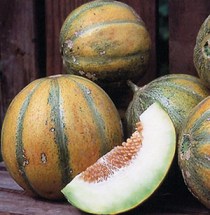 Environmental activists argue that the Monsanto patent is an abuse of patent law because it contravenes European law that excludes patents on conventional breeding. (In December 2010, the European Patent Office had decided that conventional breeding could not be patented (G2/07 and G1/08). Monsanto’s is not a real invention, and is in fact a case of bio-piracy as the original and most relevant plants come from India and are registered in international seed banks. Such patents block access to the genetic resources necessary for further breeding, and subordinate the basic resources needed for daily life to monopoly control of multinationals.
Shockingly however, in the Monsanto patent case, the Patent Office simply excluded the process for melon breeding and allowed the plants and all parts of the plant, such as seeds and melon fruit, to be patented as an ‘invention’. This is blatantly illegal as plants and seeds are not man-made, and cannot legitimately be subjected to the monopoly control of multinational corporations. That is why activists are demanding an explicit ban on the patenting of breeding material, plants, genes, and animals and food derived thereof.
The patenting of traits taken from India’s indigenous melon varieties needs to be addressed on war footing, and government cannot be negligent of its duties in this respect. This is where the Convention on Bio Diversity comes in. Though this international legally binding treaty has not been ratified by Washington – the US never ratifies treaties with which it seeks to bind other nations – it can be invoked against Monsanto as it is a multinational corporation with offices and operations in countries across the globe, which are party to the Convention.
 Dr. S. Faizi, chairman, Indian Biodiversity Forum, and key negotiator in the Intergovernmental Negotiation Committee that formulated the Biodiversity Convention, explains that the latter has three major objectives – conservation of biodiversity; sustainable use of its components; and fair and equitable sharing of benefits arising from genetic resources. Its goal is the development of national strategies for the conservation and sustainable use of biological diversity, and hence, sustainable development.
The Biodiversity Convention came into force as long back as 29 Dec 1993, but its importance is still little understood, Faizi laments. The Convention is significant because, under Article 15.1, it explicitly recognizes the sovereign rights of States over their natural resources, and declares that the authority to determine access to genetic resources rests with the national governments and is subject to national legislation. Article 15.4 states that access, where granted, shall be on mutually agreed terms and subject to the provisions of this Article.
Article 15.5 states that access to genetic resources shall be subject to prior informed consent of the Contracting Party providing such resources, unless otherwise determined by that Party. And Article 15.7 asserts that each Contracting Party shall take legislative, administrative or policy measures, as appropriate, and in accordance with Articles 16 and 19 and, where necessary, through the financial mechanism established by Articles 20 and 21, with the aim of sharing in a fair and equitable way the results of research and development and the benefits arising from the commercial and other utilization of genetic resources with the Contracting Party providing such resources. Such sharing shall be upon mutually agreed terms.
 Both the letter and spirit of this international convention have clearly been violated in the case of the patent on the Indian melon. A sovereign national resource has been misappropriated by a multinational entity, and needs to be redressed. Dr Faizi feels that a case pursued in a civil court under the Biodiversity Convention has a higher chance of success than an issue of patent law.
Indian environmentalists and grassroots activists need to urgently master the utility of the Biodiversity Convention in the fight for justice and fair play. It is important as it also covers access to the traditional knowledge of communities – another area of plunder. It also encompasses transfer of technology, including bio-technology, to governments or local communities that provide traditional knowledge or biodiversity resources.
Overall, the Convention is comprehensive and recognizes for the first time in international law, that conservation of biological diversity is “a common concern of humankind” and an integral part of the development process. It covers all ecosystems, species, and genetic resources, and is explicit about fair and equitable sharing of benefits arising from the use of genetic resources, especially those intended for commercial use.
Sandhya Jain is the Editor of www.vijayvaani.com
Filed under: india | Tagged: agriculture, biodiversity, ecology, environmentals, globalisation, india, indian melon, melon, monsanto, neo-colonialism, seed patents, seeds, UN | Leave a comment »