







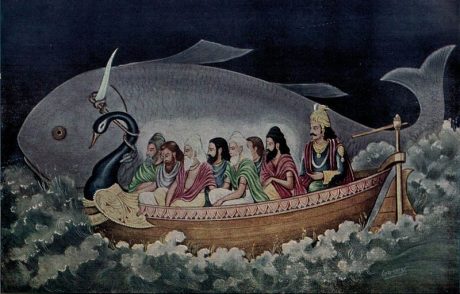
 There is an urgent need to relook at our ancient texts; we need to examine them with a decolonised lens. The distortion of the Manusmriti is just one example of how our sacred texts have been distorted and villainised. – Gopal Goswami
Slavery not only affects people financially and physically but also handicaps them intellectually. One of the most serious consequences of slavery is that it degrades and corrupts the ruled culturally and civilisationally. Generations of people are made subservient, both physically as well as culturally. The same phenomenon happened with Hindus, whose Sanatana culture was severely assaulted by foreign rulers before Independence, and post-1947 court historians and scholars distorted the idea of Bharat for new generations. The Manusmriti is an apt example of how a sacred text is demonised and through it the entire Sanatana Dharma has been put in the dock.
The Manusmriti, the oldest of the smritis, determined “varna” based on “talents, jobs, and abilities rather than birth”. Manu says that a Brahmin may become a Shudra and vice versa based on his characteristics, deeds, and talents. Similarly, there can be an interchange between Kshatriyas and Vaishyas.
Ironically, nowadays, the word “Manuvad” has a negative meaning. Brahmanism is also used as a synonym for Manuvad. In reality, people who speak out against Manuvad are unaware of Manu or Manusmriti. In reality, the caste system for which the Manusmriti and Manu are accused does not even mention the word caste [from the Portuguese casta meaning race].
The Manusmriti is a compendium of all the preparations made for the society’s operation. It is neither anti-Dalit nor pro-Brahman. Rather, it focuses only on humans and human obligations. Manu does not regard anyone to be a Dalit. Dalit-related systems are a creation of the British, [Christian missionaries,] and the Left.
According to Manu’s arrangement, the highest echelon is occupied by Brahmins, followed by Kshatriyas, Vaishyas, and Shudras. The Manusmriti says that a Brahmin can become a Shudra and vice versa based on one’s characteristics, acts, and talents. Similarly, such an exchange occurs between Kshatriya and Vaishya.
According to Manu’s law, if a Brahmin’s offspring is unsuitable, he is demoted to the fourth class, or Shudra, based on his aptitude. Similarly, a Shudra offspring can get a Brahmin status based on merit. There are several instances in our ancient civilisation where a person rose from the ranks of Shudra or Kshatriya to become a Brahmin. Vishwamitra’s abilities allowed him to go from Kshatriya to Brahmarshi. There are several examples in Indian history that refute Manu’s anti-Dalit claims.
In summary, those who believe in humanism are “Manuwadis”.
Shudras were not prohibited from practising religious rituals and rites. In doing so, Manu has clarified Shudras’ authority to pursue Dharma.
A Shudra was supposed to be pushed lightly, as per the Manusmriti. According to Manu’s penal code, the minimal penalty should be given to Shudras for offences such as stealing, and the guilty must sustain the punishment in order to support the premise that the greater he is, the bigger the punishment he receives. Thus, to a Shudra 8 times, 16 times to Vaishya, 32 times to Kshatriyas; the Brahmin will be punished 64 times.
This shows Manu was definitely not unjust to the Shudras.
According to the Manusmriti, the first birth (a caste) is recorded when one is born (naturally) in the mother’s womb. According to Manu, there is also a second birth (Dvija). One is reborn when one is initiated into the Gayatri mantra or graduated.
The initiation sacrament is called Upanayana or Yagyopavita Sanskar. This signifies that a child who goes for his education (together with all official religious procedures) is born a second time at the period stipulated in the Vedas for obtaining wisdom. A boy who purposefully or unintentionally fails to gain vidya as per any of the three varnas signifies just one born (a caste), a natural, or a Shudra. Furthermore, a person who does not execute the mandated responsibilities and obligations of that varna while having received education in any of the three varnas becomes a Shudra. Can a Shudra become a Dvija?
Once the Vedic rituals (Yajnopavita Sanskar) of a Shudra’s son begin with correct Vedic rites (means he’s educated), he is bestowed the titles of Brahmin, Kshatriya, and Vaishya by virtue and actions. Maharishi Manu states that a Brahmin becomes a Shudra based on his or her guna, karma, and merit, and vice versa. The same is the case with Kshatriya and Vaishya.
During the Vedic period, there were four classes in the social order known as varnas. After being born into any clan, every child or person can embrace and acquire the attributes, deeds, and talents of the preferred varna. In Manu’s social structure, everyone had the same right to join any varna based on his credentials, regardless of his parents’ occupation.
Not just individuals but even an entire community was at times demoted or promoted in the varna order as per their act or performance. Several passages from the Mahabharata and the Manusmriti show how for ignoring their mandated obligations and failing to undertake penance even when instructed to do so by the Brahmins, some members of the Kshatriya community were dubbed Shudras. Pundraka, Audra, Dravida, Kamboja, Yavana, Saka, Parda, Pahlava, Cheena, Kirata, Darda and Khasha are some of the names.
As the above-mentioned evidence suggests, there is an urgent need to relook at our ancient texts; we need to examine with from a decolonised lens. The distortion of the Manusmriti is just one example of how our sacred texts have been distorted and villainised. – Firstpost, 23 June 2022
› Gopal Goswami is an author, social worker and research scholar at SVNIT, Surat, Gujarat.
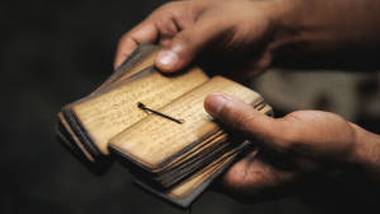

Filed under: india | Tagged: dharmashastras, hindu caste system, hindu law, manu, manusmriti | Comments Off on Manusmriti is neither anti-Dalit nor pro-Brahmin – Gopal Goswami