











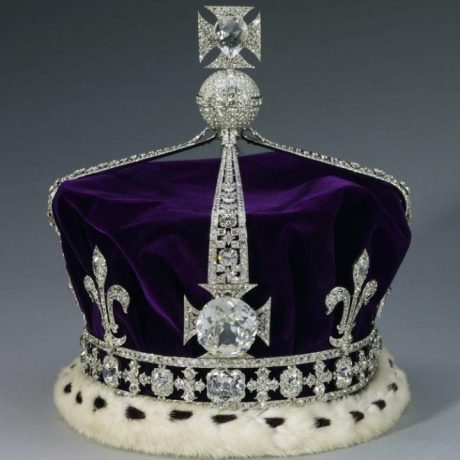
India’s pitch for the Kohinoor diamond has never gained urgency. More so as there are more onerous reparations Britain should make to India but can ill afford to do. The Kohinoor’s legendary bad luck seems to have beset Britain too. – Reshmi Dasgupta
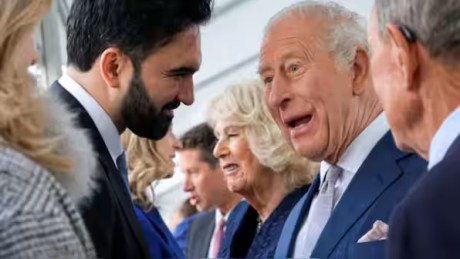
When New York’s Mayor Zohran Mamdani picks the Kohinoor as his primary agenda when asked about the visit of King Charles III to the US, there has to be more to it than a belated rush of Indophilia. Especially for an India that is currently run by a political dispensation for whom he has a visceral hatred. The return of the Kohinoor has been part of India’s broader agenda with Britain but not an urgent one, so why was this Indian-American taking up the cudgels?
On the face of it, Mamdani was being, well, Mamdani. Cheeky and flippant, even though the British monarch was visiting the city of which he is the mayor, for a solemn engagement: to pay respects to the victims of the 9/11 World Trade Center attacks. Mamdani’s attempt and motivation to pivot attention away from the uncomfortable (for him) aspects of that event by introducing an irrelevant angle to his possible interlocution with King Charles III are manifest.
How many Americans know anything about the Kohinoor? Some people there probably think it is a nightclub or casino; many may believe it is the local Indian restaurant. Even if, by some miracle of social media epiphany, some of them would know it is a large diamond that now resides in the late British Queen Mother’s crown, they are unlikely to be aware of its contested provenance or that India has been demanding its return. So why did Mamdani bring it up?
There had to be a more insidious reason. Mahmood Mamdani, as a political scientist, must have told his son of the implications of the Treaty of Lahore, Treaty of Amritsar, both signed in March 1846, Treaty of Bhairowal in December 1846 and the terms “granted” in 1849, under which the British snatched the Sikh Empire and the Kohinoor from Duleep Singh, the minor heir to Maharaja Ranjit Singh, and made their wazir, Raja Gulab Singh, the ruler of Jammu.
Crucially, Article 4 of the Treaty of Lahore stated:
“The British Government having demanded from the Lahore State an indemnification for the expenses of the war, in addition to the cession of territory described in Article 3, payment of one and a half crore of Rupees, and the Lahore Government being unable to pay the whole of this sum at this time, or to give security satisfactory to the British Government for its eventual payment, the Maharajah cedes to the Honourable Company, in perpetual sovereignty, as equivalent for one crore of Rupees, all his forts, territories, rights and interests in the hill countries, which are situated between the Rivers Beas and Indus, including the Provinces of Kashmir and Hazara.”
By the Treaty of Amritsar, the British sold the ‘ceded’ Sikh territory of Kashmir to Raja Gulab Singh for Rs 75 lakh. A century later, his descendant Maharaja Hari Singh of Jammu & Kashmir acceded to India. And in 1849, after the last Anglo-Sikh war, the British decreed that not only was the entire Sikh Empire now part of the British government but also that the “gem called the Koh-i-Noor, which was taken from Shah Sooja-ool-Moolk by Maharajah Runjeet Singh, shall be surrendered by the Maharajah of Lahore to the Queen of England”.
In short, the same unfair treaties imposed upon the child-maharaja Duleep Singh not only saw the Sikh Empire and the Kohinoor pass into British hands but also saw Kashmir become part of the nascent Dogra dynasty. Finding a legal way to hand the Kohinoor over to India would mean the rescinding of those treaties, which would not have mattered much had Kashmir not been part of the ceded territories. India surely values Kashmir more than any diamond.
In the decades since Independence, India has officially fought (and won) intense legal battles for the return of items of national importance, most recently the Chola bronzes from the US and Buddha gem relics of Piprahwa from the UK. But its pitch for the Kohinoor has never gained the same urgency. More so as there are more onerous reparations Britain should make to India but can ill afford to do. Kohinoor’s legendary bad luck seems to have beset Britain too.
Britain would probably gladly hand over the Kohinoor—all things considered—if India would call it quits on the reparation issue thereafter. But why make things easy for the British, given that they imposed impossible financial penalties on Maharaja Duleep Singh when they had the heft to browbeat Indians. The boot is now on the other foot. So rather than harping on the Kohinoor, India should instead ask Britain to pay up what it owed us after the World Wars.
Shashi Tharoor estimates that India’s contributions in cash and material in World War I totalled £8 billion in today’s money. By the end of World War II, Britain owed India £1.25 billion in ‘sterling balances’, accounting for half of Britain’s £3 billion war debt. It never paid up. Since the Kohinoor is valued at £1billion-£6 billion, some clever British bean counter-cum-babu could advise his political bosses to posit its return as Britain’s war debt repayment, thereby getting off cheaply.
Hopefully India would not fall for such a gambit, if ever offered the Kohinoor on such terms. Even the British Museum returning the Amaravati Stupa segments—another improbability—along with the Kohinoor would not be deemed adequate reparation. But coming back to Mamdani’s supposed poser, there is little King Charles III can do about it anyway, as the gem is not his personal property but that of the Crown—which means the state—however dubiously it got there.
Was Mamdani aware of this? Being educated in the US, he may indeed be more than a bit fuzzy about the status of the various categories of Britain’s colonial-era loot from India. But being a left-wing politician, it is not hard to discern his view on such “official” British possessions now reposing in the Tower of London, grand museums and even in the personal vaults of the Royal Family. But nor can that second (Kashmir) angle to his supposed comment be ruled out. – Firstpost, 2 May 2026
› Reshmi Dasgupta is a freelance writer.
Filed under: india, UK | Tagged: british colonial rule, geopolitics, koh-i-noor, reparations, stolen national treasures |






 BHARATA BHARATI