












 In permanent campaigning mode, Modi has outsourced governance to bureaucrats who can’t wait for the return of the Congress which happily abets their graft. The tax department, ED, DRI and CBI, instead of taking UPA-era corruption cases to their logical conclusion, engage in petty harassment of honest taxpayers. – Minhaz Merchant
The BJP-led NDA governs 19 of India’s 29 states. You’d think 2018, with eight assembly elections slated to be held this year, would build on that total.
You’d be wrong.
The BJP could win one of the four north-eastern states on offer (Meghalaya, Mizoram, Nagaland and Tripura) but could well lose at least one of the three big states (Rajasthan, Madhya Pradesh and Chhattisgarh) going to the polls later this year. Karnataka, in April 2018, is a toss-up.
But the real worry for the BJP is 2019. In 2014, along with its NDA allies, it won 191 out of 208 Lok Sabha seats in five key states—Uttar Pradesh, Rajasthan, Gujarat, Madhya Pradesh and Maharashtra. That tally will not be repeated.
The problem is the BJP’s wobbly economic, foreign and social policies as it enters the last year of its term. The government is in office, but not in power.
In contrast, the Congress-led UPA Opposition often seems to be out of office but in power. Its former lawyer-ministers strut around as if they were in government. In parliament, the Congress with just 45 MPs sets the agenda for debates. BJP MPs (with few exceptions like M. J. Akbar, Smriti Irani and Arun Jaitley) seem defensive, even apologetic.
The Congress, the progenitor of serial scams, hasn’t been able to pin a single scam on the NDA government. It doesn’t need to. The government gives the impression of being under pressure all the time—from the Opposition, the media, NGOs, and activists. The media, whose role by definition must obviously be adversarial to the government in power, is packed with Left leaning ideologues who loathe the BJP.
The Modi government has done some excellent things in its tenure. It has, among other achievements, legislated an insolvency and bankruptcy bill, massively expanded financial inclusion, electrified large swathes of villages that had never seen electricity before, empowered small entrepreneurs through Mudra Bank, begun recapitalising PSU banks, scrapped hundreds of colonial-era laws and launched dozens of schemes ranging from Make in India to Swachh India. Some have worked. Others haven’t. Many are works in progress. Outcomes are awaited.
So why does the Modi government seem more vulnerable than it is? To be effective, power has to be projected. The Congress has plenty of experience in doing this. The BJP has relatively little.
For the first time in 500 years, India is being governed by Bharat rather than India. Bharat isn’t used to exercising power. For centuries it has obeyed while others ruled. The Mughals were feudal. The British were feudal. The Congress is feudal. The BJP has its faults but feudal it isn’t.
The Mughals ruled India through an elaborate system of elite Indian durbaris. The British upgraded the system, making educated Indians their subaltern administrators and the poor their sepoys. The structure though remained much the same as in the time of the Mughals: the narrow top of the pyramid comprising the British elite and its Indian retainers lorded over a broad base of the deprived, the poor and the dispossessed.
The Congress after Independence borrowed Britain’s clothes. It didn’t change colonial-era laws designed to keep Indians under British subjugation. It didn’t reform the ICS except to change one alphabet letter in it. The IAS ruled; it did not serve. The Congress didn’t democratise the party; instead, it feudalised it further under one family. India was for decades a democracy run by a feudal-minded, undemocratic party.
Subjugated for 500 years by the Mughals and the British, the Congress found it easy to be feudal, elitist and undemocratic. Indians were used to being subjugated. It allowed Congressmen to believe, as the British and Mughals had believed before them, that they were born to rule. The advent of “janata” politics finally challenged this zamindari attitude. The first experiment under Morarji Desai, following Indira Gandhi’s subversive Emergency, failed. The six Vajpayee years two decades later were relatively anodyne. Vajpayee was cut in a Nehruvian mould and loath to upset the old order.
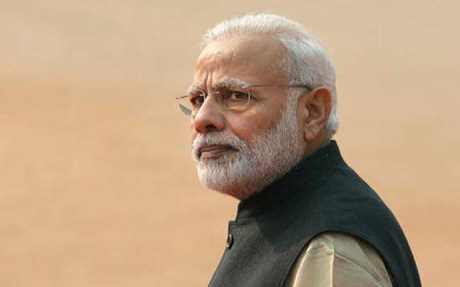
That would happen only in 2014 with the arrival of Narendra Modi. He didn’t have Vajpayee’s Lakhnawi tehzeeb or Morarji Desai’s moneyed Mumbai background. He was truly different. The poor, finally, had their man.
Their masters though weren’t happy. Chaiwala, neech and other epithets showed their contempt for this usurper, the interloper who had dared to challenge their power. He must not be allowed to succeed. India was used to being ruled by people who spoke nice English, had good table manners and arrogated to themselves the permanent right to govern.
The corrupt bureaucracy, the gnarled Lutyens media, and India-hating NGOs were quickly co-opted. Discrediting Modi and eroding his credibility were put into operation as soon as the shock of the 2014 defeat had faded.
Modi has meanwhile fallen into a trap of his own making. He has not promoted technocratic talent into his cabinet. He has relied on bureaucrats who behind his back have subverted much of his agenda.
In permanent campaigning mode, Modi has outsourced governance to these bureaucrats who can’t wait for the return of the Congress which happily abets their graft. The tax department, ED, DRI and CBI, instead of taking UPA-era corruption cases to their logical conclusion, engage in petty harassment of honest taxpayers.
Conflict of interest abounds everywhere. Mukul Rohatgi, for example, should never been appointed attorney-general. He represented some of the 2G accused. Such cavalier disregard for propriety has given the Opposition legitimate grounds to attack the Modi government across several fronts.
New Delhi’s Pakistan policy, for example, has been incoherent. Even as NSA Ajit Doval met his Pakistan counterpart Lt General Nasser Khan Janjua under the radar in Bangkok in late December 2017, Pakistan terrorists were killing Indian soldiers. This hot-and-cold approach to Pakistan has failed as mounting Indian casualties along the LoC attest.
US President Donald Trump through his tweet on January 1, 2018, virtually declared Pakistan a state sponsor of terrorism. India, the victim of Pakistani terrorism, however, continues to grant it most favoured nation (MFN) status, allows the Indus Waters Treaty (IWT) to go ahead unchecked even where IWT rules permit restrictions on water flow to Pakistan, and refuses to allow the tabling of a parliamentary resolution to declare Pakistan a state sponsor of terrorism while asking other countries to do so.
India used nuanced toughness to deal successfully with China over Doklam. Dealing with Pakistan requires an entirely different strategy based on imposing an unaffordable cost on the Pakistan army for abetting terrorism.
The armed forces, neglected for a decade by the last UPA government, have been slow to receive modern equipment even under the NDA. The bureaucracy in the ministries of defence and finance has not been tamed.
When Modi took office in May 2014, almost the first thing he did was summon over 70 key bureaucrats for a pep talk. The bureaucrats were initially worried: their kingdom was under threat by a prime minister who seemed to mean business. They are breathing much easier today. They were wrong.
In 2014, the question was: Will Modi change the system or will the system change Modi?
The prime minister has just over a year to provide an answer to that question. – Daily-O, 6 January 2018
» Minhaz Merchant is an author and journalist in Mumbai.

Filed under: india | Tagged: BJP, india, india general elections, indian general elections, narendra modi, NDA government |






 BHARATA BHARATI
The case of PHFI fraud that Manmohan Singh set up and Narendra Modi has done nothing about does illustrate the idea conveyed by the headline of this article.
Do read about PHFI’s Rs 100 crore scam
https://kbforyou.blogspot.in/2018/02/phfis-rs-100-crore-scam-and-ensnaring.html
LikeLiked by 1 person