













 The origin of the name Hindu is indigenous with the Sanskrit root “Ind.” Not only that, “Ind” is the root word for Indostan, India, Indies (Indias), Indian (Indoi), Hindu, Hindosthan and Hindustan. – Bhikhu Patel
Niranjan Shah, in his article “Followers of knowledge or Veda are known as Hindus” published in the India Tribune dated October 24, says the origin of the word Hindu [goes] to the Persians. In his earlier article “Who is Hindu? Who is not?” published in the India Tribune dated September 28, 2002, he has given the following explanation.
“In Hindu scriptures, the word Hindu is not to be found. It was brought into India by the Islamic invaders. The term Hindu is the Persian equivalent of the Vedic term Sindhu. The Iranians used the word Hindu to designate the river Sindhu and population around the Sindhu. The word Hindu was used outside India but was unknown within the country.”
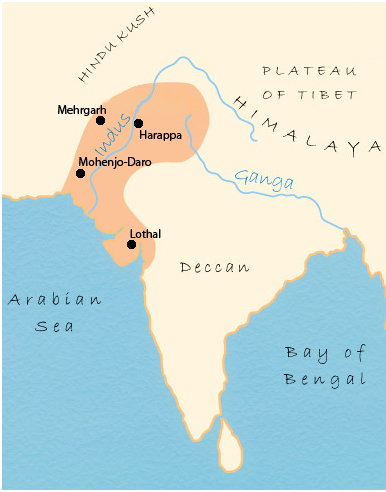 In his latest article, he has described “the word Hindu used for the people who lived around the Sindhu river as is generally believed, thus it is a geographic word.”
This has been the popular theory propagating the vocal chord difficulties of the Persians in pronouncing “Sa,” mispronounced Sindhu as Hindu, which hardened up as “Ind” in Greek. The weakness of this theory is that even today, words such as Sindh, Sindhi and Sindhu are in popular use. There are names of towns in Persia itself, e.g. Susa and Shiraz. The popular example given to support mispronunciation is the Sanskrit word Soma which is mispronounced Hoama in old Persian. This may be so, however, it is generally only one syllable that is mispronounced, “So” changing to “Hoa,” and this is supported by people in Surat district who mispronounce the word Surat as Hurat. Thus Hindu should have been Hindhu, but it is not.
Edward J. Jurji in The Great Religions of Modern World, credits the origin of the word “Hindustan” to the “moving tribesmen, who were impressed by the mighty river and called their home Hindustan, land of the rivers.” He further clarifies that “the Persian word for a river, Hindu, had become, probably in post-Vedic times, the Sanskrit ‘Sindhu.'” India as a country was an envy of the world for its fabulous riches, advanced culture and knowledge; a country that possessed Sanskrit, a language that mesmerized the Europeans, when they realized its influence over the world languages, a whole new science of Comparative Philology came into existence; a country that provided knowledge to the world, the Greeks and the Chinese came to study at Takshila and Nalanda universities; a country whose civilization has an inbuilt civilized behavior; a country, its people, its ocean, its mountain range and its Dharm, all have a common word Hindu in their names; the origin of such a word cannot be credited to the vocal chord difficulties of the Persian.
 [Neither] the Arab historians nor the European historians can be trusted when the Hindu interests are at stake. To the Arabs, the word Hindu meant a slave. Let us study the word Hindukush in which lay the explanation of the word “Hindu.” Hindukush is the name of a portion of the Himalayan mountain range, that arises in the northern parts of Afghanistan and Pakistan. As usual, the historians gave the credit for the name Hindukush to the Arabs, one of them by the name Ibn Battutah, who gave the meaning Hindu killer. The historians happened to have looked for Hindu skeletons to justify this story but found none.
This mountain range was famous for medicinal plants that bloomed in the moonlight. The Sanskrit word “Indukush” (Hindukush) means “krupan” (leaves or grass) that grows in the moonlight.
The European historians carried on with Ibn Battutah story and added on the Greek difficulties that changed the word Hindu to Ind, even though they knew there were names, e.g. Homer, Heraclitus and Herodotus among the Greeks. Therefore, the historians’ stories have no grounds to be believed.
 India had many visitors, among them some Chinese, who came to study Buddhism at source. One of them was Hiuen Tsang. In his travelogue, he records that “the correct pronunciation for Tien Chu (India) is Intu” which means the moon in Chinese language. He further elaborates that “the scholars from that land have brightened the world with their delightful and shining knowledge, like the moon.”
The word Hindu did not appear in the scriptures, as distinctions among communities were not necessary. It only became necessary after the 11th century with the establishment of Islamic rule in India. As religions and communities mushroomed, the words Indu (Hindu) for the people and Industhan (Hindusthan) for their land came in vogue.
 The Greeks called the sub-continent “Ind” and its people “Indoi.” Thus, the Greek “Ind” and the Chinese “Intu” are not far out from the Sanskrit word “Indu” for the moon (Chandra). As is known to most people, India was once known as Bharatvarsh, named after a legendary Chandravanshiya King Bharat, who ruled India in the past. His people were also known as Chandravanshiya (Indiya or India).
Thus, the origin of the name Hindu is indigenous with the Sanskrit root “Ind.” Not only that, “Ind” is the root word for Indostan, India, Indies (Indias), Indian (Indikoi), Hindu, Hindosthan and Hindustan. – India Tribune, 25 November 2009
Filed under: india | Tagged: chandra deva, etymology, hindu, indian, indu, river indus, sanskrit, sanskrit literature |











The name INDUS became popular only upon British connection (Encyclopaedia Britannica). In 1761, the Royal Geographer to her Majesty, Thomas Jeffery, was asked to provide a Map of Hindostan, in which, the name of the river is stated as ‘The Indus or Sindi River’, (The Horizon History of the World in 1776). TJ has the secret buried with him.
LikeLike
‘Hindu’ word not mentioned in Veda because the books were not for certain people, it is for mankind.
Further, at that time, there were no issue of Hindu and non-Hindu.
Hindu word is derivative of Vedic word “Indu” which means follower of knowledge/Veda.
Hindu has accepted this word as their identity when Buddhism and Jainism were propagated.
Opponent of Hindu can believe this word is derogatory meaning. Even about meaning of Hindu-kush some refer it is ‘killing of Hindu’, Some relate it with Kushan empire. Others maintain that the name Hindu Kush is probably a corruption of Hindi-Kash or Hindi-Kesh, the boundary of Hind. (George P. Tate – The Kingdom of Afghanistan: A Historical Sketch.). Opponent always find derogatory meaning in the name of enemy. Hence, there is no issue what opponent thinks about this word. Hindu has feel proud about this name.
Greek used ‘Indos’ word for Hindu in the works of Herodotus and Megasthenes, circa 5th century B.C.
In 2nd century B.C, Chinese traveller Zhang Qian referred to people of India as Hen-tu.
Also, Xuanzang (Hsuan-tsang) who visited India during AD 631 to AD 645, had mentioned Hindu word in this travel book.
The Hindu word is ancient; probably it spread during the time of Buddhist Empire as for non-Buddhist i.e. follower of Veda.
Hindu society is large unorganized community. Hinduism is not organised religion, so they don’t have central institution for keeping records and maintaining their religion. That’s why people unable to find origin of Hindu word. It is ancient and largely acceptable word.
LikeLike
The English term ‘India’ is derived from ‘Indus’, which is derived from Old Persian ‘Hindus’. Also, the term ‘Hindus’ is from the Sanskrit ‘Sindhu’. ‘Sindhu’ was the name for the river Indus. Sindh province, Sindhi language, and Sindh, the river Indus are terms still used in Pakistan.
Also, Al-Hind is the name for India in Arabic.
‘Sindhi’ is ‘Sindhri’ in my Dardic Pahari.
Old Persian and Avestan are related to Sanskrit.
Arabic has borrowed the part ‘Hind’ from Persian/Farsi.
LikeLike
There is a book in marathi by Mr G V Kavishwar naming Indu pasun Hindu(Hindu derived from Indu). His book is also in hindi & english. I think the author is telling the fact.In Mahabharata the Hindukush was called as Pariyatra parvata. More research is required in this regard.
LikeLike