











 “It is difficult to append the label ‘nationalist’ to ‘secular’ in the Indian context. As we have been given to understand through their own positions, for the Indian seculars, India, has always been an imagined entity, a notion, a congeries of contradictory diversities perpetually in conflict, with no binding thread except that of colonial domination. They dismiss as legend the concept of a peak civilisational period in India.” – Dr Anirban Ganguly
 The past few weeks have seen some avid India watchers and academics based in the West come up with a rather confusing nomenclature—‘secular nationalist’. It is striking that these self-professed secularists have at least accepted the appellation ‘nationalist’, not as pejorative or reductionist, but worthy of appropriation, however anachronistic such a stance may be with their past formulations. It would thus be interesting to articulate a few thoughts on this reversal.
It is difficult to append the label ‘nationalist’ to ‘secular’ in the Indian context. As we have been given to understand through their own positions, for the Indian seculars, India, has always been an imagined entity, a notion, a congeries of contradictory diversities perpetually in conflict, with no binding thread except that of colonial domination. They dismiss as legend the concept of a peak civilisational period in India.
From their comportment secularism has primarily emerged and is seen as being not impartial to religion but opposed to it. In short, the seculars have preferred to see India not as an evolutive entity, but as a conglomeration of disparate tendencies with no civilisational dimension.
 Interestingly, one gets to read of the earliest description (1908) of the seculars from Sri Aurobindo, when he said, “These people maintain that we are not a nation to begin with. According to their thinking, what we call a nation is an imaginary thing, not a reality. In India, they say, there are thousands of castes and subcastes,
  countless sects and subsects, and any number of creeds with differences of opinion and practice…” For Sri Aurobindo, these people never understood the “meaning of a nation”.
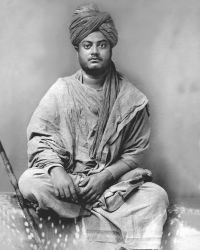
The Indian nationalist, whom the ‘seculars’ prefer calling ‘Hindu nationalist’, that much abused and misinterpreted entity, on the other hand, has always seen and recognised the underlying and sustaining cultural unity of India. Vivekananda always laughed off as “childish and superficial” any attempt to explain Indian unity as a benediction of the “two pice postage, cheap travel and a common language of affairs”. The monk rather saw these as expressions of an already extant “deep organic unity”. For Indian nationalists, the diversities of their mother country were the expressions of a larger civilisational unity—they never felt bewildered or threatened by variety.
Indian nationalists have always recognised the high-water marks of India’s civilisational march and sought to discern directions from these for addressing contemporary challenges. For them, patriotism is expressed in religious terms for they see their country as a deity for adoration, an evolving and responsive entity, as Sri Aurobindo once described it, “a nation is a living entity, full of consciousness; it is not something made up or fabricated.”
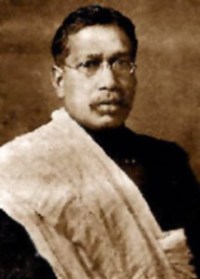 An absence of conflict between nationalism and internationalism defined the stance of Indian nationalists. For Bipin Chandra Pal, the near-forgotten leader, Indian nationalism meant “neither selfish conflict with, nor proud isolation from, the other nations of the world”. A predatory, conflicting and aggressive nationalism, of the Western type, was antithetical to the Indian nationalists’ worldview.
The Indian nationalists’ conception of freedom is a positive one. It is not, as Pal says, anadheenatā (not subjection) but rather swadheenatā, self-subjection. Independence, for the Indian nationalist, does not mean “absence of restraint or regulation or dependence” but “self-restraint, self-regulation and self-dependence”.
While Indian nationalists recognise, internalise and defend their nation as a living civilisational entity with deep cultural-religious moorings and thus become nationalists, seculars negate these aspects, and where there is no recognition of civilisation-state there can be no nationalists.
‘Secular nationalist’ is thus a fallacious terme de convenance, it is an oxymoron. – The New Indian Express, 13 July 2014
» Dr. Anirban Ganguly is a scholar of Indian civilisation and Director of the Dr. Syama Prasad Mookerjee Research Foundation. Follow him on Twitter @anirbanganguly
Filed under: india | Tagged: bipin chandra pal, indian nationalism, indian secularism, nationalism, nehruism, oxymoron, politics, secular nationalism, secularism, sri aurobindo, swami vivekananda |










Leave a Reply