











 “Science and the West are largely synonymous and coeval, and they are words which have far-reaching meaning and implications. If one looks critically at the list of “Indians” who won the Nobel Prize in Science, there are none barring C.V. Raman, though he was doubtless greatly sponsored and supported by his European counterparts.” – Dr. K.P. Prabhakaran Nair
 With Wednesday’s announcement of the latest findings in the search for the Higgs Boson, the elusive particle is on everyone’s mind, not only those who read Science, but newspapers as well. This kind of “fame” is rather rare, even for important discoveries. The Higgs Boson has been called or perhaps miscalled the “GOD Particle”. That is why it has become a news sensation.
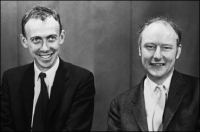
This is what makes the discovery as famous as the decoding of the double helix (structure of the DNA, the basic building block of life) by the Watson-Crick duo in Cambridge, England. Crick was a British citizen who later became an American citizen and delved into Indian mysticism during the last phase of his life. The discovery unravelled the meaning of life and opened up an entirely new chapter on molecular biology and biotechnology (which is even being misused for pecuniary purposes, as in the case of genetically modified crops).
 For most people, it would be very difficult to understand the real significance of this epoch-making discovery. For sure, it would give a new meaning to the evolution of the universe in the months to come. Perhaps that is also the reason why someone thoughtfully gave it the name “God Particle”. I would venture to add that the discovery comes closest to Indian mysticism, where the thoughts of our rishis could breach the barriers of time and space. Perhaps that is also the reason why someone thoughtfully gave the name “God Particle”. I would venture to add that the discovery comes closest to Indian mysticism, where the thoughts of our rishis could breach the barriers of time and space.
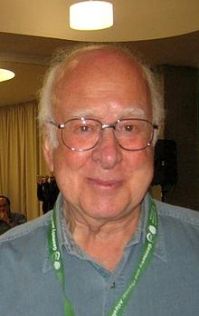 Without going into much scientific discourse, I would like to say that the term “Higgs” derives from the name of Dr Peter Higgs, an 82-year-old particle physicist who spent a lifetime of research at the Edinburgh University, Scotland. But, the more interesting question is why the term “Boson” as well?
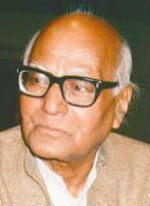
Boson derives its name from the late Dr Satyendra Bose, born in the British colonial era in the then Calcutta (now Kolkata) who was a lecturer in Physics both at the University of Calcutta and University of Dhaka. In 1924, he sent a research paper to Albert Einstein, describing a statistical model that eventually led to the discovery of what is known as the Bose-Einstein “condensate phenomenon”.
This research paper laid the basis for describing the two fundamental classes of sub-atomic particles – bosons, named after Satyendra Bose, and fermions, named after the famous Italian Physicist Enrico Fermi, who received a Nobel Prize, which Satyendra Bose did not. In 1974 Bose died, without receiving the kind of global scientific recognition that he so very richly deserved. Naturally then, it comes as no surprise that some in the West are already trying to ‘remove’ the Boson from the Higgs Boson particle, to push Bose back to obscurity. It is both improper and unfair.
 The above stated facts bring me to the most crucial question, what is True Science, and, what decides its true recognition? Though Albert Einstein must be praised, in retrospect, for giving due credit to Bose’s theory, India did not (except for a very belated Padma Vibhushan after thirty years following his great discovery, though so many undeserving politicians, bureaucrats and so-called “scientists” manage this much faster through political patronage). For this kind of epoch-making discovery, Bose so very richly deserves a Bharat Ratna posthumously, an honour for which some very undeserving “so-called” scientists are aspiring.
Einstein realized that Bose’s paper had profound implications for physics. In fact, this paper was published in a German journal in German language, not in a famous science journal like “Nature”, which invariably publishes research leading to the Nobel Prize (including the discovery of the structure of DNA), published in English language. The important point to be noted, according to me, is that Bose never did win the Nobel Prize, though his theory had such profound implications for Physics. Now he passes victoriously into immortality, almost a century later. But, the crucial point is that the Nobel Prize eluded Bose.
Does an Indian have to become an American or a European to win a Nobel?
 Science and the West are largely synonymous and coeval, and they are words which have far-reaching meaning and implications. If one looks critically at the list of “Indians” who won the Nobel Prize in Science, there are none barring C.V. Raman, though he was doubtless greatly sponsored and supported by his European counterparts.
We in India have this distasteful habit of blowing our trumpets when an American Indian gets or shares a Nobel Prize. Take the case of late Dr Har Gobind Khorana (my teacher in Chemistry when this author was pursuing his doctoral research starting 1962 at the Indian Agricultural Research Institute, New Delhi, and out of sheer disgust left the institute to take up a Post Doctoral Fellowship in Canada). Anyway, Khorana’s research on artificially synthesizing a gene, on the heels of the work of Watson and Crick, won him a Nobel Prize in 1968. But, by then he had an American wife and was an American citizen.
 Take the case of Dr Chandrasekhar, the astrophysicist, and the story repeats. Or take the most recent case of Dr Venkatraman who shared the Nobel for research on ribosome. Again, a born Indian, who later became an American and married an American Jew.
Then there are cases like Dr George Sudarshan, Emeritus Professor of Physics at Texas University, who challenged Einstein’s theory, was thrice nominated for the Nobel Prize, but missed it (actually was denied it is the most appropriate term) every time. The main distinction between the others and Dr Sudarshan is that the latter stubbornly believed and practised his “Indian-ness” with frequent visits to India with his Indian wife.
Yet, we in India celebrate so very hugely when the “non Indians” get the Nobel Prize, as if they are “truly” Indians! I know one English language newspaper in the south which went to such an extent of celebration of Venkatraman’s shared Nobel that it even eulogised his love for classical Tamil music!
 The lesson from the Higgs Boson discovery is that we know so little of life, yet we mistakenly think we know everything. Go back to the Rig Veda, you will understand what I am trying to say.
Epilogue: This author’s name was short-listed from over 3500 nominations from all over the world for the very prestigious US$1 million “Rolex Award for Enterprise”, for his revolutionary soil management technique, now globally known as “The Nutrient Buffer Power Concept”. After two screenings and a personal interview by a senior researcher of the Rolex Foundation, who came down from Geneva to interview the author, in the last week in London they announced the names of an American, an Australian, a Russian, a Kenyan and a Columbian as winners. India, indeed the Asian continent, was excluded altogether. – Vijayvaani, 6 July 2012
» Prof. K.P. Prabhakaran Nair is a Kerala-based international agricultural scientist.
Filed under: india | Tagged: albert einstein, big bang theory, c.v. raman, culture, education, geopolitics, george sudarshan, higgs boson, india, knowledge, media, newspaper, nobel prize, patriotism, peter higgs, rig veda, satyendra bose, scholarship, science, true science, watson & crick |







http://newindianexpress.com/opinion/article561063.ece
Details in the Devil by Ravi Shankar
The last lines are superb
Physicists disabuse the notion of god in the God particle. They miss the Hindu point of the universe: all matter—temporal, spiritual and ethereal—arise from the eternal, invisible and formless divine that pervades the cosmos. The Higgs boson, or the God particle, is no different. The joke goes that the boson walks into a Catholic church, and the priest asks, “What are you doing here?” The Higgs boson says: “Well, you can’t have mass without me.” The joke of the Indian politician is that the masses can be had anytime, anywhere.
LikeLike
This recent article is quite reasonable, except that it fails to address a basic question – why do Indians even bother that their compatriots have been denied a Nobel or celebrate when some ‘Indian’ has received it? The fact is that Nehruvian India has failed to build institutions and create conditions wherein science can flourish, and has systematically devalued every kind of award and recognition by a surfeit of sycophancy, nepotism, cronyism and so on. And, to be fair, the Indian greats of science like Raman and Bose totally failed in the creation of new schools of thought and scientific excellence. Only Acharya P.C.Ray came close to doing this, but he lived in wrong times.
The bare fact of history is that creative academic work (in whatever field) was carried out in India in British colonial times (Raman, J.C.Bose, S.N.Bose, Ramanujam), but comparable work is either lacking within independent India, or is never recognized because the person does not bandy around a ‘western’ award (e.g. Dharampal). This is true across several fields ranging from science to literature e.g. Booker prizes are the latest prosthetic devices to help with the handicap of mediocrity. As Sri Aurobindo put it:
‘I believe that the main cause of India’s weakness is not subjection, nor poverty, nor a lack of spirituality or Dharma, but a diminution of thought-power, the spread of ignorance in the motherland of Knowledge. Everywhere I see an inability or unwillingness to think—incapacity of thought or “thought-phobia”. Whatever may have been in the mediaeval period, now this attitude is the sign of a great decline.’
The real problem that needs tackling the creative de-colonization of the Hindu mind, or what’s left of it after a bruising millennium. In passing, I will note that India has had the greatest creative impact on the world in modern times in terms of Hindu spirituality, something that is independent of any state support or official recognition, eastern or western. Only the Christian missions have recognized this, after their own fashion, and are on an inculturation spree – a real left-handed ‘award’ for the seekers!
LikeLike
Raman did not have the backing of European counterparts so much as the author makes out to be. Raman had a trusted colleague in Prof KS Krishnan. Raman was very strategic. He published a seminal work in Nature journal which was a very descriptive paper. Then after papers in Indian Journal of Applied Physics, he gave a demonstration of Raman effect which was only Rs 250. Raman knew how to tackle westerners. He refused to meet Max Born, a well known physicist. I have met several scientists associated with C.V. Raman. He was not the kow-towing type like A. Sen or other Indians.
One feels very sorry for E.C.G. Sudarshan. He truly deserves one. Twice he had the opportunity. The First time his mentor Prof Marshak, very openly discussed their work done by ECG in front of a galaxy of scientists. Marshak gave the slip for many to complete the work. Second time also the same type of work was done by ECG on Coherence and the fellow who worked with ECG got the Nobel Prize. There was a howl of protests for this, but the committee said that ECG did not complete the work. This argument is really stupid as the foundations were laid by ECG. Saying that there is no relay race and only 100 metres run for Nobel Prize is unjust. ECG is a thorough gentleman.
LikeLike
I also suspect that the Indianness Dr. Prabhakaran Nair mentions is only Hindu-ness.
LikeLike
in the arts, A.R.Rahman got two Oscars because he went along with a film that showed Bombay is a shithole and Rama is out to kill Muslims.
LikeLike
Here is pdf file on how JC BOSE WAS ROBBED OF BY MARCONI
The author now is in India and not in MIT.
Click to access bose_real_inventor.pdf
LikeLike
It should be obvious to everyone today that the Nobel Prize is a political prize given to dubious persons who serve the West’s interests.
That Kissinger and Nixon got it is proof of this.
Gandhi didn’t get it because he wouldn’t convert to Christianity. Mother Teresa got it even though she was tainted by her association with various dictators and was a representative of very conservative Roman Catholic interests.
LikeLike