

Filed under: india | Tagged: india independence day, national anthem, nationalism, patriotism |



Operation Sindoor

Lord Buddha was every inch a Hindu

Jesus in India?

Tainted Teresa

Homos & Hinduism

National Shame!

 Voice of India
- Why nations go to war – Acharya Prashant
- Secularism and Tipu Sultan – Sita Ram Goel & Aabhas Maldahiyar
- The Iran Paradox: The strange case of Leftists mourning for a despot – Makarand R. Paranjape
- Pakistan: Islamic nation or hater of its own roots? – Balbir Punj
- Genocide in Kashmir: Forgotten and Buried – Vivek Gumaste
- Sita Ram Goel’s letter to Romila Thapar – Sandeep Balakrishna
- Ram Swarup and Sita Ram Goel: Intellectual kshatriyas who wielded the pen like a sabre – Shankar Saran
- How the holy Ganga became the Hooghly – Reshmi Dasgupta
- The non-dual reality of Lord Shiva – David Frawley
- Sita Ram Goel’s essay added in the US Congressional Record – Sandeep Balakrishna
Mohd Posters Iran

Islamic terrorism

India Crossed Out!
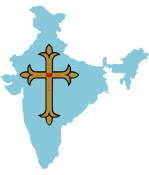
Jesus: An Artifice for Aggression

4 Responses
Leave a comment




Ram Swarup

Sita Ram Goel

Goa Inquisition

Did Thomas bring Christianity to India?

Who built the Taj?


 BHARATA BHARATI
This appears to be a lame excuse. I agree it is ambiguous. But it certainly is in praise of a male benefactor. We always think of Bharath Mata. In any case why should we have an ambiguous song as our National Anthem?
LikeLike
This is in response to CNM above:
Tagore’s Jana Gana Mana, while deliberately ambiguous to allow the occupying British force to flatter itself into thinking the lyrics were flattery about it, is specifically not about any British monarch, but about a Hindu God. Tagore himself made this clear, writing the following in a letter to his friend Pulin Behari Sen on this very point:
“A certain high official in His Majesty’s service, who was also my friend, had requested that I write a song of felicitation towards the Emperor. The request simply amazed me. It caused a great stir in my heart. In response to that great mental turmoil, I pronounced the victory in Jana Gana Mana of that Bhagya Vidhata of India who has from age after age held steadfast the reins of India’s chariot through rise and fall, through the straight path and the curved. That Lord of Destiny, that Reader of the Collective Mind of India, that Perennial Guide, could never be George V, George VI, or any other George. Even my official friend understood this about the song. After all, even if his admiration for the crown was excessive, he was not lacking in simple common sense.”
While the Jana Gana Mana cannot be compared to the Vande Mataram, it is certainly not a song about the British tyranny occupying India, let alone one in praise of it.
LikeLike
No longer about the Jana-Gana-Mana.
As for Vande Mataram, though Indians may call this song “secular”, any accurate lyrics by a Hindu that invoke the Hindu Gods belong solely to the Hindu Gods themselves and not to the lyricist (even if they ever decided they intended it secularly).
Ishwar Sharan will know the final stanza of the Adi Shankaracharya’s Soundarya Lahari where Shankaracharya explains how the words of the Soundary Lahari already belong to the Uma-Devi addressed therein herself: they are already her own “just like the Hindu’s rite of water offering to the Ocean is to return what belongs to it”.
The same Hindu argument therefore holds for the Vande Mataram: it accurately envisions the Hindu Devi-s Durga, Kamala (Lakshmi) and Vani (Saraswati) as identical and identifiable with the Motherland of Hindus, Bharatam. Alongside our planet Bhoo and the universe, the material Motherland is another physical embodiment of the Hindus’ Devi-s, who are the Mothers of the Hindus’ spirit.
Therefore, having accurately and correctly envisioned and invoked these Devi-s thus in Vande Mataram, the composer cannot take back the words (or the entire song) for himself — no matter were he to decide he meant something else by it afterwards, thereby ignoring the very inspiration behind his work. Invoking the Hindu Gods is not a light matter. Nor is having one’s works and purpose inspired by them. The words and the inspiration behind the song, as also the result of it firing many Hindus to the defence of their Motherland, belong to the Hindu Gods alone.
“tvam hi durgA dashapraharaNadhaariNee
kamalaa kamaladala vihaariNee
vaaNee vidyaa-daayinee, namaami tvaam
namaami kamalaam amalaam atulaam
sujalaam suphalaam maataram
vande maataram
shyaamalaaM saralaaM susmitaaM bhooShitaam
dharaNeeM bharaNeeM maataram
vande maataram”
It’s a simple and familiar enough Sanskrit that its translation may be attempted here:
“You are Durgaa who bears weapons in her ten arms, the Lotus-dwelling Kamalaa (Lakshmi), VaaNee (Saraswati) who bestows vidyaa, I prostrate to you. I bow to you, Kamalaa Devi, who is purity itself and incomparable.”
And then the shloka immediately proceeds, with seamless transition, to correctly identify them with the Hindus’ motherland Bharatam, its beauty and its bounties: “You are of good waters and good fruits, Mother. I bow to you Mother.
You are Shyaamala (which is both Uma-Devi’s name and poetically matches with the dark greens and blues of Nature), who art straightforward (simple, approachable), of smiling aspect, adorned and thus looking lovely; you are the Earth itself, the one who sustains and nourishes us, Mother. I prostrate to you Mother.”
LikeLike
I do not think “Jana Gana Mana” is worthy of being called our national anthem. Ravindranath Tagore had penned this song – an eulogy to British King George V, on the eve of his arrival in India in 1911.It is a different story how Nehru out of his hatred for Sanskrit and Hinduism managed to sideline Vande Mataram and installed Jana Gana Mana in its place as the national anthem.
LikeLike