












 Every major religious tradition of the world, in some aspect of it, represents a very delicate balance it has achieved, which is among its greatest achievements but, at the same time, may represent its greatest vulnerability. – Dr. Arvind Sharma
By using the word ‘delicate’ in the title here, I am not suggesting that one has to deal with the various religions of the world delicately because they involve someone else’s cherished beliefs and practices. It is, of course, highly desirable to keep in mind the sacred nature of the material that one discusses in the study of comparative religion, but this is not what I have in mind here. What I have in mind here is the fact that every major religious tradition of the world, in some aspect of it, represents a very delicate balance it has achieved, which is among its greatest achievements but, at the same time, may represent its greatest vulnerability.
For instance, Judaism combines two qualities which otherwise are difficult to combine. It combines a profound commitment to monotheism, and yet, at the same time, is not a missionary religion, unlike some other monotheistic religions. If one believes in one God, then it becomes extremely hard not to conclude, at the same time, that all other people, who do not believe in that one God, should also be approached to believe in it––as is borne out by the case of the sister religions of Christianity and Islam. Judaism has performed the rare feat of being enthusiastic without being evangelistic about its beliefs.
Christianity, similarly, has achieved a delicate balance in combining the one and the many, in its doctrine of the Trinity. The delicacy of this arrangement is clear from the fact that both Judaism and Islam reject the doctrine of this Trinity as compromising monotheism. By holding on to the idea that something can be both one and many at the same time, it offers a fresh perspective on the possible relationships between the one and the many, which has eluded many other religious systems. To illustrate: water, at one level, is H2O, and is still H2O even when it is in a solid, liquid, or gaseous state as ice, drinking water, and vapour.
The delicacy in Islam relates to the attitude believing Muslims have towards the Prophet, and lies in the fact that, although Muslims venerate the Prophet, they never worship him––for Allah alone is to be worshipped. One can gauge the striking nature of this achievement from the fact that, even though the Buddha did not believe in a God, he was raised to divine status in Mahayana Buddhism. Similarly, Jesus Christ was identified with God himself. Professor Wilfred Cantwell Smith once summarised the difference between the way non-Muslims view the Prophet, and the way Muslims view him, as follows: non-Muslims regard the Prophet as great because he was consequential in history, but, according to the Muslims, the Prophet was consequential in history because he was great.
Hinduism has achieved a delicate balance in dealing with a paradox of tolerance. This paradox has been famously stated by Karl Popper: That unlimited tolerance can lead to intolerance. One way in which this statement could be interpreted would be that, if one tolerates everything, then one would also tolerate weeds in the garden along with the flowers. But the weeds might ultimDr. Arvind Sharmaately destroy the flowers and take over the whole garden. Hinduism, at least in its present form, at least doctrinally, seems to allow maximum tolerance without becoming a victim of the paradox.
Buddhism combines its metaphysics with its ethics in a way which is unique to the tradition. On the one hand, it denies the existence of the ego or the soul, or the ‘person’, but on the other, promotes compassion in a way few other religions do. One would imagine that if we are ultimately nonentities in some sense, as the doctrine of Anatta implies, then the kind of sentiment associated with compassion is not likely to be a part of one’s worldview. However, compassion is such an important part of it that it is said of the Bodhisattvas, in Mahayana Buddhism, that they would be willing to postpone their own ultimate liberation to take care of the needs of others.
Jainism’s delicate achievement lies in the way it prevents relativity from lapsing into relativism. Jainism is known for its doctrine of anekāntavāda, or the manifoldness of truth. Its general worldview has been summed up by Professor A.L. Basham in the following words: “The world is more complex and subtle than we think it, and that what is true of a thing in one of its aspects may at the same time be false in another.” And yet, this does not mean that anything goes, or that is no ultimate reality to be known.
The delicate achievement of Sikhism lies in the way in which it balances the Hindu and Islamic elements which are present in it. As Professor Huston Smith puts it, “if the two sides––the Hindu and the Muslim––had agreed to negotiate their differences they could hardly have reached a more reasonable theological compromise than the tenets of Sikhism afford.”
The delicate achievement of Confucianism pertains to ‘The Doctrine of the Mean’, or Chung Yung. Confucianism imparted an emotional force to the value of moderation, as exemplified in Confucius’ well-known statement that to overshoot is as great an error as to fall short. It is admittedly easy to impart emotional force to extreme ideas, as is the case of monotheism, or communism. But, for a culture to succeed in inculcating the same degree of emotional commitment to moderation must be considered a great achievement, and a very delicate one.
Daoism is remarkable for the delicate way in which it deals with magic. This is a difficult subject, because magic tends to be associated with trickery, but here it is being used in the sense of connecting with a higher order. Huston Smith cites Acts 9:32-34 as providing the meaning of magic one has in mind. In this case, Peter healed a paralyzed person, and asked him to get up and make his bed, because Christ heals. Huston Smith explains: “Note that this was not a miracle. It would have been a miracle if Christ had empowered the paralytic Aeneas to climb out of bed without Peter’s help, effecting thereby an instance of what clinicians refer to as spontaneous remission. As it was, Peter had a role in the cure, a necessary role we may assume, and we are confronted with magic, sacred magic, for if a demon had been invoked for malevolent purposes sorcery would have been at work.” Such magic may even have a modern ring to it. The well-known author, Arthur A. Clarke, has pointed out that “any sufficiently advanced technology is indistinguishable from magic.” – Firstpost, 21 May 2023
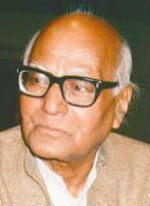
› Dr. Arvind Sharma, formerly of the IAS, is the Birks Professor of Comparative Religion at McGill University in Montreal Canada, where he has taught for over thirty years. He has also taught in Australia and the United States and at Nalanda University in India. He has published extensively in the fields of Indian religions and world religions.

Filed under: world | Tagged: abrahamic religions, dharmic religions, philosophy, theology, world religions | Comments Off on The delicate nature of different religions – Arvind Sharma