









 “Consider Saudi Arabia’s position; a geographically indefensible land the size of Western Europe with a population less than that of Sindh that finds itself encircled. … There is ISIS, a more virulent menace than even Al Qaeda. … It is a sign of the threat Saudi Arabia perceives that it is constructing a nearly 1,000-kilometre wall along the Iraqi border, in order to keep out the monsters of a creed its own devil’s bargain created, a bargain they dare not rescind.” – Zarrar Khuhro
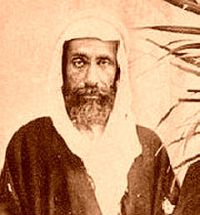 “Grant me an oath that you will jihad against the unbelievers. In return you will be … leader of the Muslim community and I will be leader in religious matters.”
This is what Muhammad ibn Abd al-Wahhab pledged to Muhammad ibn Saud, the founder of the Saudi dynasty in 1744. It marked the beginning of the Faustian bargain that the House of Saud has since maintained. It has a sword without a hilt; one that cuts the man who swings it.
In 1912, a descendant of Al Saud, Abdul Aziz, lent his blessings to another group. These were the Ikhwan, who aimed to revive the movement of Abdul Wahhab and, by dint of their faith, became the most feared warriors in the Arabian Peninsula.
 To Abdul Aziz, who needed men to counter the Hashemite Sharif of Makkah, this was essentially a pragmatic bargain as, at their height, the Ikhwan provided as many as 60,000 fighters to the cause.
To the Ikhwan, politics came a distant second to the cause of purifying the faith, with fire and blood if necessary. Thus, strains were inevitable, and when the Ikhwan tried to march into Iraq, it brought them, and by extension Abdul Aziz, into conflict with the British.
Having fed their fanaticism, Abdul Aziz now faced the consequences of trying to “secure 20th-century power with 7th-century means.”
While the Ikhwan were dealt with, the essential bargain between royalty and clergy remained intact; each would confirm the other in their powers.
Had it not been for the events of 1979, this may have remained a largely Saudi problem. Certainly, the petrodollar-fuelled export of ideology would have taken place, but not with the kind of desperate impetus that year provided.
1979 saw the Iranian revolution along with a revolt in Saudi’s Shia majority Eastern province (home to most of the oil), the bloody takeover of the Masjid Al Haram by Juhayman al-Otaybi’s extremists and, of course, the Soviet invasion of Afghanistan.
 Iran under the Shah would have certainly tried to dominate the Gulf, but the rise of the ayatollahs added a new dimension. Now the Arab-Persian rivalry was complemented by the Shia-Sunni schism and exacerbated by the natural need of littoral nations to control strategic waterways and territory. Added to this was the horror of a monarchy on seeing a Shah deposed.
The Saudis also saw the Eastern province revolt as a direct sign of Tehran reaching out its hand to stake a claim to critical resources, deepening their fear and paranoia.
Juhayman was the Ikhwan come again, asking why there was such a gap between what the Saud practised and what they preached, and willing to kill and die for the cause. While the Iranian threat was a largely external one, this was a blow at the very legitimacy of the House of Saud.
In the aftermath, al-Saud gave even more power to the clergy in an attempt to reward and appease them.
Then the Afghan war allowed them to direct the energy of the religious youth outwards. If they were busy fighting jihad, surely they would have no time to ask inconvenient questions?
This war also allowed for the spread of the Saudi brand of Islam on an industrial scale, at once countering both Iranian and Shia (they are one and the same at this point) influence and also providing fodder for the anti-Soviet war machine.
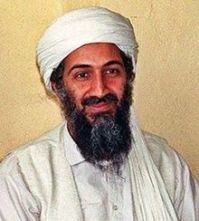 But all things come to an end, and with the close of the war came questions once again, and Juhayman’s banner was hoisted now by a man called Osama bin Laden. Ironically this happened because Saddam Hussein, who had provided such a wonderful shield against Iran, had now turned his guns on the kingdom. Dismayed by the Saudi willingness to host US troops, Osama fell out with the House of Saud and what he saw as their pet clerics.
Here begins the war between Al Qaeda and Saudi Arabia, a far more protracted conflict than the siege of Makkah, one that is as much a theological argument as it is a physical conflict.
Consider Saudi Arabia’s position; a geographically indefensible land the size of Western Europe with a population less than that of Sindh [42m] that finds itself encircled, with a chaotic Yemen to the south and perceived Iranian influence in Bahrain and Iraq.
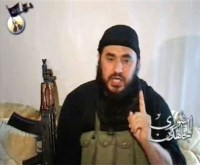 Then there is Daesh [ISIS], a more virulent menace than even Al Qaeda, which just this month killed a Saudi general on the Iraq border.
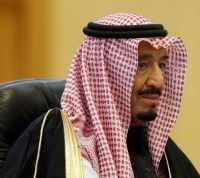
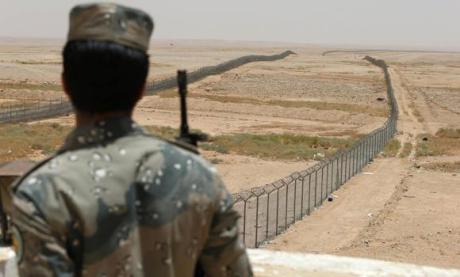
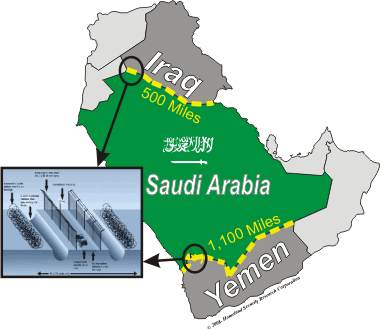
Indeed, it is a sign of the threat Saudi Arabia perceives that it is constructing a nearly 1,000-kilometre wall along that very border, in order to keep out the monsters of a creed its own devil’s bargain created, a bargain they dare not rescind. Indeed, the new king shall not rest easy. – Dawn, 15 January 2015
» Zarrar Khuhro is a columnist for Dawn in Karachi. Twitter: @zarrarkhuhro
Filed under: india | Tagged: ISIS, islam, muhammad ibn abd al-wahhab, salman bin abdulaziz al saud, saudi arabia, saudia arabia, sunni islam, wahhabism | 1 Comment »