





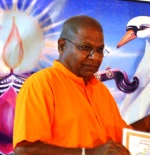




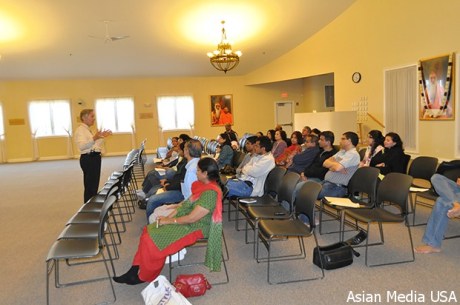
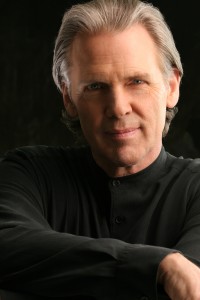
 Chicago IL: World Hindu Youth (WHY) association hosted a seminar on “Reframing Bharat” followed by another on a “New vocabulary to describe Vedic dharma” on Saturday, April 20, 2013, at Chinmaya Mission Badri campus located at 11S080 Kingery Hwy, Willowbrook, IL 60527. Presented by best-selling author Jeffrey Armstrong, also known as Kavindra Rishi, from Vancouver, the seminars aim to teach the younger generation how to speak confidently about Hindu dharma especially to its detractors. Vidya Naha of WHY presented Armstrong as a Vedantic seeker. He is also a poet and astrologer or “karma mechanic” as he also puts it.
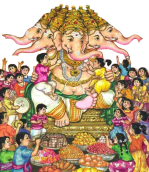
Starting with a prayer to Ganesha and invocation to the Guru, Armstrong immediately presented his unique credentials, as an American convert, to teach often bewildered Hindus-by-birth. Attracted by India’s patterns of thinking and feeling, and its compassionate culture, he soon became a “why” specialist, for “all the subjects I studied (language, psychology, science, etc.) took me to India.” As an outsider, he had to think through all these alien concepts and behavior from the foundations up, unable to take anything for granted. Whereas his Christian teachers never encouraged questions, the question-answer format is at the core of Hindu transmission.
“I gave up my family, church, and culture to become a Hindu, but ended up being more alone without a community. You don’t have to study, whereas I have to because of my situation. Hindu culture is partly asleep, whereas I am awake. Everyone is asking the youth why they are Hindu, a question their elders are not able to answer in English. This is what I’m able to do. I’ve been working with Hindu youth in both the USA and India for the past 14 years.”
The Hindu diaspora is at a disadvantage when having to explain their dharma to often skeptical, if not outright hostile, Americans because the weight of the English vocabulary is pitted against them even before the discussion can get started. Youth are especially vulnerable because the parents are not equipped to translate their beliefs into language that makes sense within the worldview and language acquired here through schooling. The whiteboard already listed a wide range of inherited (English) “Words to Avoid” as opposed to (Sanskrit) “Words to Understand.”
 Because the person who keeps asking the questions retains control, we need to disorient our interlocutor by changing the subject. When asked “why do you Hindus have so many gods?” we could start talking about the icons on his desktop and compare them to “idols” that are different from programs, yet help keeps things organized, etc., point out that invoking the name of the god is like clicking on the icon to accomplish a task through the underlying code. Armstrong resorted to many such extended, often unexpected, metaphors to bring home his lessons.
Armstrong gave many examples of how to think, question, and use words strategically instead of falling into the opponent’s trap by directly attacking him. The trick is to reframe the whole debate in unexpected ways that intrigue the listener into wanting to follow your own story and thought processes and thereby see the world differently. Piling up facts will in itself not convince a person who holds a different worldview. Participants were distributed a sheet summarizing such “Rules of Framing” adapted from the book Don’t Think of an Elephant by George Lakoff, language strategist at University of Berkeley.
The second workshop addressed the pitfalls of mapping familiar Western concepts to Hindu traditional terminology. Armstrong explained why dharma is not religion, Bhagavan is not God, yoga is not faith, devas are not gods, murthis are not idols, namah is not worship, papa is not sin, svarga is not heaven, and other such facile equivalences. The secret is to know whom you are talking to; and to ask oneself “am I a living example of what I believe in?” Most Hindus have received their tradition in bits and pieces but have not yet been initiated, which is like not installing the downloaded software and then calling tech support, i.e., the guru, to complain. Instead we “need to produce hundreds of Vivekananda’s by teaching people how to speak strategically about one’s own culture and traditions.“
Armstrong also attacked the “sameness” syndrome preached by many Hindus. All religions are not the same but more akin competing operating systems, like Microsoft Windows versus Apple, each with its own terminology and underlying philosophy. The Christian operating system is much poorer in vocabulary, as evidenced by the smaller list of words to avoid. The British purposely replaced Sanskrit with English language, thereby limiting the vocabulary for discourse about oneself. Abrahamic world view was never interested in the world and matter, unlike the elaborate treatment of prakriti (nature) in Hinduism. There are already many Sanskrit words in English, and one of the greatest gifts that Vedic culture can give the world is its richer vocabulary. Armstrong wondered why no Hindu has ever approached him to try and explain the universe in terms of the permutations of the three gunas (sattva, rajas, and tamas) and defects (dosha) to outsiders, and went on to explain the notion of devas in considerable detail.
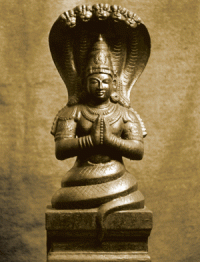 He ended by decoding the sophisticated vocabulary of Patanjali’s Yoga Sūtras of mind-stuff (citta), its modifications, (vrtti) psychic traces (vasana), our inherent nature (svarupa), etc. He opposed its scientific approach to “religion” from “re-ligare” (Latin), which is to be “bound by rules,” i.e., do as you are told with no questioning). This is the source of the “religious” conflict we see today around the world. Paramatma (Supreme Self) is the single cohesive all-pervading consciousness that holds everything together including the separate individual consciousnesses (atma). Goal of yoga is to “plug into paramatma” by first realizing your own atman (through citta-vrtti-nirodhah). “I’ve been ‘programming’ with these words,” Armstrong affirmed.
Armstrong’s examples, especially his (pseudo-) etymologies and proposed ‘kinships’ between English and Sanskrit, became funnier as the workshop progressed such that the chuckling students were sometimes uncertain whether he was (half-) joking. In truth, he was skillfully using humor to entice the audience into thinking differently and more deeply about the words and concepts we have inherited without reflecting. Questioned about this technique, he told Asian Media USA that in his previous life he was a standup comedian regularly invited by the corporate world and paid handsomely to teach them to see the ‘religious’ side of IT and laugh!
The seminars were repeated the next day on a larger scale at the Chinmaya Mission’s Yamunotri camp at Gray’s Lake. Two of his volumes were on sale during the workshops. – Asian Media USA, 24 April 2013
Filed under: india | Tagged: abrahamic religions, christianity, devatas, gods | goddesses, hindu, hindu defence, hinduism, hindutva, iconography, india, indian diaspora, jeffery armstrong, monotheism, monotheistic religions, panentheism, philosophy, politics, polytheism, psychological warfare, psychology, religion, rituals, sanskrit, sanskritisation, values, vedanta, yoga | 4 Comments »