











 “The consequences of NATO’s 21st century blunders in Asia are a lesson for the countries of the world’s most consequential continent, that military force may win battles but will almost always ensure defeat in the war. Any “victories” earned will be Pyrrhic. Even in Libya, it will not be long before the people there mobilize against the petroleum concessions doled out to themselves by NATO member-states, while in Iraq and Afghanistan, NATO troops are loathed by the local population.” – Prof. Madhav Nalapat
 For nearly two centuries, it was the Atlantic Ocean that was the most important geopolitical focus. On both sides, vibrant countries expanded their reach. By the close of World War I (1919), the US had become the dominant country on the globe, although the size of the British Empire masked the change. However, by the time World War II ended (1945), it was apparent that Britain had been exhausted, despite having lost far fewer of its citizens than the principal adversaries, Russia (the USSR) and Germany.
Although much is made in the history books of the “freedom fighters” who are presumed to have secured independence for India, the reality is that the Empire could have withstood many more decades of Mahatma Gandhi’s Hot and Cold strategy. By withdrawing from governmental office when war was declared in 1940, the Congress Party lost the advantage to the Muslim League, and from there onwards, it was downhill. Much of the war was spent by Congress leaders in prison, leaving the field free to M. A. Jinnah, who shrewdly played on the feelings of the British by fully backing their cause against the Axis at a time when the Congress Party was neutral.
 None of the errors made by the leaders of the “freedom movement” have been mentioned in the history books taught to young people in schools across India. Neither has the fact that it was the revolt in the military following the war that caused the British to retreat. Just as in the case of Egypt in 2011, it was only when the military turned against the rulers (Mubarak and his family in the case of Egypt) that they had to relinquish power.
Almost all of India’s historians enjoy the benefits of state funding in one form or the other, and hence cannot be blamed for writing in the style that pleases their paymasters. But to return to the Atlantic Ocean and the “Trans-Atlantic Partnership” of Europe and the US that has dominated the globe for so long, this cosy club has been challenged by the rise of China. On the other side of the US landmass, abutting the Pacific Ocean, a new superpower has arisen, embedded in a region that is the fastest-growing among all major economic actors on the globe. In 2012, more than four years after the 2008 financial crisis that shattered the credibility of the players in the trans-Atlantic alliance, it is the dynamic on both sides of the Pacific that has become the most significant geopolitical location across the world.
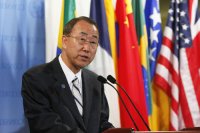 Needless to say, Ban Ki-Moon’s reliance on former colonial powers is backed by the US, which took along the UK, the former colonial master of Iraq, when it moved against Saddam Hussein in 2003. It is this Europeanist policy, one that contains elements laden with patriarchy, which was responsible for errors in policy such as appointing a US Viceroy in Iraq, the comic Paul Bremer, and in squandering hundreds of billions of dollars on a top-heavy alien administration whose key elements knew as little about Iraq as they did about Pluto. Add to that the sourcing of materiel from the US rather than from the most cost-effective sources, and it becomes clear why wars have become the Achilles Heel of the NATO alliance. The methods of deployment and attendant logistics are beyond the financial capacities of the countries making them, so that the prolonged NATO deployment in theatres such as Iraq and Afghanistan have significantly contributed towards the weakening of the economies of key NATO member-states.
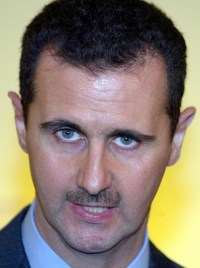 Sometime in the future, most likely under a different President, the US will in substance rather than merely rhetoric pivot towards Asia, by freeing itself of Europeanist baggage in its foreign and strategic policy. Unless Washington embraces Asia in the same way as it has Europe for so long, giving priority to the continent and to its interests, any “pivot to Asia” will lack substance, and will be seen as simply an excuse to continue to insert NATO into the continent, the way it has already happened in so many locations, the next possibility being Syria, a country that has been destroyed by NATO’s emphasis on regime change through the use of force (in this case, actualized through the arming, training and funding of militias seeking to free the country of its Alawite leaders).
 The use of military force may have worked in Asia in the past, but no longer has potential to engineer an outcome that is beneficial to those resorting to it. In Afghanistan, the US and its NATO partners succeeded so long as they gave primacy on the field to domestic Afghan players. As soon as they began to run field operations themselves, the resulting deployment regenerated the Taliban while bankrupting NATO treasuries. In Asia, it is Asians who ought to bear responsibility for their own security, not a military alliance that has broadened its remit from Europe to the world, and which is open about its being used as a means of continuing the primacy of Europe and its allies across the Atlantic.
The consequences of NATO’s 21st century blunders in Asia are a lesson for the countries of the world’s most consequential continent, that military force may win battles but will almost always ensure defeat in the war. Any “victories” earned will be Pyrrhic. Even in Libya, it will not be long before the people there mobilize against the petroleum concessions doled out to themselves by NATO member-states, while in Iraq and Afghanistan, NATO troops are loathed by the local population.
 Instead of copying the misdeeds and mistakes of NATO, countries in Asia need to set up structures that would ensure the peace in their region. If the 19th century was a period of conquest and the 20th of war, the 21st has to be an era of conciliation and the peaceful resolution of intra-Asian disputes. Only in this way can Asia fulfill its potential to emerge once again as the lead continent, now that the Pacific has overshadowed the Atlantic. – Pakistan Observer, 2 Novenber 2012
— Prof. M.N. Nalapat is Vice-Chair, Manipal Advanced Research Group, UNESCO Peace Chair & Professor of Geopolitics, Manipal University, Karnataka State, India.
Filed under: india, USA, west asia | middle east | Tagged: afghanistan, civil rights, civil war, economics, egypt, freedom fighters, geopolitics, globalisation, hegemony, imperialism, india, international politics, legitimizing power, libya, middle-east, nationalism, NATO, nato aggressors, nato member states, neo-colonialism, oil concessions, politics, super power, UN, US imperialism, US politics, USA, west asia, west asia | middle east | Leave a comment »