








Across the world, Pakistanis are generally viewed with suspicion and distrust. Pakistan seems to hope that this gambit of projecting itself as a seat of a great ancient civilisation might help redeem its image somewhat in the eyes of the world – Virendra Parekh
After spending nearly eight decades repudiating and destroying its Hindu past, Pakistan has suddenly discovered that it is, after all, an ancient civilisation. It is laying claim not just to Chanakya, Panini the grammarian, the great king Porus/Purushottam and Takshashila university, but also to Sanskrit language and Indus Valley Civilisation. We are now told that “Pāṇini, the greatest grammarian of Sanskrit, was a Pakistani. The Sanskrit you (Hindus) hang on to today was standardized by a Pakistani.” “Chanakya the Great studied at Pakistani university of Taxila. The knowledge he gained there shaped him into one of history’s greatest strategists.” A Pakistani X user has declared that Raja Purushottam, widely known as King Porus who ruled the region between the Hydaspes (Vitasta/Jhelum) and Acesines (Asikani/Chenab) rivers and halted Macedonian conqueror Alexander on the banks of the River Jhelum in 326 BCE was a Buddhist, although there is not much clarity on Raja Purushottama’s religion.
This change of heart is probably explained by two factors. Over the decades, Pakistan has justly earned an unflattering reputation as a hub of Islamic terrorism. Across the world, Pakistanis are generally viewed with suspicion and distrust. Pakistan seems to hope that this gambit of projecting itself as a seat of a great ancient civilisation might help redeem its image somewhat in the eyes of the world. The other probable reason could be the Indus Water Treaty, suspended by India in the wake of the Pahelgam terror attack. Pakistan is becoming increasingly aware of the cost that this suspension—virtual abrogation—could impose on its agriculture, economy and society. It has knocked at every door and tried every trick in the book to persuade, cajole or frighten India into restoring the treaty. Nothing has availed. Now it seems to think that laying a claim to the great Indus Valley Civilisation might strengthen its claim to the waters of the Indus river system. Needless to say, neither of the objectives, if Pakistan indeed harbours them, is likely to be achieved.
It is interesting to note that, one way or other, Pakistan cannot overcome its obsession with India. The Hindus may not mind this sudden change of heart on the part of an artificial country that defines itself as “anti-Hindu”. They may smile indulgently when informed that Chanakya studied at the university of Takshashila, located in what has now become Pakistan. They would agree that Pakistan accommodates some of the earliest sites of the Indus Valley Civilisation, as also a large part of the land of Saptasindhu that is associated with the Vedas.
Still, the project would pose great difficulties for Pakistan. If the cultural and civilizational heritage of the undivided India is to be partitioned territorially, then Pakistan must forget the Delhi Sultans and Mughals, their capital cities, Delhi and Agra, as also the numerous monuments built by these rulers that lie in India. Also, Pakistanis should stop revering the Ajmer Dargah and such other places held sacred by them.
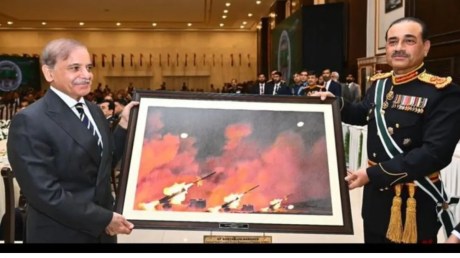
Anyway, this crude attempt to claim credit for achievements of accomplished Hindus, who were fortunate to have lived in times when there was no Islam or Muslim around, is unlikely to go down well with common people in Pakistan. Since its inception, public discourse, school curriculum and media have been telling them that they are descendants of warrior races like Arabs, Turks, etc. In Pakistan, history begins with Muhammad bin Qasim’s invasion of Sind in 712 AD. It is regarded as a watershed event that brought the ‘light’ of Islam to the ‘dark’ land of Hindustan. Pakistanis are taught to lionise invaders like Mahmud Ghazni, Ghori, Babur, Abdali et al, who heaped untold miseries on the Hindus, Sikhs, Buddhists and Jains who happen to be the ancestors of Muslims of India and Pakistan today. Pakistan’s missiles are named after these invaders, hailing them as its heroes. The sudden U-turn now is likely to be met with disbelief and incredulity.
The short point is this. What distinguishes Pakistan from India is not geography but civilisation and attitude to the history of that civilisation. In ancient times, the whole landmass to the south of Himalayas and north of the ocean, from Afghanistan to Assam and Sindhu to Sinhal was the playground of the great Hindu civilisation. Culturally, it was an indivisible whole. Every great king aspired to rule over the whole of it as a chakravartin. Pakistan is an artificial construct carved out of that Bharatavarsha. It is, therefore, no surprise that some illustrious figures flourished and some important sites are located in the territory now occupied by Pakistan.
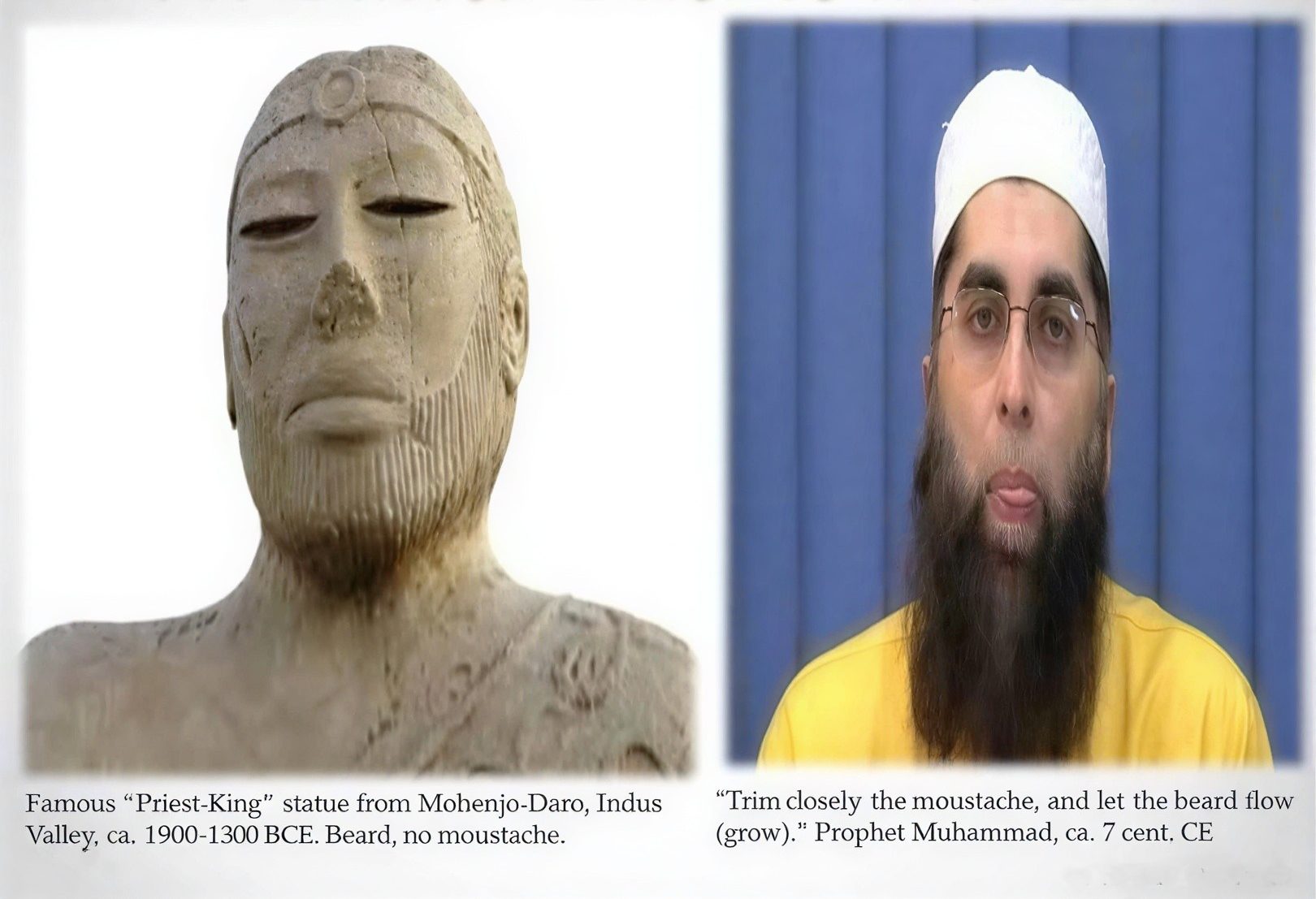
The question is, what would the Islamic state of Pakistan do with that heritage? Islam insists on a clean, complete and irreversible break with the pre-Islamic past as a period of darkness in the life of an individual, group or a country. Muslim scholars would dismiss as kaffirs and kufr the historic figures and sites that Pakistan seeks to claim credit for. There have been voices in Pakistan for demolition of Indus Valley Civilisation sites of Harappa and Mohen-jo-Daro as bastions of kufr (falsehood). If Takshashila university existed in the times of Delhi Sultanate or Mughals, would its fate be any different from that of Nalanda that was reduced to ashes by Bakhtiyar Khalji? Could Panini expect to be honoured by the likes of Alauddin Khalji or Aurangzeb?
If Pakistan wants to claim credit as inheritor of a great ancient civilisation, it will have to do a U-turn on the way it views India’s history. Instead of celebrating conquests of Islamic invaders and the rape, plunder, arson, temple destruction and forced conversions inflicted by them on the Hindu populace it will have to side with their victims. Instead of glorifying the Ghaznis, Ghoris, Mamaluks, Saiyads, Khalijis, Tughlakhs, Lodis and Mughals, it will have to glorify Pruthviraj Chauhan, Hemu, Maharana Pratap, Chhatrapati Shivaji, Guru Tegbahadur, Guru Gobind Singh, Veer Durgadas and their like. In short, it will have to move away from injunctions of Islam on treatment of kaffirs and jahiliya. But were it to do so, it would lose its raison d’être, the rationale for its existence. For, a Pakistan that proudly owns its pre-Islamic heritage might as well reintegrate with India. It was well said that if Turks leave Islam, they would still be Turks; if Arabs leave Islam, they would still be Arabs. But if Pakistanis leave Islam, they would become Hindus. Is Pakistan ready for that?
› Virendra Parekh writes on economics and politics, also on issues related to Indian civilization, history and cultural nationalism.
Filed under: india, pakistan | Tagged: ancient india, indus valley civilisation, islamic state, pakistan history, state terrorism | Comments Off on From Jihadistan to ‘Ancient Pakistan’ – Virendra Parekh