






 “The connotation Hindu is inclusive in its origin and evolution. Any effort to draw a parallel between Hindu nation and theocratic states needs to be contested. India is the only nation in the world which is co-terminus with a civilisation. In other words, India is an organic example of continuity of age-old civilisation. ” – Rakesh Sinha
 The comment by a Goa minister that India is a Hindu Rashtra is not something which goes against the spirit of the Indian Constitution or annihilation of secularism. The connotation Hindu is inclusive in its origin and evolution. Any effort to draw a parallel between Hindu nation and theocratic states needs to be contested. India is the only nation in the world which is co-terminus with a civilisation. In other words, India is an organic example of continuity of age-old civilisation. Therefore, Hindu Rashtra is an adjective of the nation, not a political objective. The origin of the connotation, Hindu, has neither religious origin nor identification with particularism. Its parallel connotation which is suggested is Bharatiya Rashtra. The nation has been named after the Hindu legendary Bharat, the son of Shakuntala and Dushyant, and he was groomed in the ashram of Kanwa, a Hindu saint. Going by epistemology, the term Bharat is more religious than Hindu.
Such controversy on the usage of Hindu is due to relentless deconstruction of our tradition of secularism since colonial period. The colonial India witnessed development of two parallel streams: one, people with perspective on the time-tested Hindu culture and world view. There are umpteen examples of such people—Raj Narayan Bose, Maharishi Aurobindo, Lala Lajpat Rai, Bal Gangadhar Tilak, Bipin Chandra Pal, Mahatma Gandhi, M. S. Golwalkar and Radhakrishnan. They used historiography and socio-cultural genealogy to understand India. By their logical and argumentative writings, they heralded a semi-renaissance in the country. No nation becomes civilisational antiquity when it fails to trace its roots and its people feel guilty while answering, who am I? Pal’s The Soul of India is a classic quest for defining India as a civilisational nation.
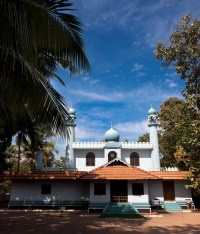 But there was another strand which included people who understood India through the writings of Western scholars and submitted themselves to Western political philosophy, assuming it to be superior, more rational and of greater universal application than what India could offer. People like Keshab Chandra Sen, Jawaharlal Nehru, R. P. Dutt and Amartya Sen are representatives of this dimension. The classic test has been the definition of secularism. The former understood secularism as a way of life and felt proud of India’s tradition of diversities. It can be understood by the example of Cheraman Mosque in Kerala built by a Hindu king to facilitate Muslim traders and immigrants. This is the world’s second oldest mosque (after Mecca). It denotes culture of coexistence and progressive assimilation.
 Unfortunately, the latter stream borrowed definitions and interpretations from the West and interpreted secularism as a political duel between competing communities based on their numerical strength. It is they who made use of the colonial concepts of majority and minority. This led to mitosis of secularism into the process of ‘otherings’.
This was visualised during the debate in the Constituent Assembly. Fathers of the Constitution wanted to deter any further damage to our civilisational progress. Tajammul Hussain categorically stated that the majority-minority dichotomy was the British creation and argued that because he worshipped the same God in a different way, it didn’t turn him as a minority. He appealed to the makers of free India to “throw this term (minority-majority) from your dictionary”. But it could not happen. Contrary to it, the concept got institutionalised. H. C. Mukherjee, the Vice-Chairman of the Constituent Assembly, who was by faith Christian, warned that “if our idea is to have a secular state, it follows inevitably that we cannot afford to recognise minorities based upon religion”. Any concept whose practice breeds ‘otherings’ can’t be secular. And here the concept of Hindu Rashtra reflects geo-cultural inclusiveness which abhors uniformity. – The New Indian Express, 27 July 2014
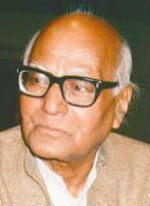
» Prof Rakesh Sinha is an eminent political scientist. He is the Hony. Director of India Policy Foundation. Contact him at rakeshsinha46@gmail.com
Filed under: india | Tagged: hindu, hindu geographical term, hindu rashtra, hinduism, indian secularism, minorities in india, nationalism, religion, religious minorities, theocracy | 7 Comments »