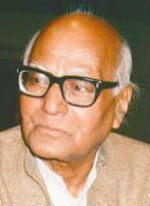











 The basic and brutal fact is that most Indian Muslims were once Hindus or people of indigenous faith practices. The road to their return to the Hindu fold should not only be wide open but underwritten with security, dignity, acceptance and love. Without the first two, all “ghar wapsi” efforts will be futile. – Prof Makarand Paranjape
Is Hinduism locked in an existential struggle against Abrahamic faiths, especially Islam and Christianity? Not necessarily. As I have argued in my earlier writings, particularly Altered Destinations: Self, Society, and Nation in India (London, 2010) and Making India: Colonialism, National Culture, and the Afterlife of Indian English Authority (Dordrecht, 2013), the Sanatani and the non-Sanatani can coexist without conflict.
That is because the Sanatani, with its inclusive and open-ended belief systems, has the capacity both to absorb and allow radical differences. Also, and this is something we tend to forget, non-Sanatani systems, religious or secular, also have Sanatani elements of pluralism, non-exclusion, and acceptance of difference.
The real problem occurs when the non-Sanatani becomes anti-Sanatani. This can be true of theologically justified armed invasion and occupation as applicable to much of the Islamic conquest of India. Or, on a smaller scale, of the Portuguese assault and inquisition in Cochin and Goa, and the early French rule in Puducherry, where religious aggression accompanied imperialistic conquest.
The British ruled differently, using a Macaulay-inspired educational, intellectual and cultural rebooting of India that, unfortunately, turned out to be anti-Sanatani in many of its features. Marxism and modernity, too, obviously non-Sanatani, can also be very viciously and virulently anti-Sanatani.
Likewise, Dravidianist and Ambedkarite extremism, with their reverse racism, targeted hate campaigns and divisive politics, may also be included in the roster of anti-Sanatani movements. In more recent times, a combination of these forces have resulted in a rather powerful anti-India or, as some go to the extent of arguing, breaking-India narrative.
 What, then, would be the fitting response from the Sanatani side to such threats? The answer, rather obvious to those who have studied the Sanatana traditions, would be a principled and carefully executed combination of defence and offence. The defence, like a shield, protects us when we are most vulnerable; the sword thrusts, rather than slashes, where the adversary is at its weakest. But in the process, when the Sanatani dons the fierce mask that almost resembles its opposite, it must never lose its Sanatani essence, which remains plural, non-exclusive, open-ended. The Sanatani, after all, is exceptional precisely because it has no one point of origin, no one book or prophet, no one doctrine or ideology, no one church or belief system. Without origin or closure, the Sanatani permits a great variety of both precepts and practices with some fundamental underlying structures.
In its fight against the anti-Sanatani, if the Sanatani becomes indistinguishable from its opponent, it would lose its self. Worse, the loss of the Sanatani, bad enough for itself, would also be catastrophic for the world. Whatever the symbol or deity of our battle against our adversaries, the more benign and sober form of it as well as ourselves must remain the normal and default mode.
After all, a deity which is angry all the time, even the new and rather popular graphic of “angry Hanuman,” will eventually turn on its own followers, having run out of enemies. Anger directed outward at real or imagined foes will come back to consume us too if we do not know the art of stilling it. Hence, all our rituals and ceremonies end with shanti mantras. Energies invoked for specific purposes must also be stilled and quietened for cosmic balance and harmony to be restored.
It is in this light that we must view the “ghar wapsi” of nearly 300 so-called Muslims of Haryana to Hinduism in two recent instances. The earlier one occurred on April 18, when six families with some 35 members returned to Hinduism in Danoda Kalan, a village in the district of Jind in Haryana. The more recent incidence was on May 8 in which 40 families consisting of some 250 people returned to Hinduism.
In both instances, the trigger was the last rites of a deceased elder. By opting for cremation over burial, the reconverted returned to their Hindu identity. Earlier, I used “so-called Muslim” to describe these families because they lived like Hindus, for most part retaining Hindu customs and names, but were listed as Muslims. According to their own traditions and legends, they were converted to Islam during the times of Aurangzeb. One reason for their return, it was reported, is that they belong to the Dom community, recognised as a scheduled caste, and thus eligible for benefits if they identified as Hindus rather than Muslims.
It is very important to underline that what these two cases illustrate is the basic and brutal fact that most Indian Muslims were once Hindus or people of indigenous faith practices. The road to their return to the Hindu fold should not only be wide open but underwritten with security, dignity, acceptance and love. Without the first two, all “ghar wapsi” efforts will be futile.
Once it is established that the return to Hinduism is as per the law, that is without fear or inducement, then both government and non-government agencies should ensure that such returnees are not harassed or hounded by the former co-religionists. After all, in several non-Sanatani religions, the price for apostasy is very high, as high, in fact, as death itself.
The Sanatani, as I said earlier, is an open system. That does not mean that it is a one-way stream, with people leaving the Hindu fold to become Muslim, Christian, Sikh, Buddhist, Marxist or even secularist. It means that those who left can also return. Whenever they like. It is up to us, as modern Hindus, to make their return both meaningful and sustainable. We must create the felicity conditions for their welcome and integration into Hindu society.
In this regard, it is a gross misunderstanding to claim that Hinduism is non-proselytising, though of course the word has a totally different connotation for us. The fact is that most of Vaishnavism, right up to the worldwide success of ISKCON, is based on attracting converts. There is no reason that should change now. If at all, Hinduism today should be made even more appealing to both returning and new converts. – The New Indian Express, 15 May 2020
› Prof Makarand R. Paranjape is an author and poet and Director of the Indian Institute of Advanced Study, Shimla.

Filed under: india | Tagged: abrahamic religions, conversion, ghar wapsi, hinduism, reconversion | 2 Comments »