



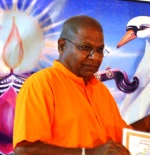





 Race, ethnicity, class, sex, religion, nationality, geography, etc. are valid, legitimate and appropriate social categories of difference in examining historical and contemporary issues. – Dr Kumar Mahabir
Even academics like me who often view certain topics through the lens of race sometimes receive negative attention and judgement. Some people feel that speaking or writing rationally about race is counter-productive and even racist.
Indo-Caribbean people (Indians), in particular, tend to receive condemnation when they examine topics on the basis of race. Indian victims are often criticised for reporting discrimination.
On the other hand, Afro-Caribbeans (Africans) receive either indifference or praise when they discuss race. For example, the following comment by a black calypsonian, published in a Trinidad national newspaper, drew praises: “In the midst of black consciousness in the 1970s, Bro Superior told black people ‘No matter where yuh born, Yuh still African’” (Guardian, Nov 12, 2017).
Discussing race objectively with empirical data and statistical evidence is not racist. Racism is the belief that another race of people is inferior. This attitude results in discrimination, antagonism and domination individually, politically, economically and otherwise.
Race, ethnicity, class, sex, religion, nationality, geography, etc. are valid, legitimate and appropriate social categories of difference in examining historical and contemporary issues.
Why should someone who talks objectively about race be criticised as a racist? Should we also condemn someone who uses sex as a mode of inquiry as being sexist? To do so would be ignorant, biased and unfair.
In a recent public broadcast, the prime minister of multi-racial Trinidad & Tobago advised some citizens “not to see race in everything we do” (Express, Sept. 22, 2017). This ill-informed statement was made in relation to the mixed responses he received when he appealed to citizens to open their homes to displaced Dominican refugees who were devastated by Hurricane Maria.
On the contrary, people should be encouraged to “see race” as well as sex (gender), class, nationality, geography and [all] types of social identity. Studying race can reveal differences in the form of disparities, disadvantages, inequalities, power and privilege which have structured human life in the past and present.
To overlook race would be to ignore the elephant in the room.
Criminologist and social psychologist Dr Ramesh Deosaran wrote a book entitled Inequality, Crime & Education in Trinidad and Tobago: Removing the Masks (2016). He found that there was a toxic relationship among race, class, gender, family and geography, resulting in African students performing the worst in the education system. Deosaran wrote: “Wittingly or unwittingly, the education system, to a large extent, becomes a racially segregated system. And with academic achievement also stratified by race” (page 163). His data showed that while 47% of African students went to university three years after secondary school, as much as 72% of Indians did so, and 49% of the Mixed group also attended.
Prospective students of Whitman College in the USA are encouraged to enrol in its Race and Ethnic Studies programme. They are told that “ideas about race and ethnicity have been central at many points in world history and remain salient today, whether we talk about ethnic pride or ethnic cleansing, about multicultural diversity or racial discrimination.”
Race and ethnicity are often used interchangeably. However, race refers to biological features (bone structure, facial features, hair texture, skin colour, etc.) and ethnicity denotes cultural traits (history, customs, religion, family-type, values, music, food, etc.).
In the Caribbean Examination Council (CXC) CSEC Social Studies syllabus, Section A (Individual, Family and Society) comprises of a content section that explains characteristics of the population. These characteristics include age, sex, occupation, religion and ethnicity.
In the CXC CAPE Sociology syllabus under Unit 1, Module 3, Social Stratification is conceptualised according to status mobility, gender, class, colour, caste, race and ethnicity.
The topic of race and ethnicity is studied not only in sociology but also in history, anthropology, cultural studies, visual culture, media, literature, communication, law, health, human rights, gender, political science, economics, geography, public policy, international relations, social psychology, etc.
In a research paper entitled “Understanding race and crime in Trinidad and Tobago,” criminologist Dr Randy Seepersad (2017) found that most of the murderers, victims, accused and prisoners are Africans. His disaggregated data demonstrated that most of the violent crimes are committed by blacks against blacks.
In 2011, former National Security Minister John Sandy said, “We must recognise that it is people looking like me who are being murdered, mothers like my mother, God rest her soul, who are out there weeping more than any other race” (Express Sep 3, 2011).
Race has always been a major factor in voting in all general elections in T&T. This form of ethnic polarisation has been well documented by pollsters such as SARA, NACTA, ANSA McAl and HHB & Associates Ltd. Most Africans and Mixed persons support the PNM while most Indians vote for the PP/UNC. – World Hindu News, 20 December 2017
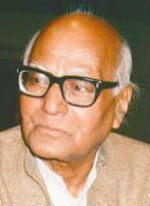
› Dr. Kumar Mahabir is an anthropologist and author of 11 books. He teaches at the University of Trinidad & Tobago, West Indies.

Filed under: UK, USA, west indies | Tagged: all lives matter, black lives matter, christopher columbus, police brutality, racism | Comments Off on Why we should talk about race – Kumar Mahabir