










Today, temple finances, administration, rituals, and even the meaning of sacred space itself are dictated by government authorities. No other major religion in India has been subjected to such sustained intervention. – Rahul Shivshankar
Are Hindus who support the movement to reclaim their religious rights communal?
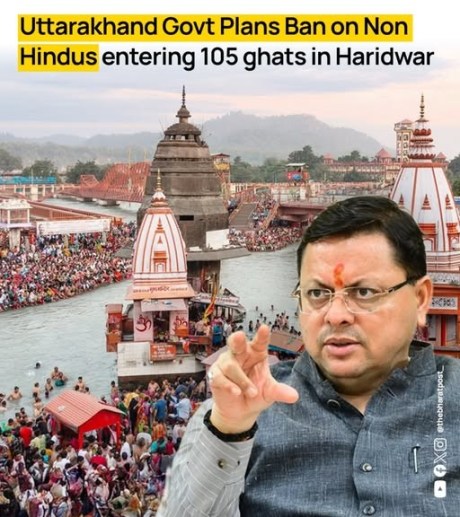
If you put that question to the so-called secular intelligentsia, expect the answer to be “yes”. Which is why an injunction contemplated by the Kedarnath and Badrinath temple committees barring entry to non-Hindus is being met with predictable secular disapproval.
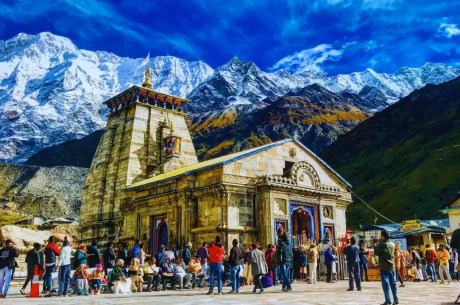
But secular hand-wringing aside, the orders contemplated by the Badrinath and Kedarnath temple boards mark an important moment in India’s long and uneven relationship with religious autonomy.
To the casual observer, these measures may appear exclusionary. An editorial in a leading daily argues that “access for all in Hindu temples is a battle hard-won … the state cannot allow a return to hoary segregationist practices and remain wilfully blind to law and constitutional morality.”
Yet, optics should not be allowed to obscure the underlying reality. The proposal by the Badrinath and Kedarnath temple committees is not an act of social exclusion but an assertion of religious autonomy, one that seeks to reclaim Hindu places of worship from decades of excessive state control. Hindu temples are not tourist destinations. Nor is the question of entry merely a matter of civil rights for all.
Unlike mosques or churches, a vast number of Hindu temples in India have been designated as public religious institutions, a classification that has allowed the state to move far beyond regulation into direct management. What began as reform has, over time, hardened into permanent and often intrusive control.
It is undeniable that certain interventions were necessary to address caste-based exclusion and other social injustices. But these reforms were never meant to convert the state into the custodian of Hindu religious life. Today, temple finances, administration, rituals, and even the meaning of sacred space itself are dictated by government authorities. No other major religion in India has been subjected to such sustained intervention.
This selective intrusion has distorted the idea of constitutional secularism and normalised the assumption that Hindu temples are public utilities rather than living religious institutions governed by doctrine and ritual discipline. A temple is not a public park. Its purpose is not leisure, access, or convenience, but sanctity. In the case of Kedarnath and Badrinath, these are centres of the Vedic tradition established by Adi Shankaracharya, where religious meaning is inseparable from discipline and boundary.
If a religious institution lacks the ability to determine who may enter and under what conditions, religious freedom is reduced to symbolism rather than substance.
One line of opposition suggests that defining “non-Hindus” risks excluding other dharmic traditions such as Sikhism and Jainism. Article 25(2)(b) of the Constitution, through Explanation II, explicitly includes Sikhs, Jains, and Buddhists within the legal definition of Hindus for regulatory and reform purposes. This classification has long been used to govern access to Hindu religious institutions and cannot be selectively invoked to challenge religious autonomy now.
At the heart of the opposition to the Badrinath-Kedarnath proposal lies a deeper inconsistency. Critics risk denying Hindu institutions the very autonomy that other faiths enjoy as a matter of course. Islamic and Christian bodies manage their internal religious affairs with minimal state intrusion. Hindu temples, by contrast, are required to justify even the most basic assertions of sanctity.
Parsi agiaries do not permit non-believers. Mecca remains out of bounds for non-Muslims. Several mosques restrict entry. These practices are not framed as segregationist but as essential to preserving religious identity. Hindu temples alone are denied this presumption of legitimacy.
Seen in this light, the Badrinath and Kedarnathboards’ orders are not a rejection of constitutional values but a reminder of them. The Constitution protects freedom of religion not only in belief and expression but also in the preservation of sacred space. Reform was never intended to erase religious autonomy altogether. – Open Magazine, 30 january 2026
Filed under: india | Tagged: haridwar ghats, hindu temples, non-hindu ban, protection of sacred spaces, temples not tourist areas | Comments Off on Barring non-Hindus from temples corrects a historical imbalance – Rahul Shivshankar