














 “In the extant form of political representation, the individual voter chooses the politician and political party that most convincingly offer to articulate and politicize his parochial desires and sectarian grievances. In a presidential constitutional order, the compulsion of voting for a singular national figure would require them to consider who would best reconcile their competing demands with the rest of society. No one group could hope to elect a President able to exclusively espouse their particularistic aspirations. The structural imperative of the latter system of governance, for all its likely defects and shortcomings, would be unity through negotiation of division, while the parliamentary contest does precisely the opposite by intensifying it.” – Dr. Gautam Sen
 India’s metropolitan political, economic and social elites have assumed a sense of personal grandeur as economic success began to haunt India in the aftermath of the 40-year mayhem of command economics and bureaucratic paralysis. Many of them have grown very rich and rejoice in their ability to enjoy their wealth. This was difficult in earlier times under the gaze of a state bureaucracy unable to countenance private surfeit without sharing it corruptly. Now, sleek German limousines are a common sight in the roads of Mumbai and Delhi and it is disconcerting to observe young men casually settle 50,000 rupee bar bills in 5 star hotels in a single evening. Yet, these examples of dysfunctional enjoyment of wealth do not even approach the limits of excess and a visit to marriages in Delhi farmhouses will disabuse any gullibility on this issue. And much of the wealth is acquired through fraud and the product of the economics of political arbitrage or political office itself.
The economic strangulation of the licence Raj is alleged to have ended, but, in essence, what was lifted was sectoral restrictions on economic activity (though some of the worst remain) and permissible volumes in production. But it did not seriously curtail the range of official approvals required to engage in them and the whole panoply of detailed terms and conditions that unfailingly accompany them. These remain firmly in the control of politicians and bureaucrats and they cannot believe their good fortune, since it enables collection of even larger rents. As a result, the ratio of reward to effort for political activity has risen dramatically, with the private business fortunes of the few offering undreamt of opportunities for illicit enrichment for the political and bureaucratic elite. With the exception of a few critical individuals, they have grasped the unparalleled opportunity with both hands and feet. The recent revelations of corrupt enrichment of politicians, reaching right up to the highest levels, bear testimony to its stupefying scale.
 The fact that political careers in India exceed virtually all other endeavours in their huge profitability is graphically highlighted by the emergence of political dynasties as the norm. There are exceptions in some parts of the country, but they must be regarded as anomalies. Even the most exalted servant of the state, invested in its premier constitutional office, could not bear to abandon his parliamentary constituency to anyone except a son. The end of a family’s political enterprise likely promises rapid socio-economic oblivion for the family gene pool, no matter that this particular progeny is evidently mentally challenged, given to repugnant comment, with violence to the grammar of his own mother tongue. India’s political arrangements and scope for private economic opportunity have conspired to establish a framework that relegates governance to obscurity and prioritizes private greed and ambition in its political and bureaucratic classes.
The folly of parliamentary politics and the attendant downright inappropriate form of constitutional governance stands exposed in all its virulent consequences. Parliamentary representation identifies, articulates and amplifies every active and dormant fault-line and division in Indian society. And it privileges the political entrepreneur most competent to exploit them to ensure that they worsen and endure. The divide-and-rule of imperialism has become the monstrosity of divided rule by the incumbent natives, who have seized it’s every demonic facet to preside over the precipitous downward spiral of their inheritance. Pre-existing caste, religious, linguistic and regional divisions, efficiently deployed by imperial Britain to keep the natives in their place, have flourished since her departure because the Indian Constitution facilitates and promotes them.
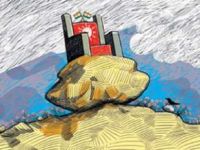 In the extant form of political representation, the individual voter chooses the politician and political party that most convincingly offer to articulate and politicize his parochial desires and sectarian grievances. In a presidential constitutional order, the compulsion of voting for a singular national figure would require them to consider who would best reconcile their competing demands with the rest of society. No one group could hope to elect a President able to exclusively espouse their particularistic aspirations. The structural imperative of the latter system of governance, for all its likely defects and shortcomings, would be unity through negotiation of division, while the parliamentary contest does precisely the opposite by intensifying it. Exactly the same holds true of individual states, in which an elected governor, who, ruling with an assembly, enjoying carefully enumerated powers, would be obliged to reconcile competing demands of electors rather than look to the lowest common denominator of vote bank politics.
The questions over policing and law enforcement, following the brutal rape and death of a young woman, are a comment on deeper troubles in the Republic. It is indeed a metaphor that tragically captures much that is wrong with Indian society and the threat of worse to come. The surge of commentary on the incompetence and callousness of law enforcement is apt but the diagnosis flawed. The performance of the guardians of the law, if they may be ironically deemed as such, cannot be ipso facto judged on how they have functioned in this particular grim episode. It is essentially erroneous to impute to them primary responsibility for protecting the public. Their primary task is to ensure the safety of India’s political and bureaucratic elites and, to a lesser degree, the very wealthy, if the latter do not employ private security firms to do so already. An RTI application would reveal how many security personnel are engaged in looking after VVIPs, though it is known that the Z-plus level entails an unprecedented 30 personnel for each fortunate individual. The performance of official security agencies, assessed in terms of their actual operational mission, must be deemed tremendously successful. Very few VVIPs have succumbed to violence and many security personnel have given their lives in extraordinary displays of bravery in performing their duty.
 The pre-existing fissures and divisions of Indian society, combined with the dire threat of terrorism sponsored by the government of Pakistan, have exposed the deepest dilemmas of Indian society. It is nakedly a social order in which the prosperity and personal safety of politicians and their bureaucratic underlings are ensured because vote-banks acquiesce. Cultivating these becomes the dominant fixation rather than virtuous governance and the pursuit of the public good. An ignored public occasionally takes to the street, with modest expressions of violent militancy, quite mellow by international standards. And the state is perfectly willing to unleash the police against them for their audacity in breaching barricades outside the palatial homes of arrogant rulers. Apparently, those who do not matter should know their place. In a final example of cynicism, the dying victim of rape was dispatched abroad by disdainful rulers, just in case her funeral procession became a cause of additional irritants to their serenity. But the gods must be watching, since she has beckoned her fellow citizens to action with a remarkable display of moral integrity and courage, values worth living and dying for. – News Insight, 2 January 2012
» Dr Gautam Sen has taught Political Economy at the London School of Economics.
Filed under: india | Tagged: corruption, dynasty politics, economy, free market economy, india, indian economy, indian national congress, indian parliment, indian politics, lifestyle, nehruism, nepotism, political corruption, political representation, politics, rahul gandhi, rich poor divide, scams, socialism, sonia gandhi, UPA-2 | 2 Comments »











