















 Teesta Setalvad’s petition in the Supreme Court, which tries to dispute the massive archaeological, epigraphic and literary evidence supporting the existence of a Hindu temple beneath the Babri Masjid, makes no mention of repeated pleas by smaller Muslim groups to hand over the site to Hindus, since it has no particular religious value for Islam. – Prof Michel Danino
The long dispute between claimants to the site of Ram Janmabhumi and the erstwhile Babri Masjid in Ayodhya seems to be inching towards a conclusion in India’s Supreme Court. How far the litigants will be satisfied by a final judgment on the ownership of the crucial plot of land remains unclear. Meantime, did the Chief Justice of India on February 8 miss a golden opportunity to resolve the conflict innovatively, when he refused to hear a petition filed on behalf of the NGO “Citizens of Peace and Justice” by 32 “public-spirited citizens” such as Teesta Setalvad, Shyam Benegal, Medha Patkar, Aruna Roy and John Dayal?
What was the gist of the petition? Actually an old argument: the Ayodhya developments have posed such “a serious threat to the secular fabric of the country” that the dispute cannot be regarded as an ordinary land issue. To save the country from a communal conflagration, the Court is asked to “direct that the disputed site be used for a non-religious public use.” However, while brushing the petition aside for the moment, the Chief Justice said he wanted the dispute to be treated “as a land issue,” hinting that it would be solely decided on the merits of the title to the disputed plot.But what if the petition were to be taken seriously? Let us consider the implications.
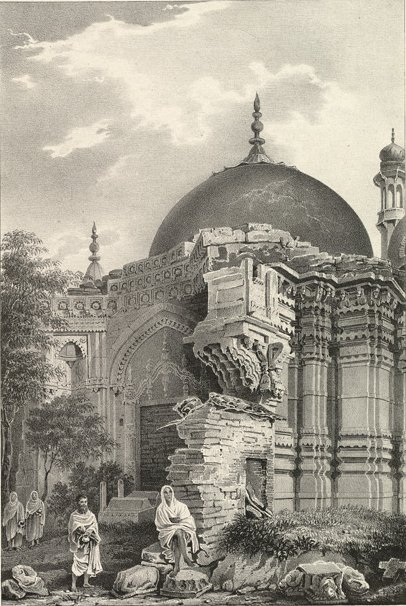
There is enormous historical evidence—from Islamic chronicles, inscriptions and archaeological remains—that thousands of Hindu, Jain and Buddhist temples were destroyed by Islamic invaders from the 11th century onward. Delhi’s Qutub Complex, for instance, was built by Qutb-ud-din Aibak out of the remains of 27 destroyed Hindu and Jain temples. Varanasi’s Gyanvapi Mosque erected by Aurangzeb sits on the erstwhile Kashi Vishvanath Temple, remains of which are still visible (the 19th-century Orientalist James Prinsep left a fine lithograph of them).
Aurangzeb also had Mathura’s Krishna Janmabhumi Complex destroyed, with the Shahi-Eidgah Mosque built over parts of its remains. And so on. Let us assume that in the name of secular wisdom Ayodhya’s disputed site is indeed turned into a public space. Very likely, Hindutva organisations would go back to their list of potential hotspots (starting with Varanasi and Mathura) and launch fresh agitations. All would depend on whether those were sufficiently sustained and intense. If they pass the test, Ayodhya’s “secular solution” would serve as a very useful precedent: should not the newly disputed mosques be converted to hospitals, schools or such like? One after another, thousands of mosques across India could thus experience the delights of secularisation. Hindutva organisations would not recover the underlying temples, but the public would considerably benefit in terms of public health and education, a prospect every progressive Muslim should rejoice in.
But why stop at mosques? Ananda Ranga Pillai in his Diary recorded the destruction in 1748 of Pondicherry’s large Vedapuriswar Temple; at Goa, the historian A. K. Priolkar listed the destruction of 34 temples, some later overbuilt with churches; there have been persistent arguments that Chennai’s Santhome Cathedral stands over Mylapore’s original Kapaliswar Temple. Should some of the churches become candidates to secularisation too?
And why stop at India? Christendom is replete with churches built over destroyed Pagan sites. In the late first millennium, Muslims conquering Spain erected mosques over churches; Christians promptly reconverted them after their reconquest. (Although Spanish Muslims have asked the Roman Catholic Church to let them pray at Córdoba’s Cathedral of Our Lady of the Assumption, earlier known as the Great Mosque of Córdoba, the Vatican seems in no mood to grant their request!) And what if orthodox Jews started agitating for the removal or reconversion of Jerusalem’s Dome of the Rock Mosque? Its location was that of the Jewish Second Temple, which the Romans destroyed to erect a temple of their own; later, one or several churches were built over it, before Islam swept by. Perhaps orthodox Jews should demand thorough excavations, and, were their claim to be established, could ask the building to be put to some “secular” use.
The potential unleashed by our 32 self-appointed guardians of secularism appears limitless. Should we rejoice at this formula? And if not, why reserve it for Ayodhya? All the above examples—not even the tip of a global iceberg—are inherent to the history of aggressive, conquering religions. Unsurprisingly, that history has more often than not been sanitized or swept under the carpet—a mistake in my view, as we stand to benefit hugely from an honest look at the unvarnished past and its darker chapters.
Strangely, the petition in the Supreme Court, which clumsily tries to dispute the massive archaeological, epigraphic and literary evidence supporting the existence of a large Hindu temple beneath the Babri Masjid, makes no mention of repeated pleas by smaller Muslim groups to hand over the site to Hindus, since it has no particular religious value for Islam. Or of last November’s proposal by Uttar Pradesh’s Shia Central Waqf Board chairman Waseem Rizvi to let a “grand Ram temple” be built at the disputed site, in exchange for a mosque at Lucknow. Such formulas, coupled with a goodwill agreement that there would be no future claims to other sites, would be a far more promising road to a final solution for this centuries-old conflict and to true reconciliation.
Since, meanwhile, the petition is loud on India’s “secular and tolerant ethos,” which it sees under threat from Hindu activism (and no other), we need to cast a critical look at the concept and practice of secularism in India, both in the polity and in education. – The New Indian Express, 26 March 2018
» Michel Danino is a guest professor at IIT Gandhinagar and a member of the Indian Council of Historical Research.
Filed under: india | Tagged: ayodhya, india, nehruvian secularism, ramjanmabhumi, ramjanmabhumi dispute, secularism, supreme court india, temple-breaking | 2 Comments »











